Rivet press machine
1344×768 · AVIF · CC BY 4.0
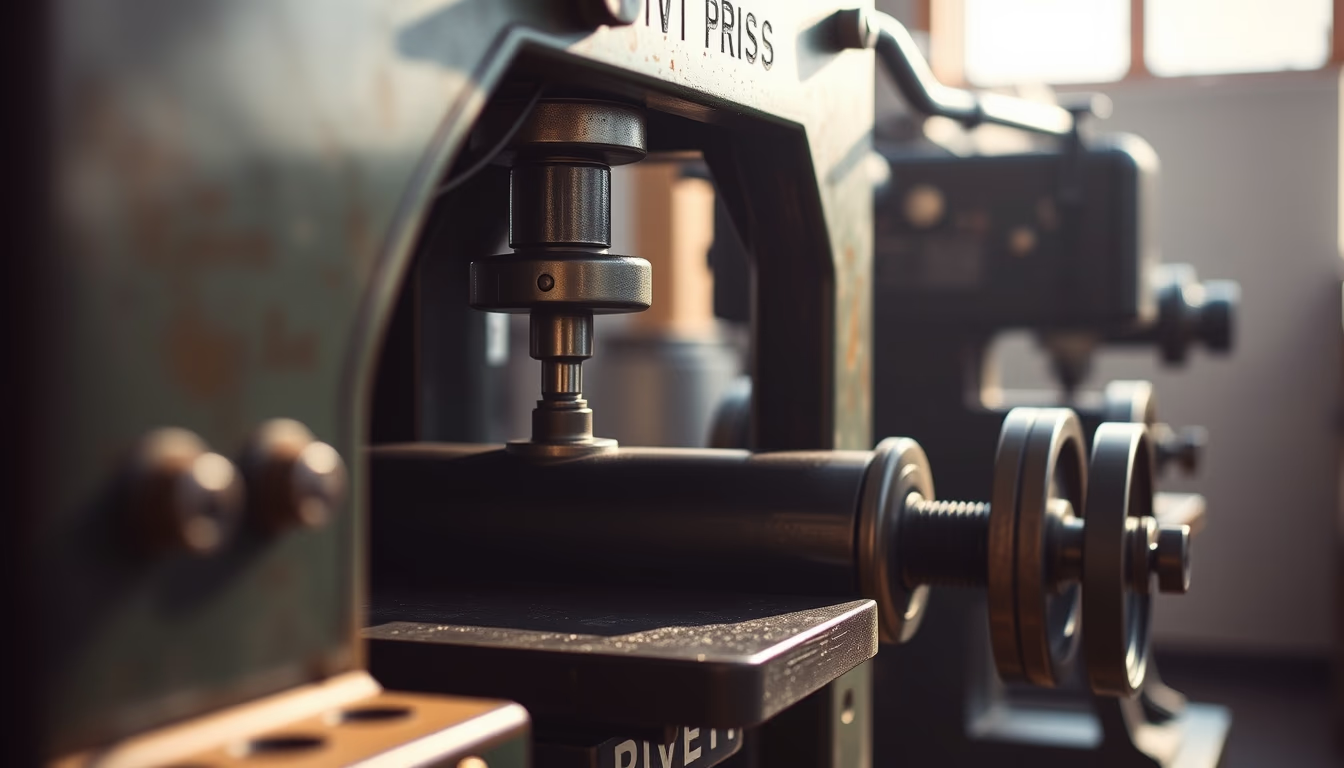
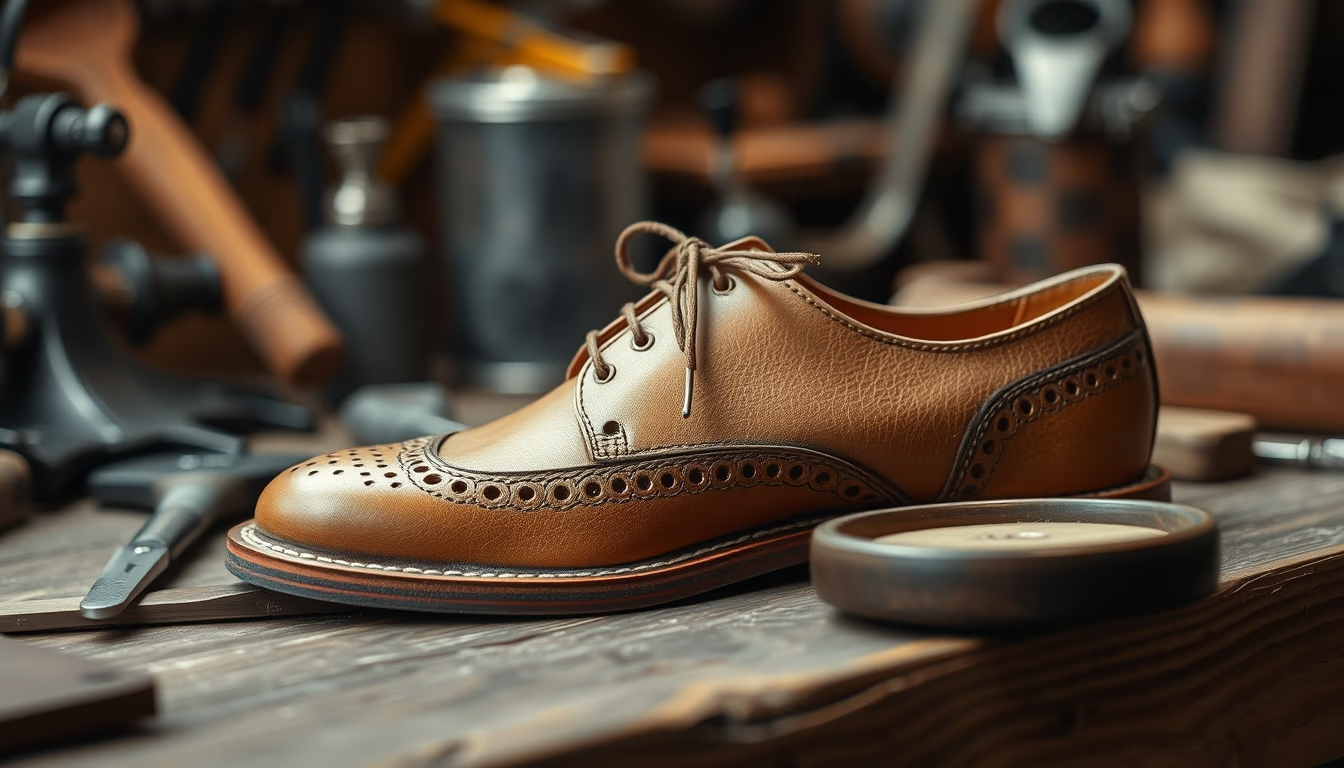
Essential rivet press machine for assembling leather goods, joining layers with precision and durability.
About this subject
The rivet press machine is a key tool in leatherworking and other industries dealing with materials like leather, canvas, and synthetics. Its primary function is to apply controlled force to deform the tail of a rivet, creating a permanent mechanical joint between two or more material layers. Unlike screws or stitches, rivets offer high shear strength and durability, making them widely used in belts, bags, wallets, saddles, and footwear.
Historically, manual rivets have existed for millennia, but industrialization brought pneumatic, hydraulic, and lever machines that boost productivity and consistency. In Brazil, the leather and footwear industry is one of the most traditional, with hubs like Franca (SP) and Novo Hamburgo (RS) employing rivet presses on a large scale. The choice of machine type depends on production volume: manual models are common in artisan workshops, while pneumatic presses serve high-output factories.
Operating a rivet press requires expertise to adjust pressure and piston stroke according to rivet diameter and leather thickness. A common mistake is applying excessive force, which can damage the material or break the rivet. Modern machines incorporate sensors and electronic force control for repeatability. Rivets come in various materials: aluminum (light and corrosion-resistant), brass (decorative), and steel (maximum strength). Regular maintenance, including lubrication and die replacement, is critical to avoid failures.
Interestingly, in projects involving raw leather or wet forming, the rivet cannot be set before the material dries, otherwise there is a risk of deformation. Therefore, riveting is one of the final assembly steps. The rivet press machine symbolizes the transition from pure craftsmanship to semi-industrial production, while still requiring manual skill for adjustment and part positioning.
Frequently Asked Questions
What is the difference between a manual and a pneumatic rivet press machine?
A manual press uses a lever or screw to generate force, suitable for low volume and fine adjustments. A pneumatic press uses compressed air for fast, repetitive actuation, ideal for high-volume production with more consistency.
What types of rivets can be used in a rivet press?
Common types are aluminum, brass, and steel rivets. Aluminum is lightweight and corrosion-resistant; brass offers a decorative finish; steel provides maximum strength. The choice depends on the application and materials being joined.
How to choose the right rivet press for a leather workshop?
Consider production volume, leather thickness, and rivet diameter. For small volumes, a manual lever press is sufficient. For higher productivity, opt for a pneumatic press with force control. Also check the availability of interchangeable dies.
Direct URL
https://pub-c7d6a6ea828543ac903a74a341ccb2e1.r2.dev/imagens/rivet-press-machine-documentary-photography-fresh16.avifHow to credit
Include a visible link back to UtilizAí. Copy one of the snippets below:
<a href="https://xn--utiliza-eza.com/en/midia/imagens/rivet-press-machine-documentary-photography-fresh16">Rivet press machine</a> by <a href="https://xn--utiliza-eza.com">UtilizAí</a>, licensed under <a href="https://creativecommons.org/licenses/by/4.0/">CC BY 4.0</a>.
[Rivet press machine](https://xn--utiliza-eza.com/en/midia/imagens/rivet-press-machine-documentary-photography-fresh16) by [UtilizAí](https://xn--utiliza-eza.com), CC BY 4.0
License: CC-BY-4.0