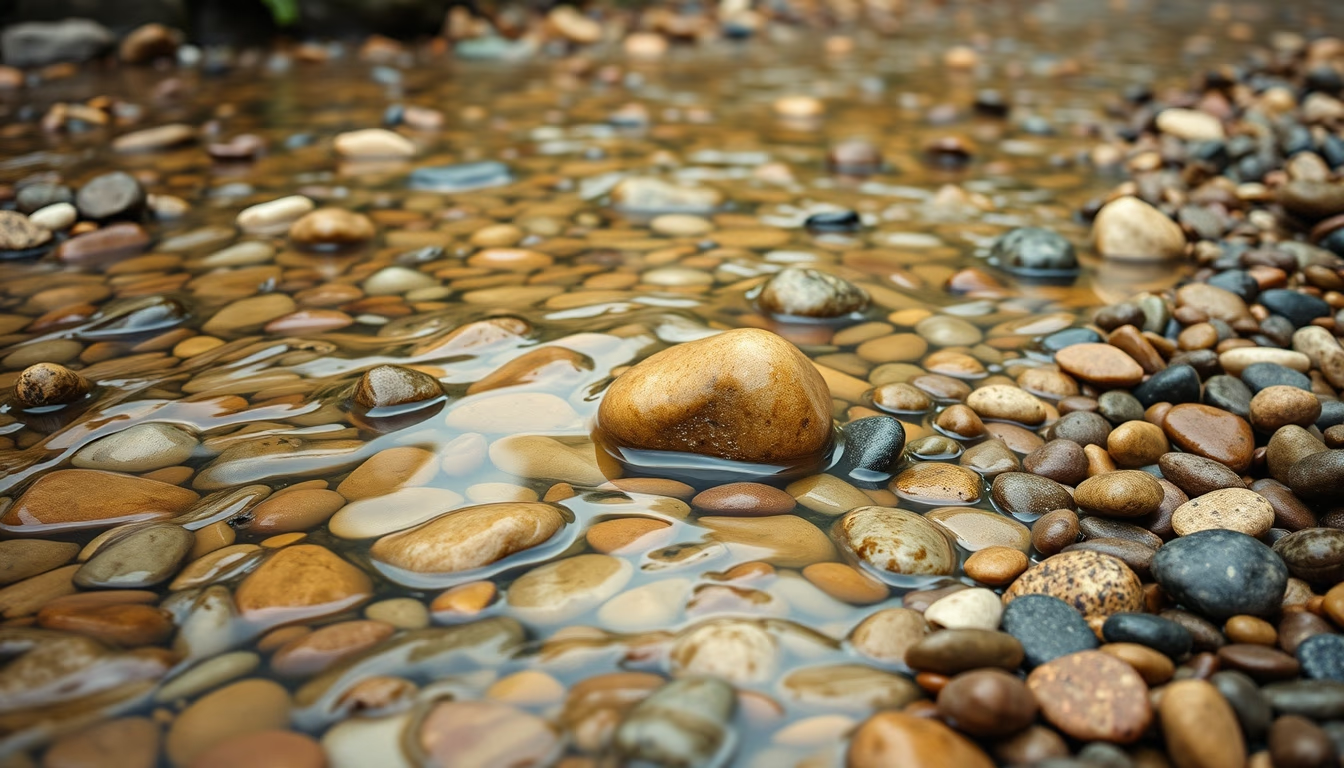
River smooth pebbles colorful
1344×768 · AVIF · CC BY 4.0
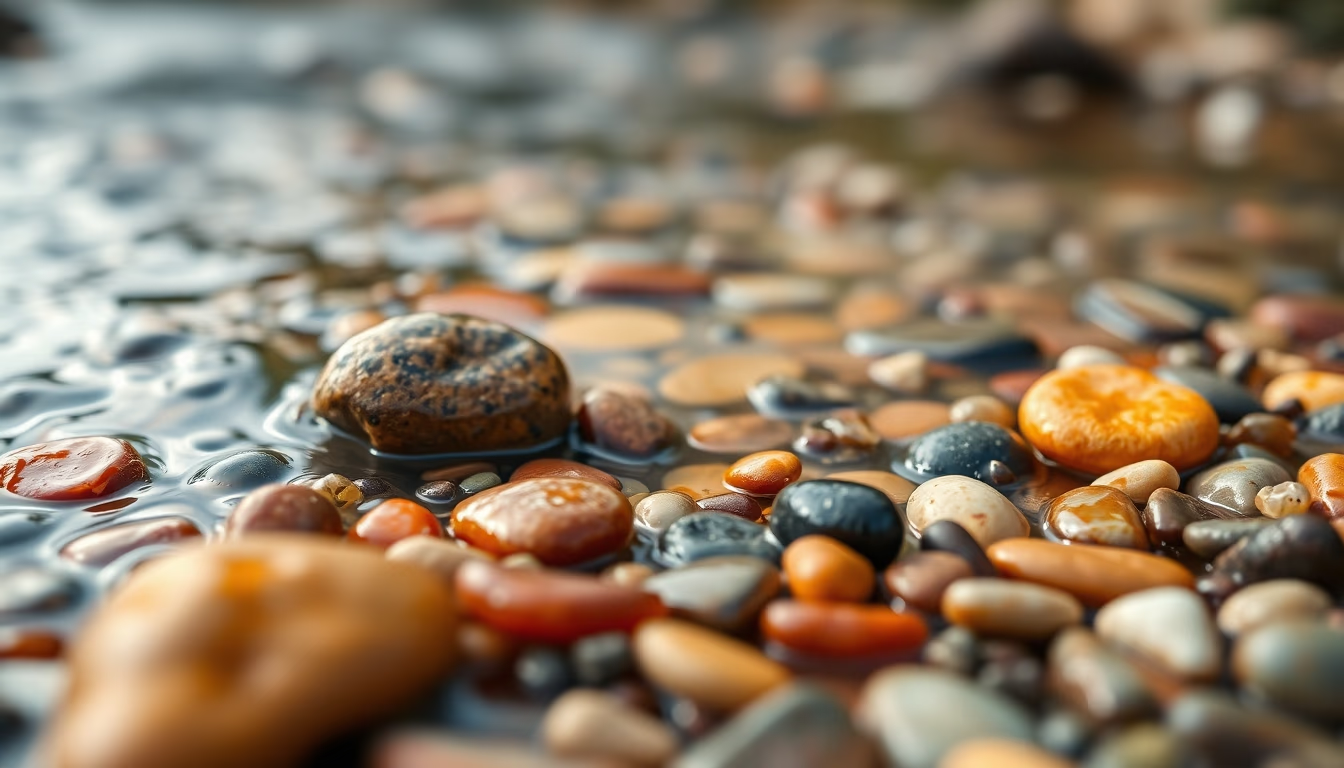
Smooth colorful river pebbles, polished by millennia of water erosion, are used in landscaping, art, and holistic therapies.
About this subject
River pebbles are rock fragments that, over thousands or millions of years, have been transported and worn down by water flow. This continuous abrasion, where particles collide with other stones and the riverbed, rounds their edges and smooths their surface, resulting in characteristic oval or spherical shapes. The varied coloration, ranging from gray to red, yellow, or purple, comes from minerals in the source rock: iron oxides produce reddish tones, while manganese yields black and brown.
In Brazil, rivers such as the São Francisco and Paraná are known for depositing large quantities of pebbles along their banks. These stones are widely collected for gardening use as ground cover in beds and pathways, and for decorating fountains and artificial ponds. In Japanese Zen gardens, pebbles symbolize water and purity, being raked into meditative patterns. In alternative medicine, certain pebble types, especially quartz, are believed to possess energetic properties and are used in crystal therapy.
Interestingly, pebbles also have historical significance: prehistoric hominids used them as percussion and grinding tools. Geological studies show that pebble shape and size help date sedimentary deposits and understand a region's hydrological history. The process of pebble lithification can take millions of years, creating concretions like those found in Utah, USA. In some cultures, pebbles are used in balancing rituals or as talismans.
Frequently Asked Questions
Why are river pebbles smooth?
Natural polishing occurs from constant friction with water, sand, and other stones during transport along the riverbed. This erosive process can take centuries to fully round a fragment.
How do pebble colors form?
Colors are determined by minerals in the source rock. Iron causes reddish tones, manganese dark hues, and pure quartz results in whites or transparency. Exposure to water's chemical elements may also alter coloration.
What are pebbles used for in landscaping?
They are used as decorative ground cover in flower beds, for drainage in pots, in garden paths, around natural pools, and to create textures in low-maintenance areas. They also compose arrangements in Zen gardens and fountains.
Direct URL
https://pub-c7d6a6ea828543ac903a74a341ccb2e1.r2.dev/imagens/river-smooth-pebbles-colorful-tilt-shift-miniature-fresh3.avifHow to credit
Include a visible link back to UtilizAí. Copy one of the snippets below:
<a href="https://xn--utiliza-eza.com/en/midia/imagens/river-smooth-pebbles-colorful-tilt-shift-miniature-fresh3">River smooth pebbles colorful</a> by <a href="https://xn--utiliza-eza.com">UtilizAí</a>, licensed under <a href="https://creativecommons.org/licenses/by/4.0/">CC BY 4.0</a>.
[River smooth pebbles colorful](https://xn--utiliza-eza.com/en/midia/imagens/river-smooth-pebbles-colorful-tilt-shift-miniature-fresh3) by [UtilizAí](https://xn--utiliza-eza.com), CC BY 4.0
License: CC-BY-4.0