Retired investor reviewing real estate fund portfolio
1344×768 · AVIF · CC BY 4.0

Retired investor reviews real estate fund portfolio seeking passive income and financial security.
About this subject
For many retired investors, Real Estate Investment Trusts (REITs) or Brazilian FIIs represent an attractive source of passive income, combining potential appreciation with regular dividend distributions. In Brazil, FIIs gained popularity after the 2000s, with regulatory frameworks offering tax benefits, such as income tax exemption on dividends for individuals under certain conditions. Currently, over 400 funds are traded on B3, covering segments like corporate offices, shopping malls, logistics, and even paper funds that invest in real estate securities.
A retired investor reviewing their portfolio must consider factors such as vacancy rates, lease duration, fund management, and the macroeconomic scenario. The Selic rate, for example, directly influences FII attractiveness: in low-interest environments, real estate funds tend to outperform fixed income. Historically, the IFIX index, the sector's benchmark, has delivered average annual returns between 8% and 12% over the last ten years, albeit with volatility.
Beyond income, diversification is key. A well-balanced portfolio may include funds from different segments and regions, reducing specific risks. The investor should also monitor fund liquidity, especially if quick redemptions are needed. Tools like monthly management reports and shareholder meetings provide transparency on managers' decisions.
Interesting fact: some Brazilian FIIs, such as KNRI11 and MXRF11, are among the most traded on B3, with millions of shareholders each. Continuous financial education is essential, as the FII market evolves with new products like development funds and infrastructure funds.
Frequently Asked Questions
What is the difference between brick-and-mortar FIIs and paper FIIs?
Brick-and-mortar FIIs invest directly in physical properties, such as corporate offices or shopping malls, generating rental income. Paper FIIs invest in real estate securities, like Real Estate Receivables Certificates (CRI), offering exposure to real estate credit.
How are FIIs taxed for individuals in Brazil?
Dividends distributed by FIIs are exempt from income tax for individuals, provided the fund has at least 50 shareholders and shares are traded on the stock exchange. Capital gains from selling shares are taxed at 20%.
Is it safe to invest in FIIs during retirement?
FIIs can be an interesting option, but they involve risks such as vacancy, default, and market fluctuations. For retirees, diversification and choosing funds with a solid management track record and low volatility are recommended.
Direct URL
https://pub-c7d6a6ea828543ac903a74a341ccb2e1.r2.dev/imagens/retired-investor-reviewing-real-estate-fund-portfolio-editorial-overcast-daytime-3.avifHow to credit
Include a visible link back to UtilizAí. Copy one of the snippets below:
<a href="https://xn--utiliza-eza.com/en/midia/imagens/retired-investor-reviewing-real-estate-fund-portfolio-editorial-overcast-daytime-3">Retired investor reviewing real estate fund portfolio</a> by <a href="https://xn--utiliza-eza.com">UtilizAí</a>, licensed under <a href="https://creativecommons.org/licenses/by/4.0/">CC BY 4.0</a>.
[Retired investor reviewing real estate fund portfolio](https://xn--utiliza-eza.com/en/midia/imagens/retired-investor-reviewing-real-estate-fund-portfolio-editorial-overcast-daytime-3) by [UtilizAí](https://xn--utiliza-eza.com), CC BY 4.0
License: CC-BY-4.0
Tags
Related images
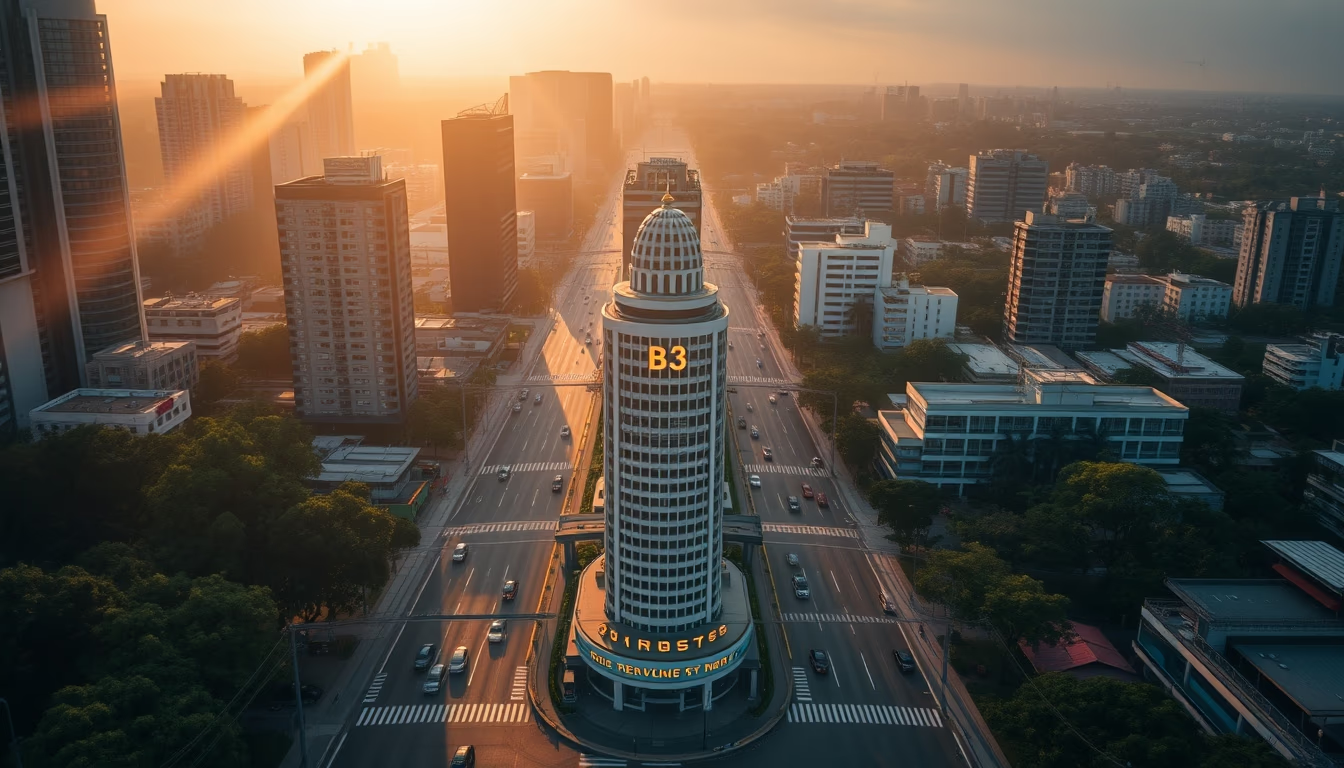 Aerial view of São Paulo financial district at golden hour with B3 building
 Aerial view of São Paulo financial district at golden hour with B3 building
 Aerial view of São Paulo financial district at golden hour with B3 building
 Aerial view of São Paulo financial district at golden hour with B3 building
 Aerial view of São Paulo financial district at golden hour with B3 building
 Aerial view of São Paulo financial district at golden hour with B3 building