Retired investor reviewing real estate fund portfolio
1344×768 · AVIF · CC BY 4.0

Retired investor reviews his real estate fund portfolio on an overcast day, reflecting on passive income and long-term strategies in the Brazilian market.
About this subject
Real estate funds, also known as REITs in the US or FIIs in Brazil, are investment vehicles that pool capital from multiple investors to invest in real estate assets such as corporate offices, shopping malls, logistics warehouses, and mortgage-backed securities. In Brazil, FIIs have gained popularity especially among retirees seeking monthly income exempt from income tax for individuals, provided the fund has more than 50 unitholders and units are traded on the stock exchange. The distribution of earnings is mandatory by law, requiring at least 95% of the profit calculated semi-annually.
The Brazilian FII market is one of the most developed in Latin America, with over 400 funds listed on B3 and net assets exceeding R$ 200 billion. Analyzing an FII portfolio involves evaluating indicators such as dividend yield, vacancy rate, average lease term, and tenant quality. Experienced investors often diversify across segments to mitigate risks, such as exposure to economic cycles and interest rate fluctuations.
For a retired investor, periodic portfolio review is crucial to align investments with cash flow needs and risk tolerance. On overcast days or during market instability, the tendency is to reassess positions and seek assets with more predictable income. The macroeconomic scenario, especially the Selic rate and inflation, directly impacts FII performance, as it influences credit costs and the attractiveness of real assets.
Interestingly, the first Brazilian real estate fund was created in 1993, but the market only took off after 2008 with CVM regulation that allowed greater transparency and liquidity. Today, FIIs are a democratic alternative to direct real estate investment, enabling small investors to participate in large developments with low initial capital.
Frequently Asked Questions
What are the main indicators to evaluate a real estate fund?
Key indicators include dividend yield, vacancy rate, average lease term, and tenant quality. It is also important to analyze the fund's distribution history and management quality.
Are real estate funds exempt from income tax for individuals in Brazil?
Yes, distributions from FIIs are exempt from income tax for individuals, provided the fund has more than 50 unitholders and units are traded on the stock exchange. However, capital gains from selling units are taxed at 20%.
How does the Selic rate affect real estate funds?
The Selic rate influences credit costs and risk appetite. When Selic rises, fixed-income securities become more attractive, pressuring FIIs. Conversely, low interest rates favor real estate funds by increasing demand for real assets and reducing financing costs.
Direct URL
https://pub-c7d6a6ea828543ac903a74a341ccb2e1.r2.dev/imagens/retired-investor-reviewing-real-estate-fund-portfolio-editorial-overcast-daytime.avifHow to credit
Include a visible link back to UtilizAí. Copy one of the snippets below:
<a href="https://xn--utiliza-eza.com/en/midia/imagens/retired-investor-reviewing-real-estate-fund-portfolio-editorial-overcast-daytime">Retired investor reviewing real estate fund portfolio</a> by <a href="https://xn--utiliza-eza.com">UtilizAí</a>, licensed under <a href="https://creativecommons.org/licenses/by/4.0/">CC BY 4.0</a>.
[Retired investor reviewing real estate fund portfolio](https://xn--utiliza-eza.com/en/midia/imagens/retired-investor-reviewing-real-estate-fund-portfolio-editorial-overcast-daytime) by [UtilizAí](https://xn--utiliza-eza.com), CC BY 4.0
License: CC-BY-4.0
Tags
Related images
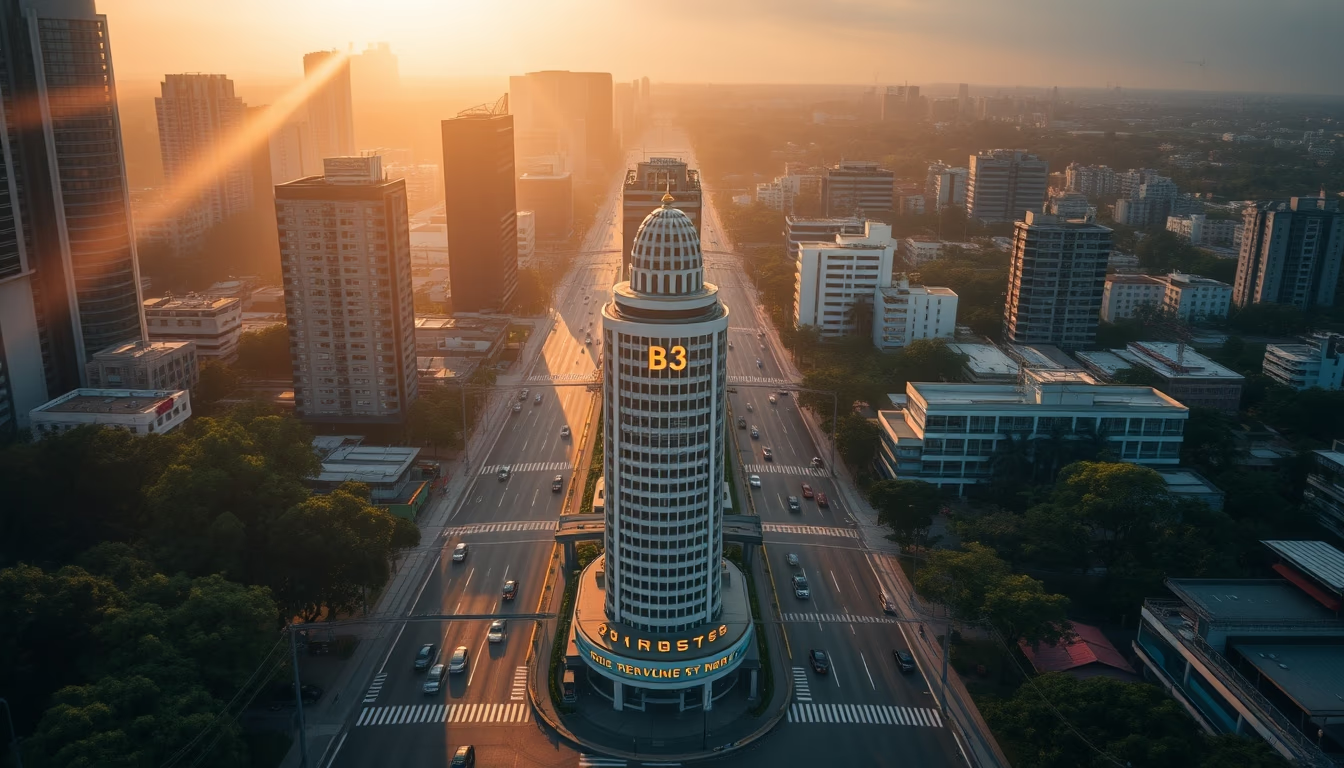 Aerial view of São Paulo financial district at golden hour with B3 building
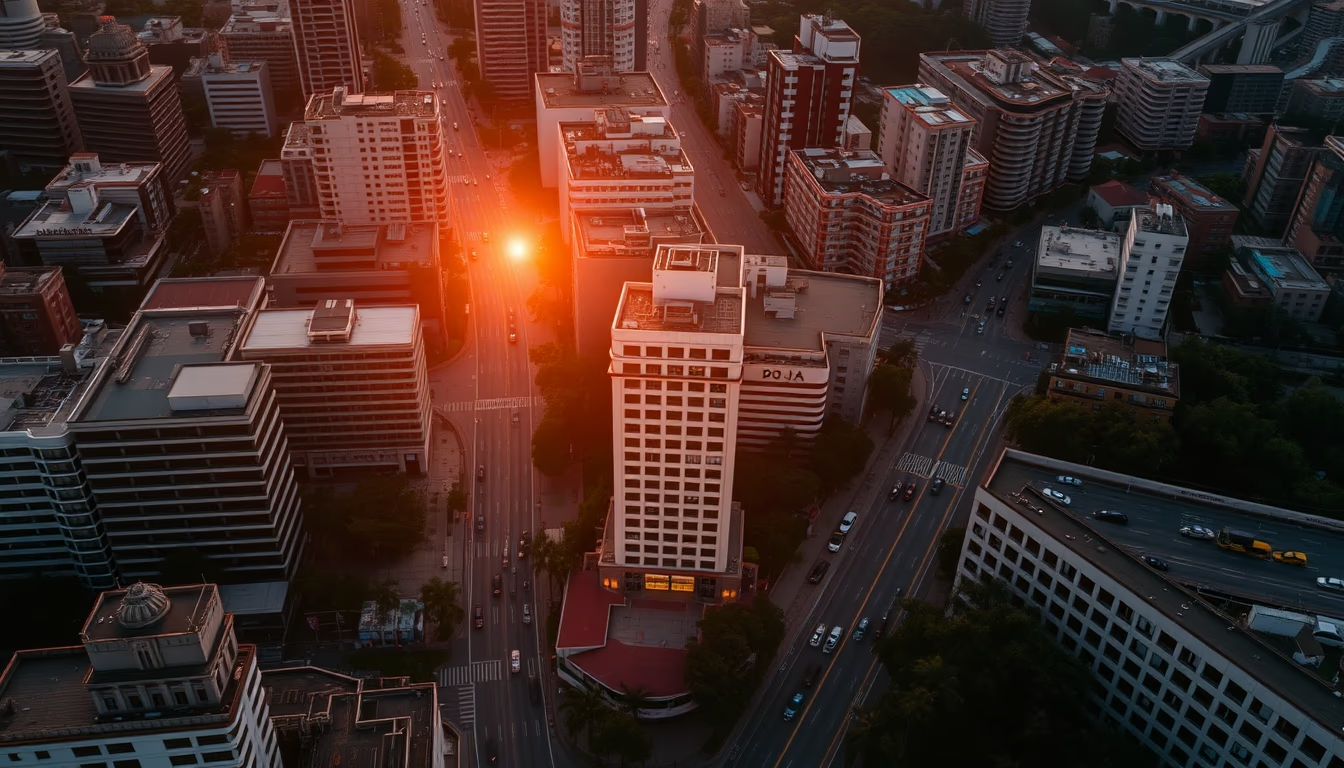 Aerial view of São Paulo financial district at golden hour with B3 building
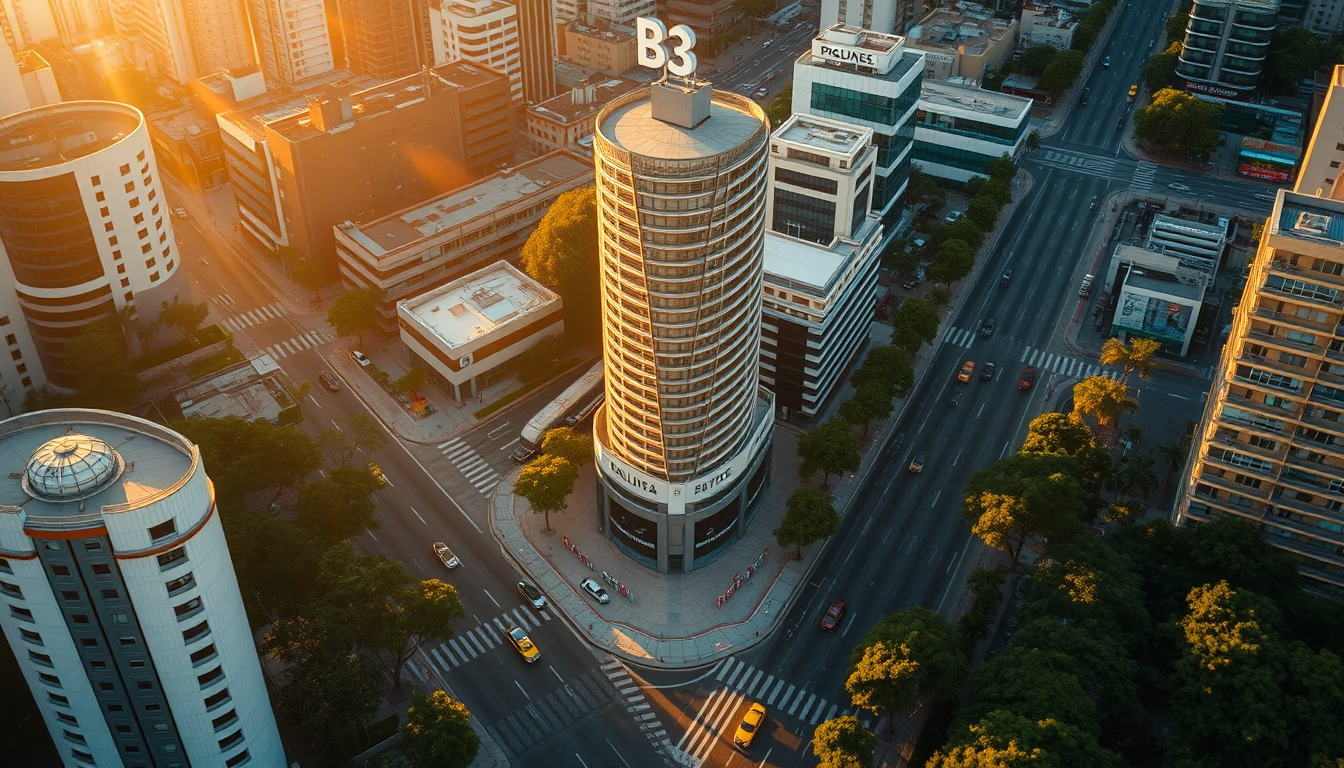 Aerial view of São Paulo financial district at golden hour with B3 building
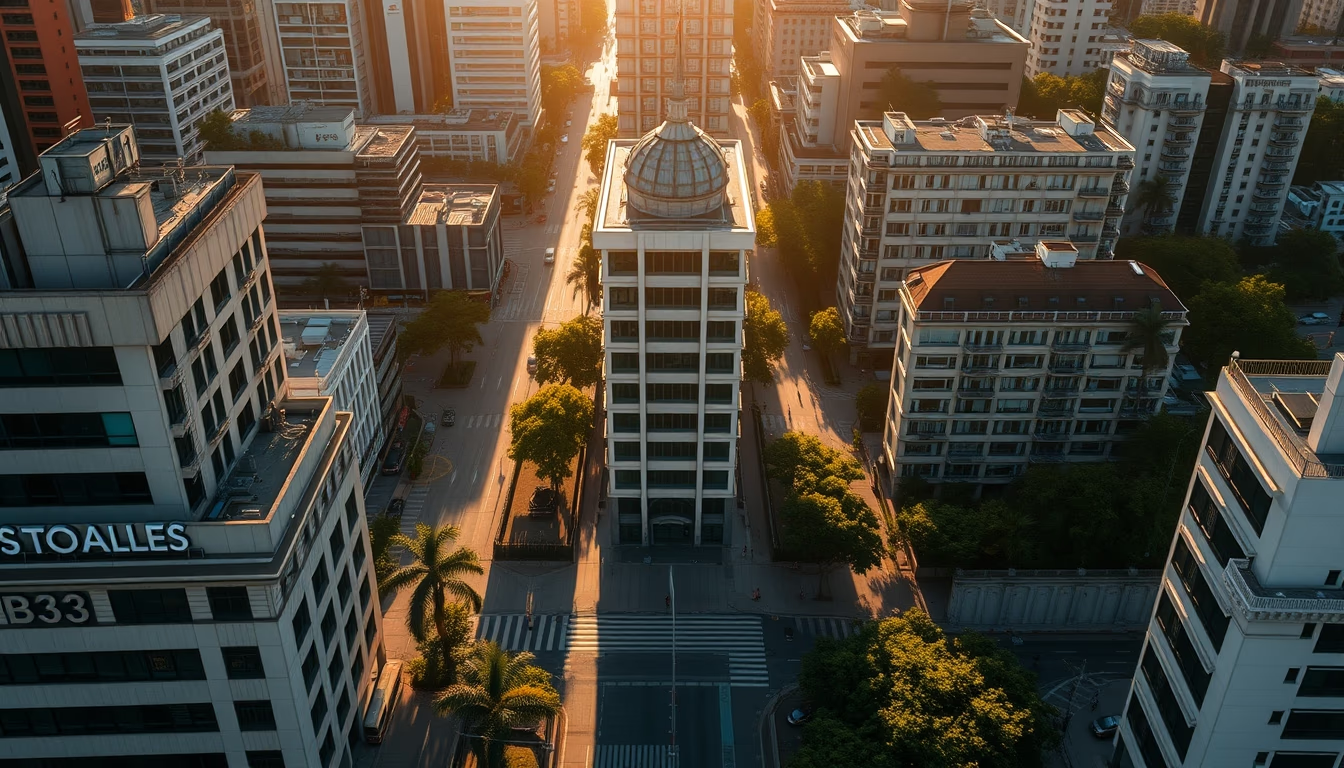 Aerial view of São Paulo financial district at golden hour with B3 building
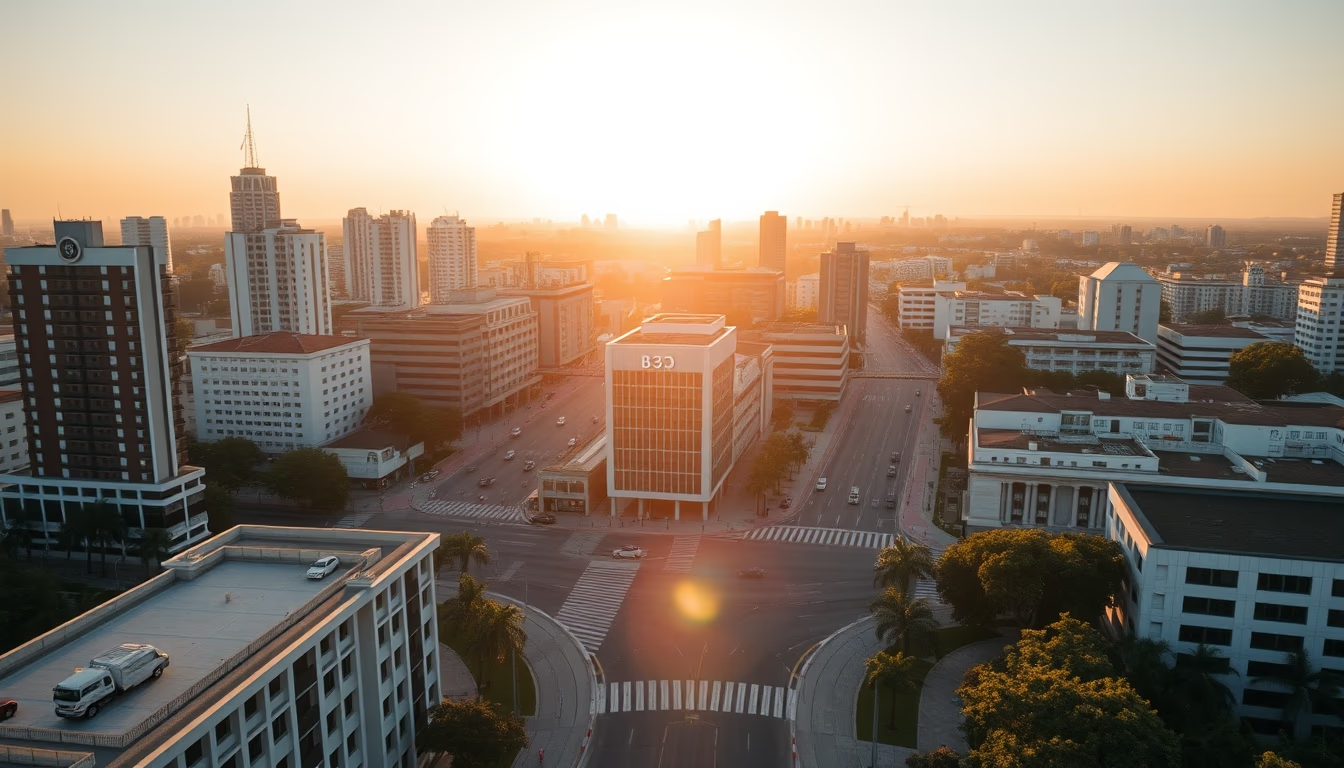 Aerial view of São Paulo financial district at golden hour with B3 building
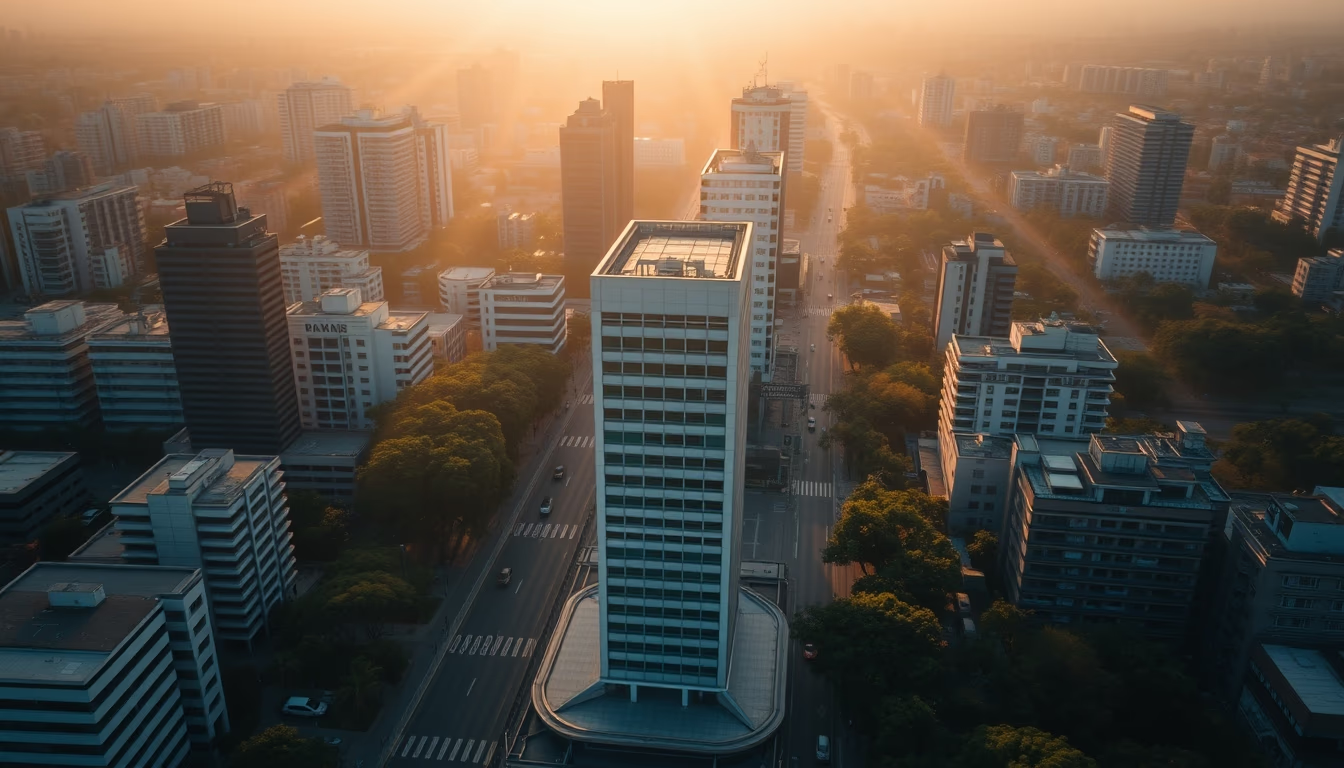 Aerial view of São Paulo financial district at golden hour with B3 building