Rappel rope cliff
1344×768 · AVIF · CC BY 4.0
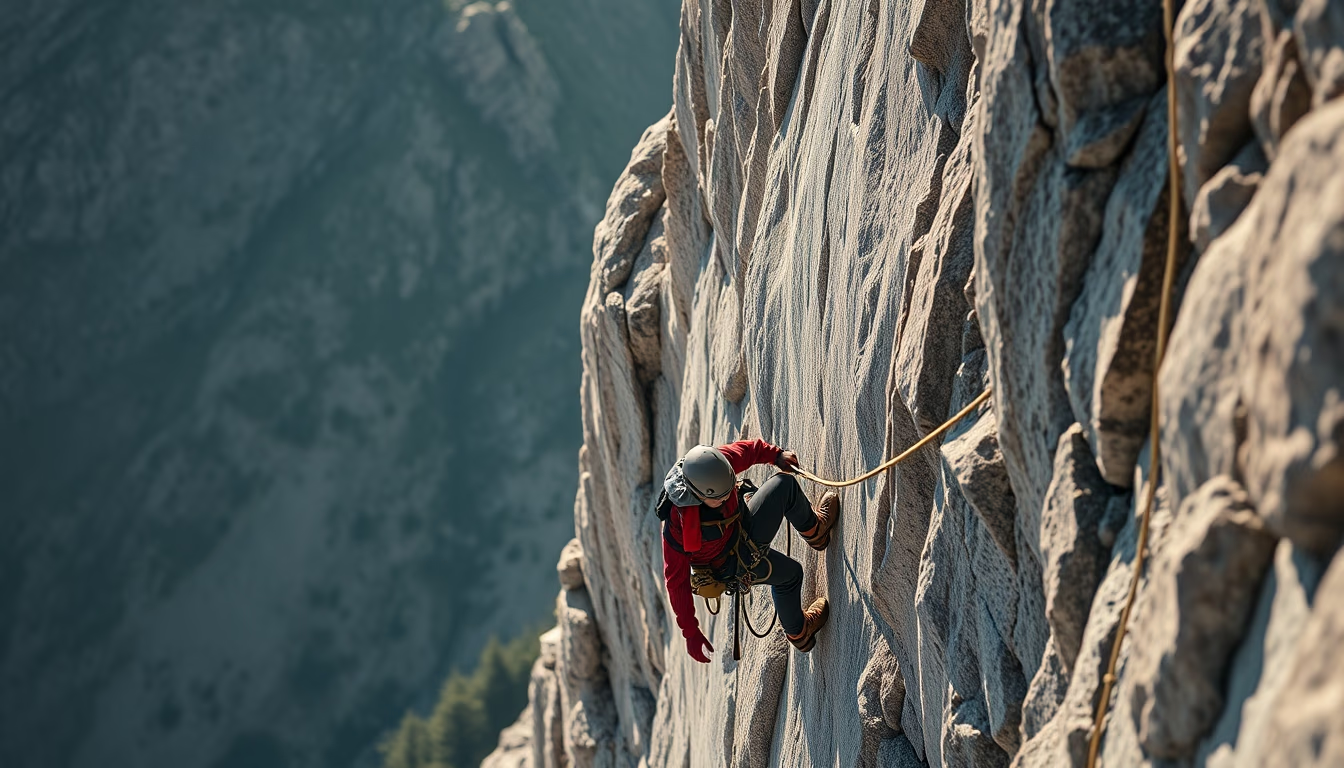
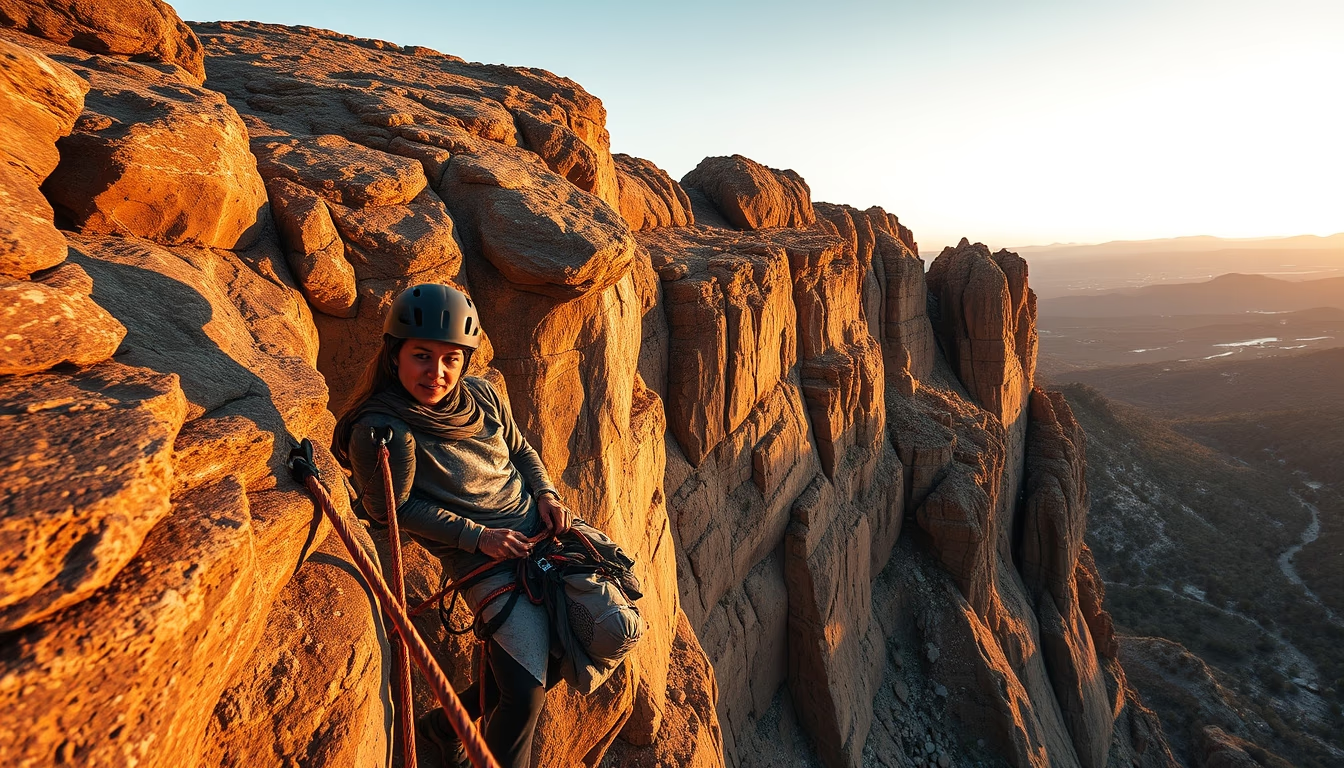
Rappelling on a cliff, a controlled vertical descent technique used in mountaineering, rescue operations, and adventure sports.
About this subject
Rappelling, also known as abseiling, is a controlled vertical descent technique using ropes. It is widely applied in mountaineering, climbing, rescue operations, military maneuvers, and adventure sports. The technique involves sliding down a fixed rope from a top anchor point while using a friction device, such as a figure-eight descender, a reverso, or a grigri, to regulate speed. The practitioner must wear a harness, carabiners, gloves, and a helmet, and master essential knots like the figure-eight or anchor knot.
The origins of rappelling trace back to the early days of mountaineering in the Alps, but it was systematized by Italian climber Emilio Comici and later by alpine rescue teams. Today, rappelling is a mandatory skill in climbing courses and vertical safety training. Iconic walls like El Capitan in Yosemite National Park and Sugarloaf Mountain in Rio de Janeiro are classic venues for the practice.
In rescue contexts, rappelling enables firefighters and first responders to quickly and safely access victims in canyons, buildings, or caves. The technique requires redundant anchor points and backup knots (e.g., prusik knots). Variations include military rappelling using steel cables and tandem rappelling for team descents. Dynamic ropes, with controlled elasticity, are preferred to minimize shock loads.
A notable feat: the longest continuous rappel was achieved in Hang Son Doong cave, Vietnam, exceeding 800 meters. In Brazil, waterfall rappelling (canyoning) is popular in regions like Serra da Bocaina and Brotas. Regardless of location, adherence to safety protocols and environmental respect is critical: avoid damaging rock or vegetation, and never rappel alone without experienced supervision.
Frequently Asked Questions
What is the difference between rappelling and zip-lining?
Rappelling is a vertical descent controlled by a friction device; zip-lining involves sliding horizontally or on a slope along a tensioned cable, typically faster.
What essential gear is needed for safe rappelling?
Dynamic rope, harness, locking carabiners, a descender device, helmet, gloves, and a backup knot such as a prusik knot.
Can you rappel without experience?
No, rappelling requires technical training and supervision by a qualified instructor. The technique carries serious fall risks if performed incorrectly.
Direct URL
https://pub-c7d6a6ea828543ac903a74a341ccb2e1.r2.dev/imagens/rappel-rope-cliff-documentary-photography-p5.avifHow to credit
Include a visible link back to UtilizAí. Copy one of the snippets below:
<a href="https://xn--utiliza-eza.com/en/midia/imagens/rappel-rope-cliff-documentary-photography-p5">Rappel rope cliff</a> by <a href="https://xn--utiliza-eza.com">UtilizAí</a>, licensed under <a href="https://creativecommons.org/licenses/by/4.0/">CC BY 4.0</a>.
[Rappel rope cliff](https://xn--utiliza-eza.com/en/midia/imagens/rappel-rope-cliff-documentary-photography-p5) by [UtilizAí](https://xn--utiliza-eza.com), CC BY 4.0
License: CC-BY-4.0