Ram memory module ddr5
1344×768 · AVIF · CC BY 4.0
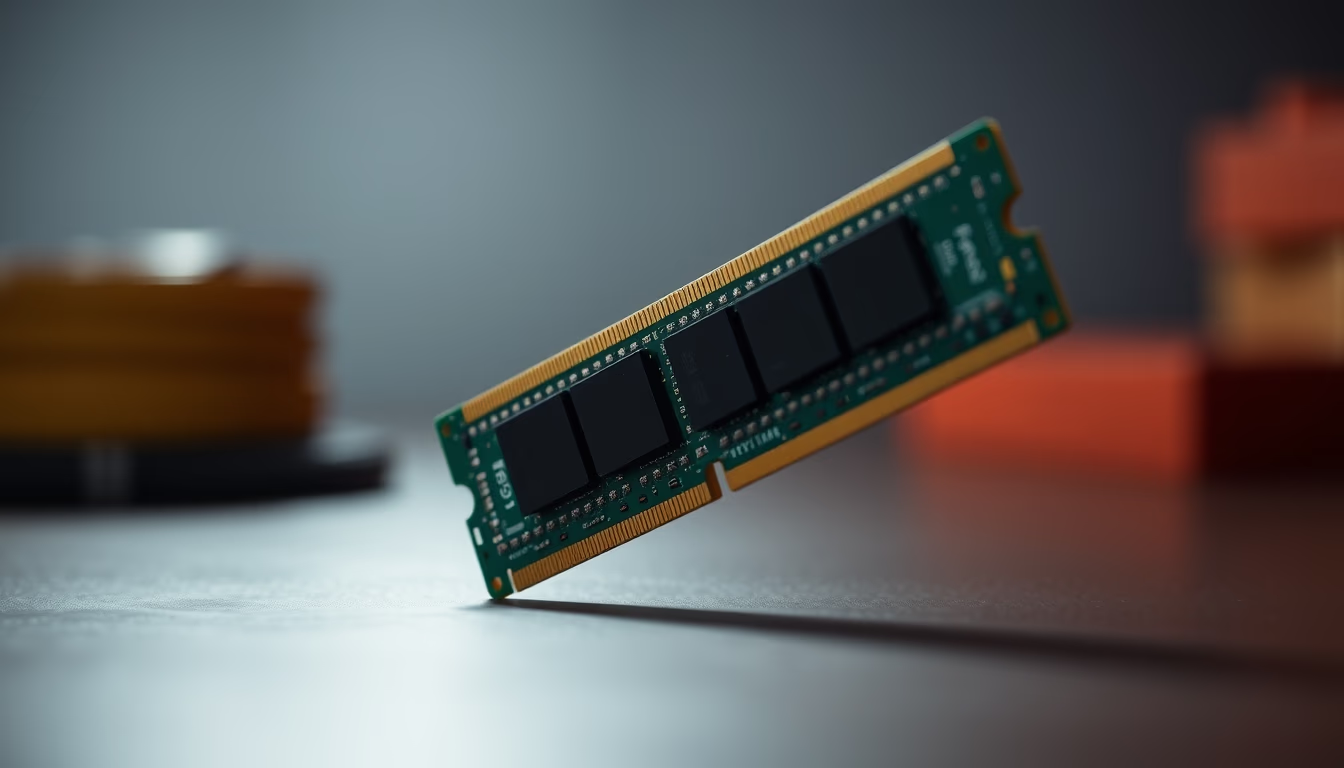
DDR5 is the fifth generation of RAM memory, designed to deliver higher speed and energy efficiency in modern computers.
About this subject
DDR5 (Double Data Rate 5) memory is the latest standard for computer RAM, succeeding DDR4. Officially launched in 2021 by JEDEC (Joint Electron Device Engineering Council), it brings significant improvements in transfer speed and capacity. While DDR4 maxed out at 3200 MT/s, DDR5 starts at 4800 MT/s and can reach 8400 MT/s or higher, allowing modern processors to handle data much faster. Additionally, the operating voltage dropped from 1.2V to 1.1V, contributing to lower power consumption and heat generation.
Architecturally, DDR5 introduces important changes: each module has two independent 32-bit channels (instead of one 64-bit channel), which improves data access efficiency. Module capacity has also increased: while common DDR4 sticks topped out at 32 GB, DDR5 can reach 128 GB per module, thanks to higher density chips and advanced packaging technology. For servers and workstations, DDR5 is essential for handling intensive workloads such as AI, big data analytics, and 3D rendering.
In the consumer market, DDR5 arrived alongside Intel Alder Lake (12th gen) and AMD Ryzen 7000 platforms, becoming the standard for high-performance builds. Despite the initially higher cost, adoption is growing, driven by demand for games and applications requiring high bandwidth. Notably, DDR5 also includes on-die error correction (ODECC), which provides basic protection against bit errors, a feature previously limited to server ECC memory. This increases reliability, especially in systems running 24/7.
Frequently Asked Questions
What is the difference between DDR5 and DDR4?
DDR5 offers higher speeds (starting at 4800 MT/s vs 3200 MT/s for DDR4), larger capacities per module (up to 128 GB vs 32 GB), and lower voltage (1.1V vs 1.2V). It also features two internal 32-bit channels and on-die error correction.
Can I use DDR5 on a DDR4 motherboard?
No. DDR5 is physically incompatible with DDR4 sockets due to different key notch positions and voltage requirements. You need a motherboard and CPU that support DDR5.
Is DDR5 necessary for gaming?
For current games, DDR5 offers performance gains in titles that benefit from higher bandwidth, but the difference between high-frequency DDR4 and DDR5 can be small. In professional applications (video editing, rendering), the impact is more noticeable.
Direct URL
https://pub-c7d6a6ea828543ac903a74a341ccb2e1.r2.dev/imagens/ram-memory-module-ddr5-lo-fi-disposable-camera-p8.avifHow to credit
Include a visible link back to UtilizAí. Copy one of the snippets below:
<a href="https://xn--utiliza-eza.com/en/midia/imagens/ram-memory-module-ddr5-lo-fi-disposable-camera-p8">Ram memory module ddr5</a> by <a href="https://xn--utiliza-eza.com">UtilizAí</a>, licensed under <a href="https://creativecommons.org/licenses/by/4.0/">CC BY 4.0</a>.
[Ram memory module ddr5](https://xn--utiliza-eza.com/en/midia/imagens/ram-memory-module-ddr5-lo-fi-disposable-camera-p8) by [UtilizAí](https://xn--utiliza-eza.com), CC BY 4.0
License: CC-BY-4.0