Ram memory module ddr5
1344×768 · AVIF · CC BY 4.0
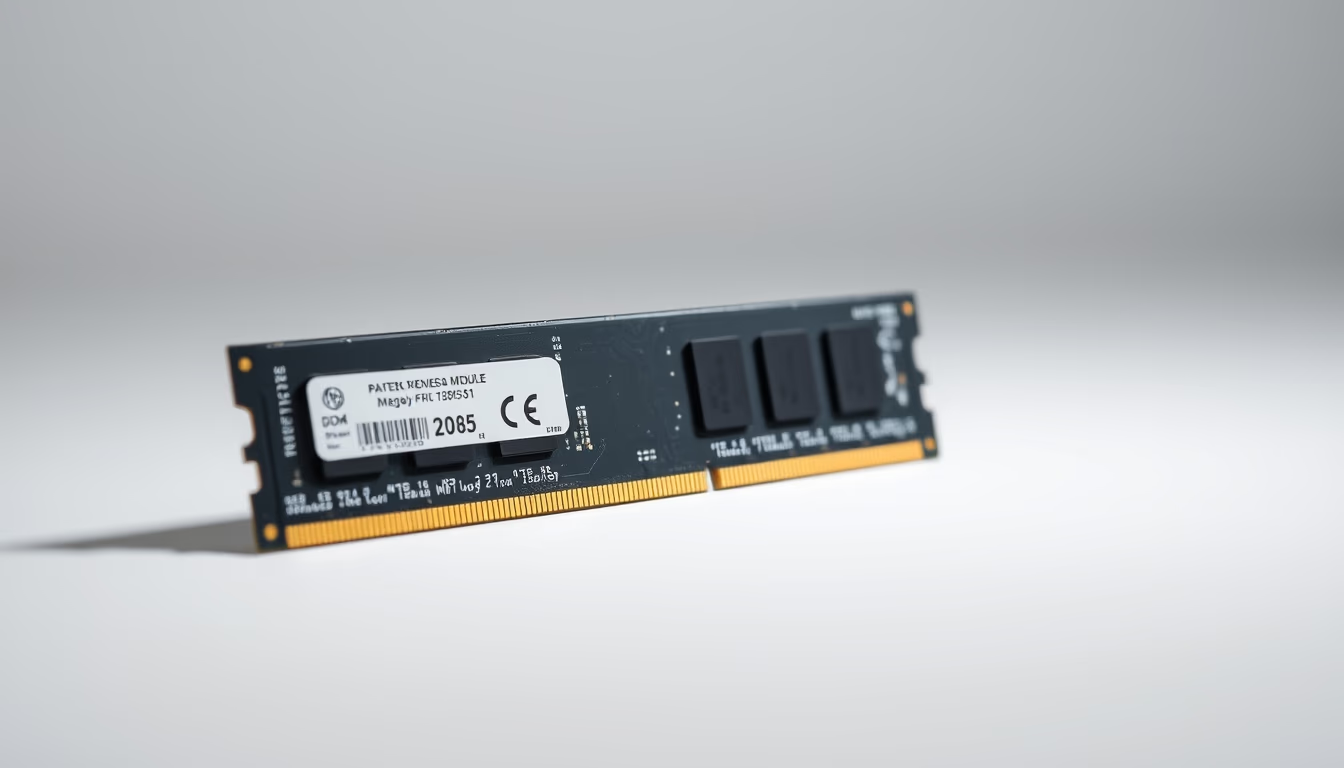
DDR5 RAM memory module, a high-speed standard for modern computers, offering increased bandwidth and energy efficiency.
About this subject
DDR5 RAM is the fifth generation of the Double Data Rate standard, officially launched in 2020 by JEDEC. It represents a significant leap over DDR4, with data transfer rates starting at 4800 MT/s and exceeding 8000 MT/s in high-performance modules. This speed increase is made possible by architectural improvements, such as splitting the data bus into two independent channels per module, reducing latency and boosting efficiency.
Besides speed, DDR5 introduces features like on-die ECC (error correction integrated into the chip) and a lower operating voltage of 1.1V, which reduces power consumption compared to DDR4 (1.2V). The minimum capacity per module has also increased, with common sticks of 16 GB and 32 GB, and future expansion up to 512 GB. This makes it ideal for memory-intensive applications such as video editing, virtualization, and AAA gaming.
The DDR5 market grew rapidly from 2021 onward, driven by Intel's 12th-gen (Alder Lake) and AMD's Ryzen 7000 (Zen 4) processors. Motherboards supporting DDR5 use sockets like LGA1700 and AM5, and memory is sold in kits of one or two modules to leverage dual-channel mode. Notably, DDR5 is not backward compatible with DDR4 motherboards due to physical and electrical differences, requiring specific hardware.
A technical curiosity: each DDR5 module has two independent 32-bit channels, totaling 64 bits per module, whereas DDR4 uses a single 64-bit channel. This improves parallelism and data access efficiency. Additionally, DDR5 allows more aggressive overclocking thanks to voltage regulators (PMIC) built directly into the module, a feature previously handled by the motherboard.
Frequently Asked Questions
What is the difference between DDR5 and DDR4?
DDR5 offers higher speeds (starting at 4800 MT/s vs 2133-3200 MT/s for DDR4), lower voltage (1.1V vs 1.2V), larger capacity per module, and features like on-die ECC and two independent channels per stick.
Is DDR5 compatible with DDR4 motherboards?
No. DDR5 modules have a different notch and pin layout, and require chipset support. You need a motherboard specifically designed for DDR5.
What are the advantages of DDR5 for gaming?
In gaming, DDR5 can improve performance in titles that demand high bandwidth, reducing bottlenecks. However, the gain varies by game and setup, being more noticeable at high resolutions and with modern processors.
Direct URL
https://pub-c7d6a6ea828543ac903a74a341ccb2e1.r2.dev/imagens/ram-memory-module-ddr5-commercial-product-photography-p2.avifHow to credit
Include a visible link back to UtilizAí. Copy one of the snippets below:
<a href="https://xn--utiliza-eza.com/en/midia/imagens/ram-memory-module-ddr5-commercial-product-photography-p2">Ram memory module ddr5</a> by <a href="https://xn--utiliza-eza.com">UtilizAí</a>, licensed under <a href="https://creativecommons.org/licenses/by/4.0/">CC BY 4.0</a>.
[Ram memory module ddr5](https://xn--utiliza-eza.com/en/midia/imagens/ram-memory-module-ddr5-commercial-product-photography-p2) by [UtilizAí](https://xn--utiliza-eza.com), CC BY 4.0
License: CC-BY-4.0