Quantum computer chip
1344×768 · AVIF · CC BY 4.0
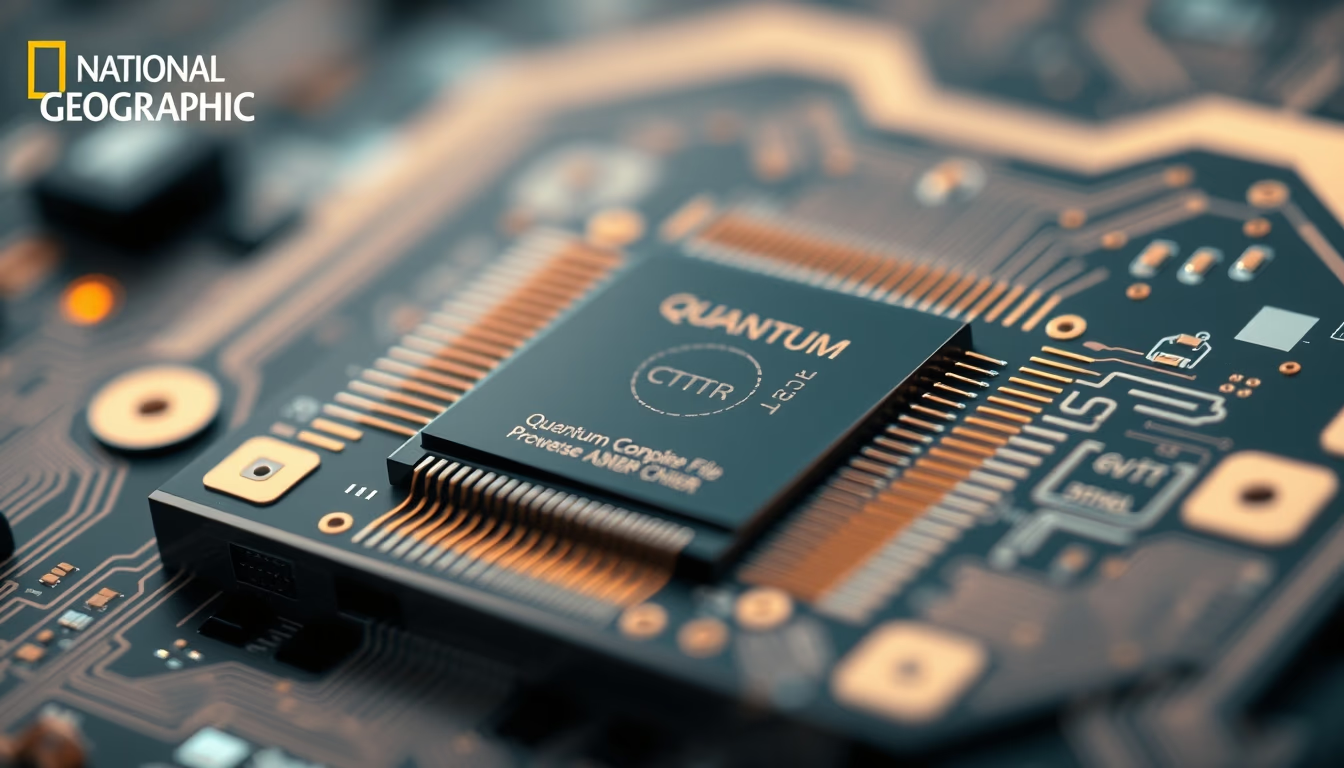
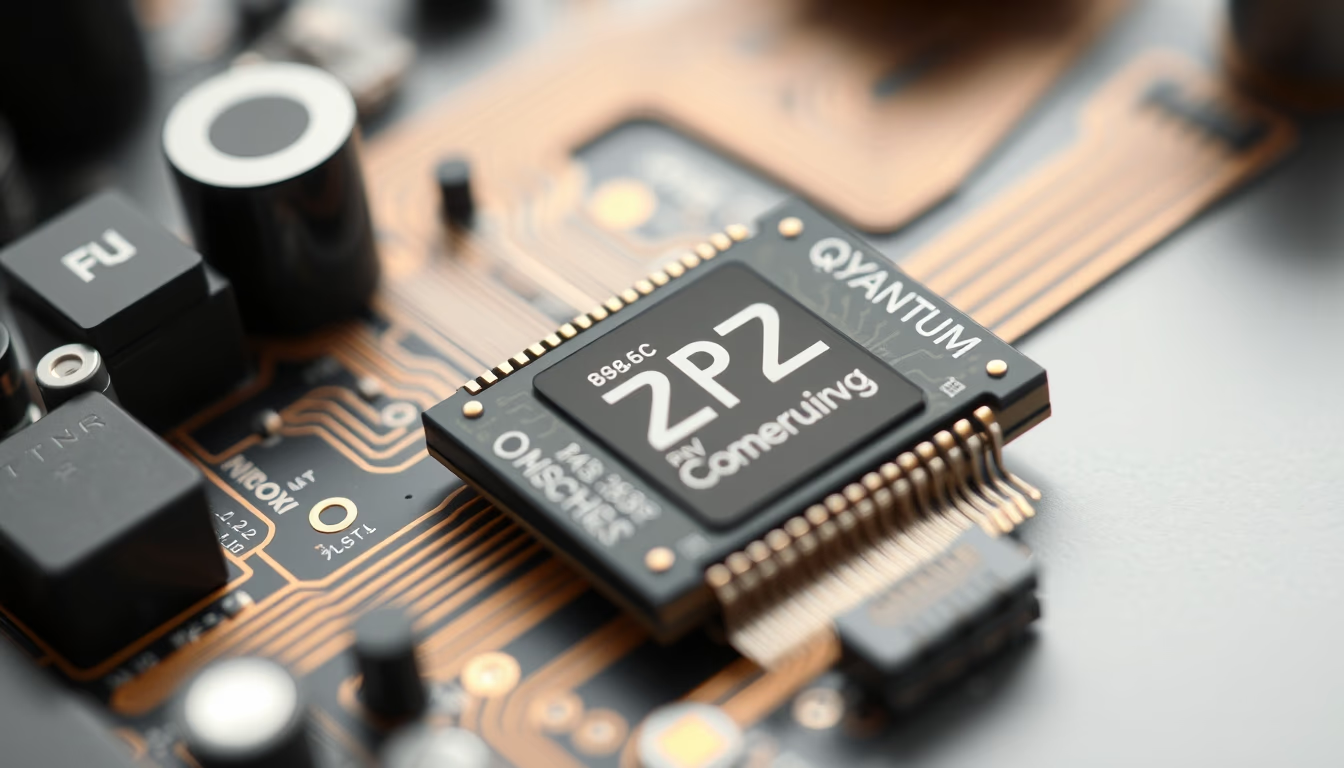
Quantum computer chips represent the frontier of computing, using qubits to process information exponentially faster than classical chips.
About this subject
Quantum computer chips are the fundamental unit of quantum computers, devices that exploit principles of quantum mechanics to perform calculations. Unlike classical chips, which use bits (0 or 1), quantum chips use qubits that can exist in superposition states. This allows a single qubit to represent both 0 and 1 simultaneously, multiplying processing capacity exponentially.
Manufacturing these chips is one of the greatest challenges in modern physics. Companies like IBM, Google, and startups such as Rigetti employ different technologies: superconducting qubits (cooled to near absolute zero), trapped ion qubits, and topological qubits still under development. Each approach has advantages and limitations, such as sensitivity to noise and the need to maintain quantum coherence.
Currently, the most advanced quantum chips have between 50 and 1000 qubits, but they are not yet capable of performing practical tasks at scale due to high error rates. Quantum error correction is an active research area, essential for fault-tolerant quantum computers. In 2023, IBM's Osprey processor reached 433 qubits, while Google's Sycamore processor demonstrated quantum supremacy on a specific problem, completing in seconds tasks that would take thousands of years on classical supercomputers.
Future applications include molecular simulations for drug discovery, supply chain optimization, quantum cryptography, and artificial intelligence. However, experts estimate that practical quantum computers are still one or two decades away. The development of quantum chips requires billion-dollar investments and international collaboration, with countries like the United States, China, and Germany leading the race.
Frequently Asked Questions
What makes a quantum chip different from a classical chip?
Quantum chips use qubits instead of bits, enabling superposition and quantum entanglement. This allows processing multiple combinations of states simultaneously, while classical chips process one state at a time.
What are the main challenges in building quantum chips?
Key challenges include maintaining quantum coherence long enough, minimizing errors from noise and external temperatures, and scaling up the number of qubits without proportionally increasing error rates.
When will we have practical quantum computers for everyday use?
Experts estimate that quantum computers capable of solving practical problems are still 10 to 20 years away. Advances in error correction and chip architectures are necessary before widespread adoption.
Direct URL
https://pub-c7d6a6ea828543ac903a74a341ccb2e1.r2.dev/imagens/quantum-computer-chip-national-geographic-style-p0.avifHow to credit
Include a visible link back to UtilizAí. Copy one of the snippets below:
<a href="https://xn--utiliza-eza.com/en/midia/imagens/quantum-computer-chip-national-geographic-style-p0">Quantum computer chip</a> by <a href="https://xn--utiliza-eza.com">UtilizAí</a>, licensed under <a href="https://creativecommons.org/licenses/by/4.0/">CC BY 4.0</a>.
[Quantum computer chip](https://xn--utiliza-eza.com/en/midia/imagens/quantum-computer-chip-national-geographic-style-p0) by [UtilizAí](https://xn--utiliza-eza.com), CC BY 4.0
License: CC-BY-4.0