Quantum computer chip
1344×768 · AVIF · CC BY 4.0
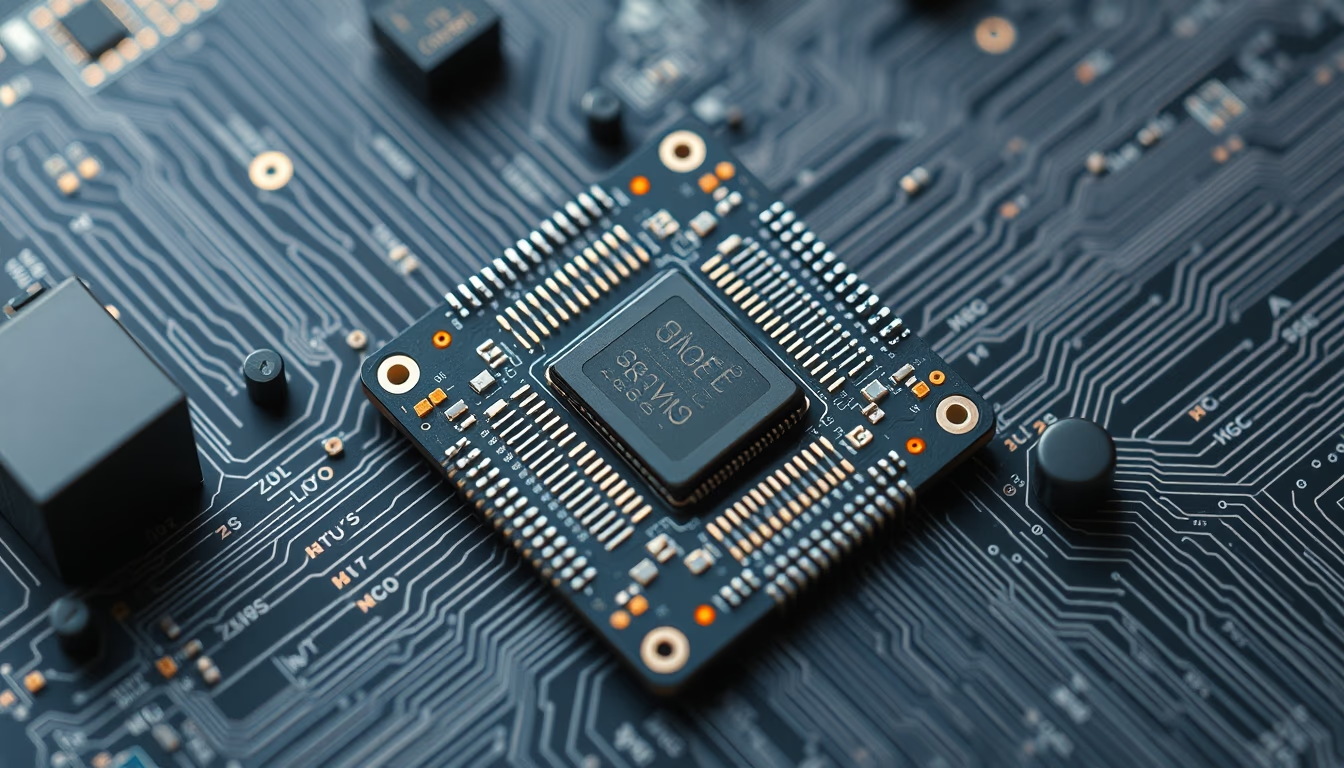
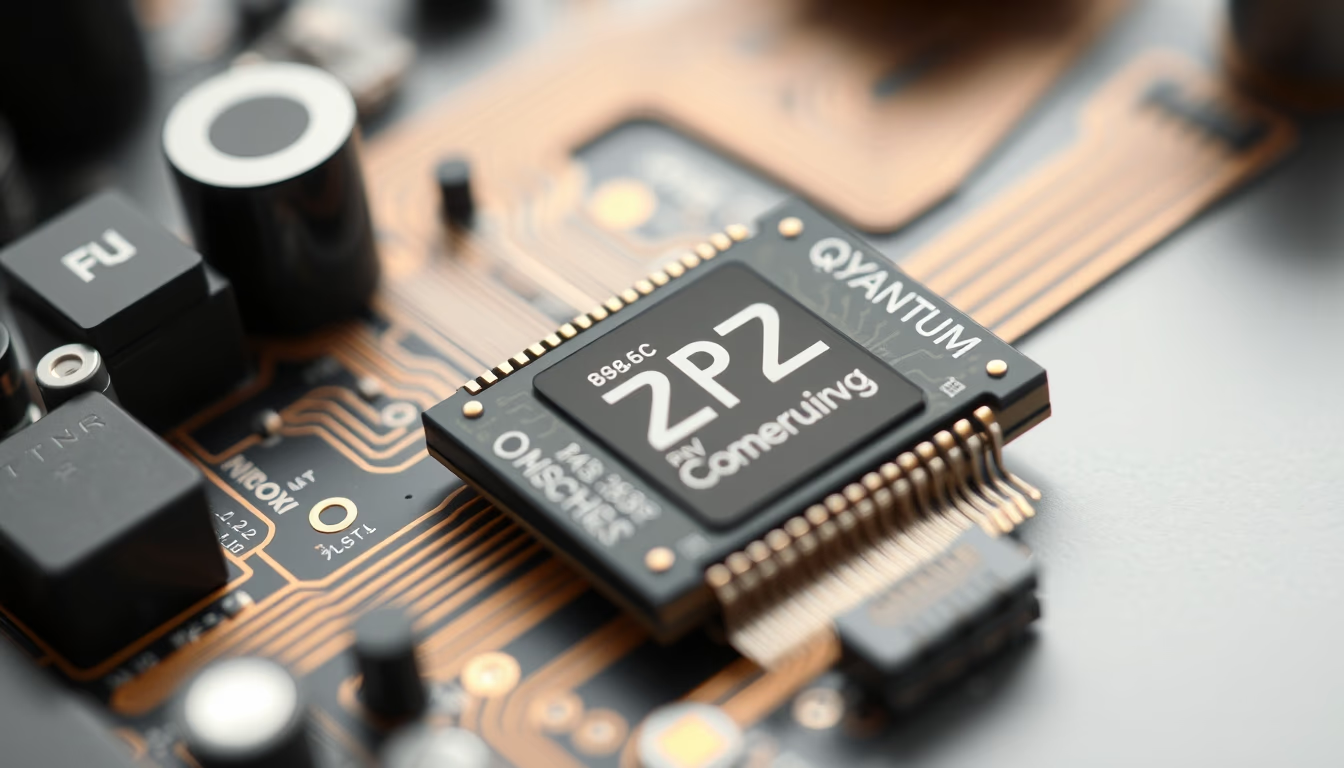
Quantum computer chips leverage qubits to process information exponentially faster than classical chips.
About this subject
A quantum computer chip is the core component of a quantum computer, designed to store and manipulate qubits, the fundamental unit of quantum information. Unlike classical bits that are either 0 or 1, qubits can exist in superposition of both states simultaneously due to quantum mechanical phenomena. This property allows quantum computers to perform certain complex calculations, such as factoring large numbers and simulating molecular interactions, exponentially faster than classical computers.
Quantum chips are fabricated using various technologies, including superconductors (used by Google and IBM), trapped ions, quantum dots, and topological qubits. Each approach has distinct advantages and challenges, such as the need for extreme cooling near absolute zero for superconducting qubits. The chip itself consists of resonators, Josephson junctions, and control lines, all microfabricated on substrates like silicon or sapphire.
Current quantum chips still face scalability and decoherence issues, where the quantum state degrades due to environmental interactions. Research focuses on improving quantum error correction and increasing the number of coherent qubits. In 2024, IBM unveiled its 'Heron' chip with 133 qubits, while Google's 'Sycamore' chip with 53 qubits demonstrated quantum supremacy. The future aims for chips with thousands of qubits, potentially revolutionizing cryptography, drug discovery, and artificial intelligence.
Frequently Asked Questions
How does a quantum chip differ from a classical chip?
A classical chip uses bits (0 or 1) and deterministic logic gates. A quantum chip uses qubits that can be in superposition and quantum gates that leverage phenomena like entanglement to process information in parallel.
What temperature is required to operate a superconducting quantum chip?
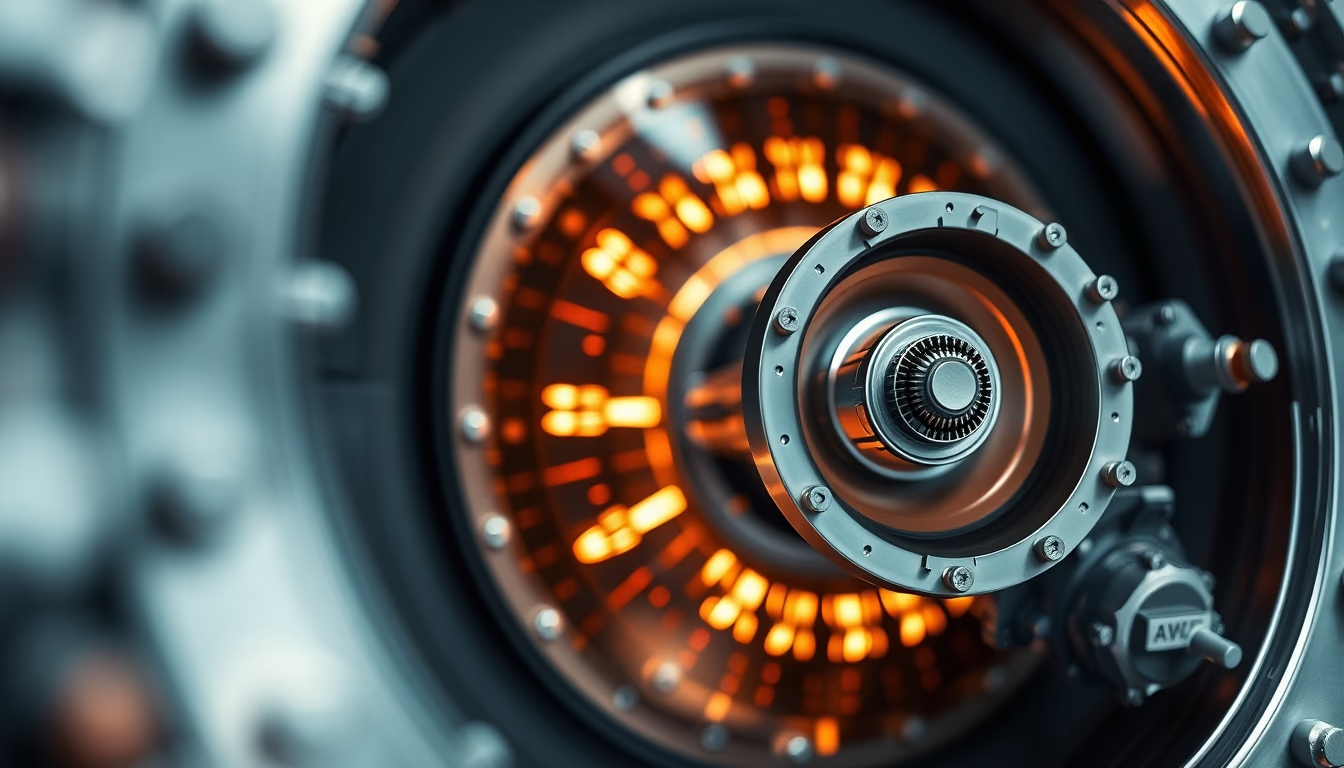
Superconducting chips need to be cooled below 20 millikelvin (about -273°C), close to absolute zero, so that superconducting qubits maintain coherence.
What is quantum decoherence?
Decoherence is the loss of a qubit's quantum state due to interactions with the environment (vibrations, radiation, etc.), destroying superposition and entanglement. It is a major challenge for building practical quantum computers.
Direct URL
https://pub-c7d6a6ea828543ac903a74a341ccb2e1.r2.dev/imagens/quantum-computer-chip-isometric-flat-lay-p7.avifHow to credit
Include a visible link back to UtilizAí. Copy one of the snippets below:
<a href="https://xn--utiliza-eza.com/en/midia/imagens/quantum-computer-chip-isometric-flat-lay-p7">Quantum computer chip</a> by <a href="https://xn--utiliza-eza.com">UtilizAí</a>, licensed under <a href="https://creativecommons.org/licenses/by/4.0/">CC BY 4.0</a>.
[Quantum computer chip](https://xn--utiliza-eza.com/en/midia/imagens/quantum-computer-chip-isometric-flat-lay-p7) by [UtilizAí](https://xn--utiliza-eza.com), CC BY 4.0
License: CC-BY-4.0