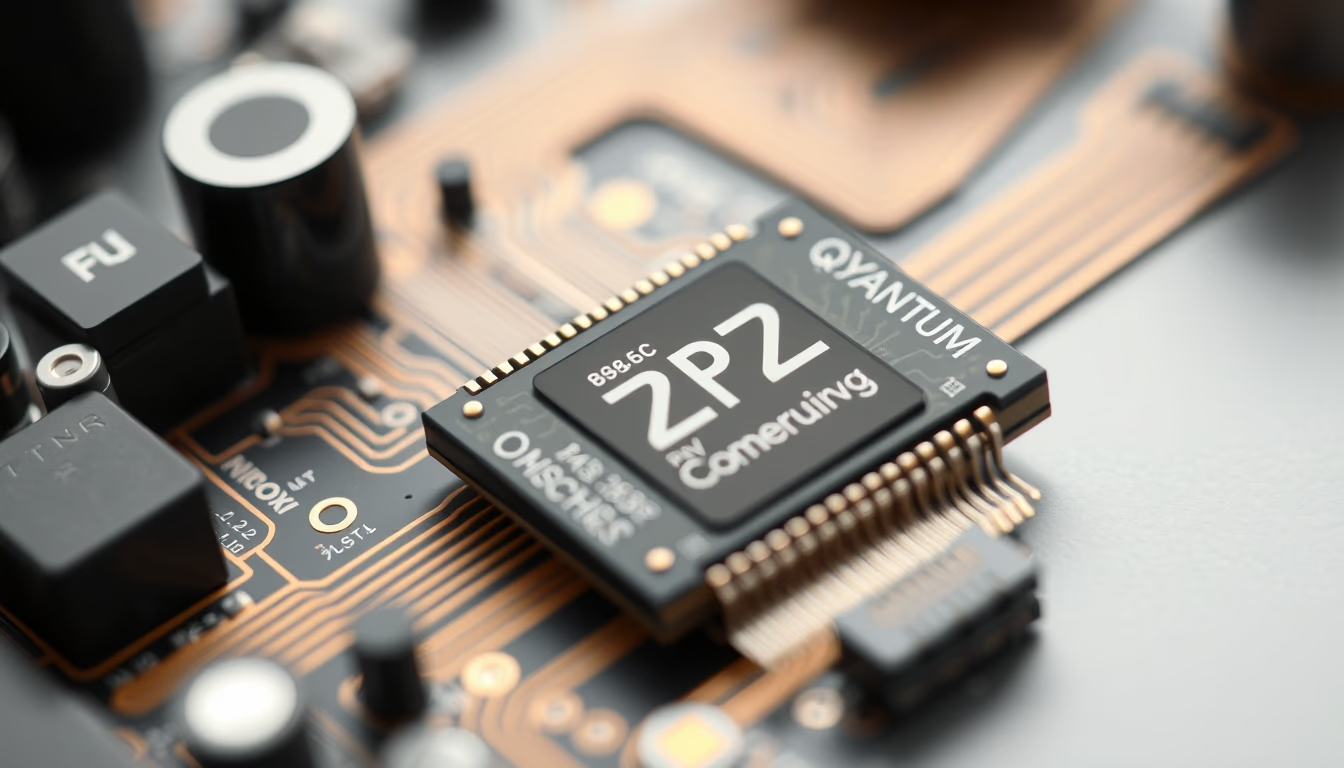
Quantum computer chip
1344×768 · AVIF · CC BY 4.0
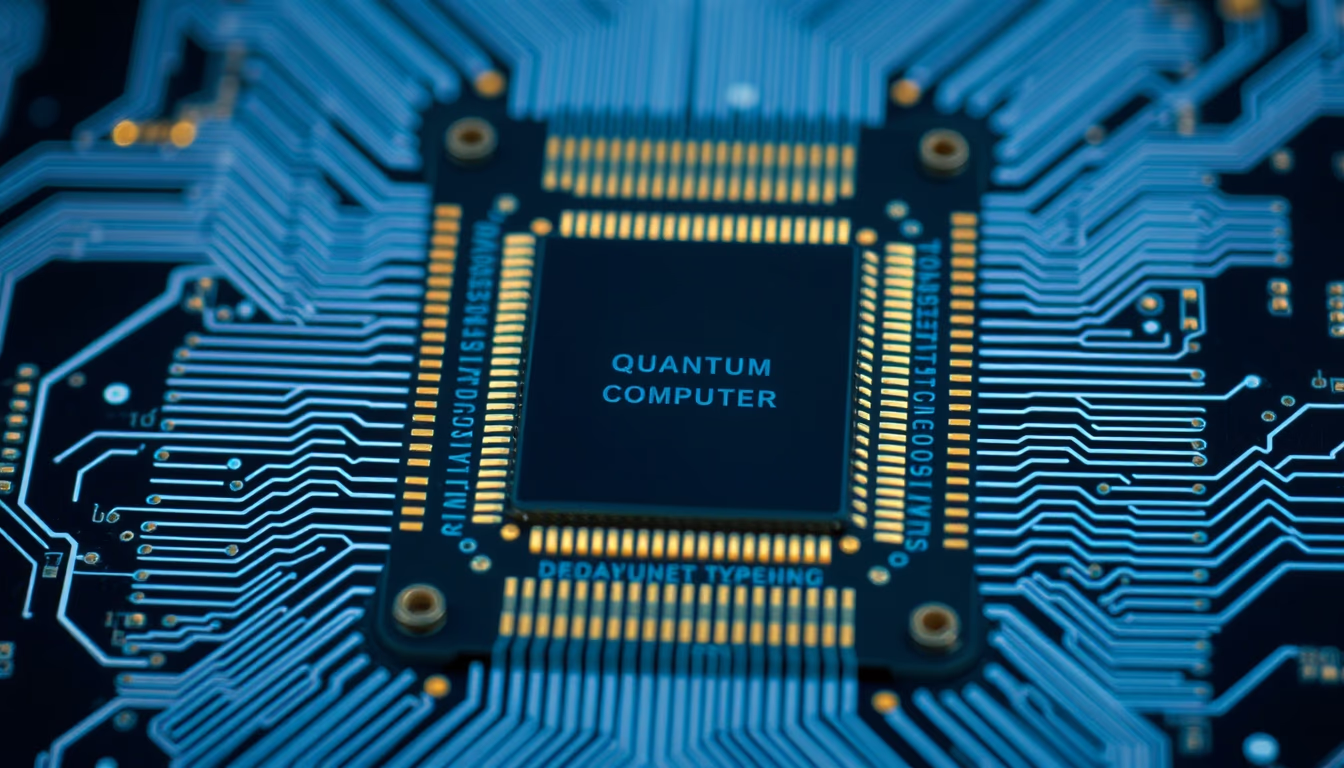
The quantum computer chip is the core component of quantum computers, using qubits to process information exponentially faster than classical chips.
About this subject
The quantum computer chip represents a revolution in computing. Unlike classical chips that use bits (0 or 1), quantum chips employ qubits, which can be in superposition states, allowing multiple calculations simultaneously. This property, along with quantum entanglement, gives quantum computers the potential to solve complex problems in cryptography, molecular simulation, and optimization.
Current approaches to building quantum chips include superconducting circuits (used by IBM and Google), trapped ions (IonQ), and quantum dots. Superconducting chips operate near absolute zero in dilution refrigerators to minimize thermal noise and maintain qubit coherence. Qubit counts have increased: IBM's Osprey processor, launched in 2022, has 433 qubits, while Google's Sycamore reached 53 qubits in 2019.
A major challenge is error correction, as qubits are extremely sensitive to external interference. Error-correcting codes use multiple physical qubits to form a reliable logical qubit. Practical quantum computers are expected to require thousands of logical qubits, which is still under development. Fabrication requires ultra-high vacuum environments and atomic-precision lithography.
Real-world impact is emerging. In 2019, Google claimed quantum supremacy with its Sycamore chip, solving in 200 seconds a problem that would take thousands of years on a classical supercomputer. Though debated, it marks a milestone. Today, governments and companies invest billions in the quantum race, with predictions that transformative commercial applications will appear in the next 10 to 20 years.
Frequently Asked Questions
What is a quantum computer chip?
It is the processor of a quantum computer, consisting of qubits (quantum bits) that can represent 0, 1, or both simultaneously (superposition). This enables much faster information processing for certain problems compared to classical chips.
How do quantum chips keep qubits stable?
They operate at extremely low temperatures (near absolute zero) to reduce thermal noise. Magnetic shielding and error correction techniques are also used to preserve qubit coherence.
When will we have practical quantum computers?
There is no exact timeline. Currently chips have tens to hundreds of qubits, but thousands of logical qubits are needed for useful applications. Experts estimate that in 10 to 20 years, systems capable of solving real-world problems may emerge.
Direct URL
https://pub-c7d6a6ea828543ac903a74a341ccb2e1.r2.dev/imagens/quantum-computer-chip-documentary-photography-p10.avifHow to credit
Include a visible link back to UtilizAí. Copy one of the snippets below:
<a href="https://xn--utiliza-eza.com/en/midia/imagens/quantum-computer-chip-documentary-photography-p10">Quantum computer chip</a> by <a href="https://xn--utiliza-eza.com">UtilizAí</a>, licensed under <a href="https://creativecommons.org/licenses/by/4.0/">CC BY 4.0</a>.
[Quantum computer chip](https://xn--utiliza-eza.com/en/midia/imagens/quantum-computer-chip-documentary-photography-p10) by [UtilizAí](https://xn--utiliza-eza.com), CC BY 4.0
License: CC-BY-4.0