Quantum computer chip detail
1344×768 · AVIF · CC BY 4.0
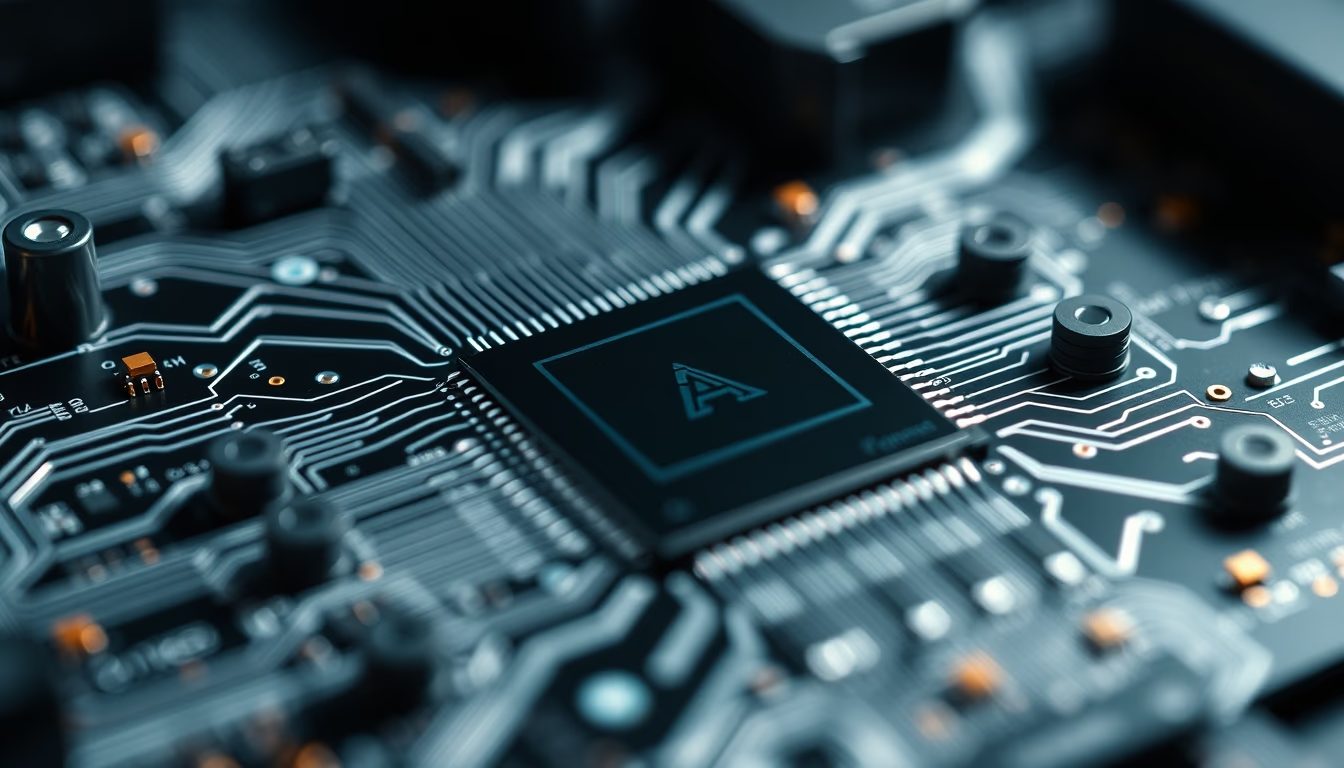
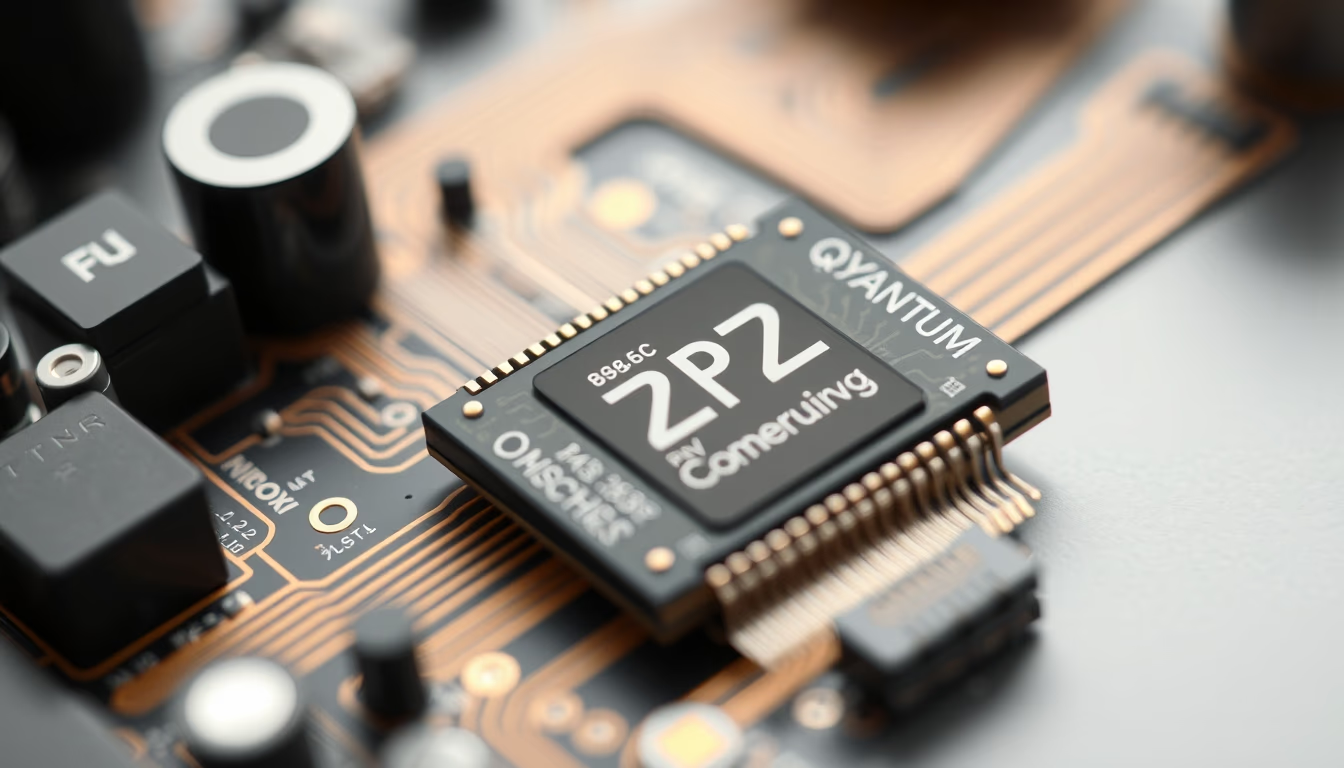
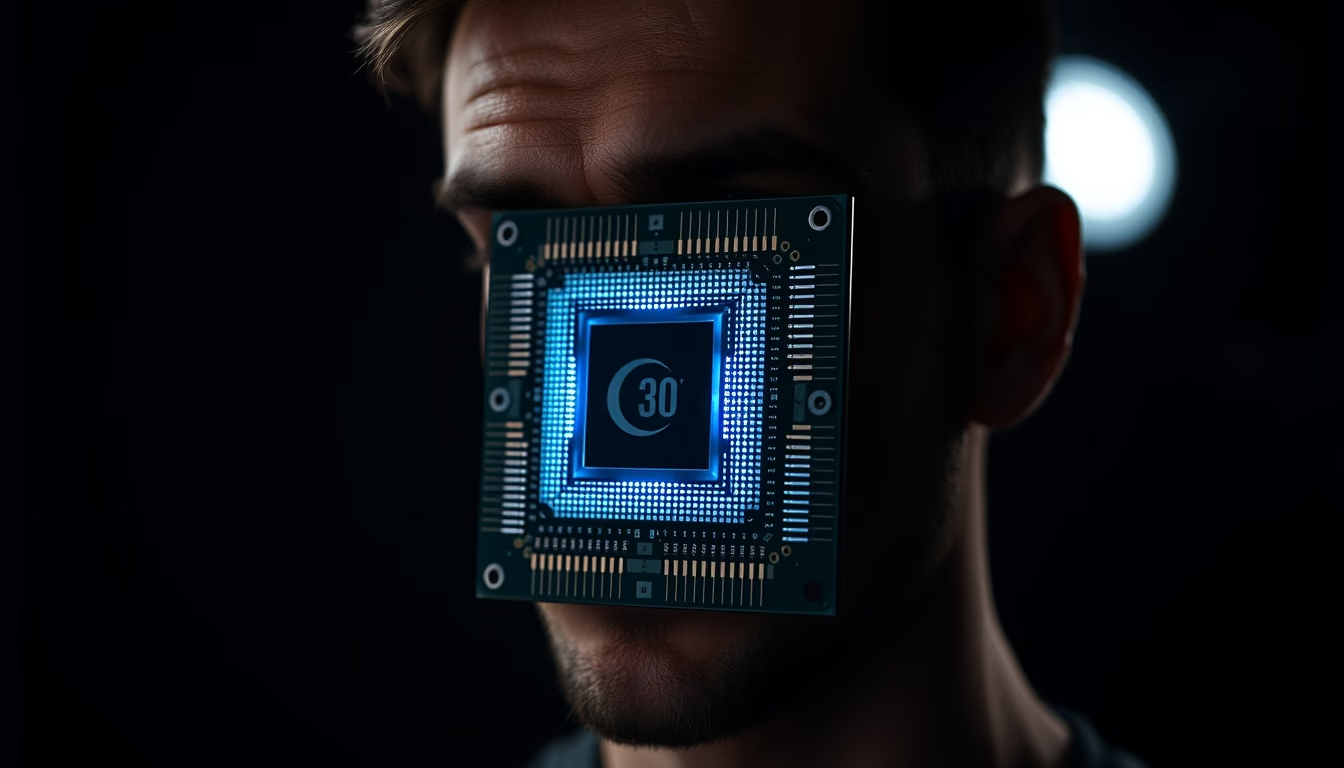
Close-up of a quantum computer chip showcases intricate superconducting qubits and the engineering hurdles in the race for quantum supremacy.
About this subject
A quantum computer chip is the core of a device that harnesses quantum mechanics to process information. Unlike classical chips, which use bits (0 or 1), quantum chips employ qubits that can exist in superposition states. This property enables exponentially faster calculations for specific problems, such as large number factorization or molecular simulation.
Superconducting qubits, common in chips from Google and IBM, are made of materials like niobium or aluminum, cooled to near absolute zero. At that temperature, electric current flows without resistance, allowing qubits to maintain quantum coherence long enough for operations. The detailed chip image reveals the intricate microwave circuits used to control and read out the qubits.
Scalability is a major challenge. Current quantum chips have dozens to hundreds of qubits, but practical applications require millions. Decoherence, the loss of quantum information due to environmental interactions, limits calculation time. Research advances in quantum error correction and novel materials, such as topological qubits, aim to overcome these barriers.
Future applications include quantum cryptography, drug discovery, materials science, and logistics optimization. Despite the promise, we are still in the NISQ (Noisy Intermediate-Scale Quantum) era, where chips are noisy and intermediate in scale, yet already capable of tasks that no classical computer can match.
Frequently Asked Questions
How does a quantum computer chip work?
A quantum chip uses qubits that can represent 0, 1, or both simultaneously through quantum superposition. Microwave pulses manipulate these qubits via superconducting circuits, performing quantum logic operations at cryogenic temperatures.
What is the difference between a qubit and a classical bit?
A classical bit is binary (0 or 1), whereas a qubit can exist in a superposition of both states. Additionally, qubits can be entangled, enabling quantum correlations that exponentially speed up certain computations.
What are the main challenges in building a quantum chip?
Key challenges include decoherence (loss of quantum information), scalability (millions of qubits needed), error correction, and the need for extreme cooling (temperatures below 20 millikelvin).
Direct URL
https://pub-c7d6a6ea828543ac903a74a341ccb2e1.r2.dev/imagens/quantum-computer-chip-detail-magazine-editorial-p11.avifHow to credit
Include a visible link back to UtilizAí. Copy one of the snippets below:
<a href="https://xn--utiliza-eza.com/en/midia/imagens/quantum-computer-chip-detail-magazine-editorial-p11">Quantum computer chip detail</a> by <a href="https://xn--utiliza-eza.com">UtilizAí</a>, licensed under <a href="https://creativecommons.org/licenses/by/4.0/">CC BY 4.0</a>.
[Quantum computer chip detail](https://xn--utiliza-eza.com/en/midia/imagens/quantum-computer-chip-detail-magazine-editorial-p11) by [UtilizAí](https://xn--utiliza-eza.com), CC BY 4.0
License: CC-BY-4.0