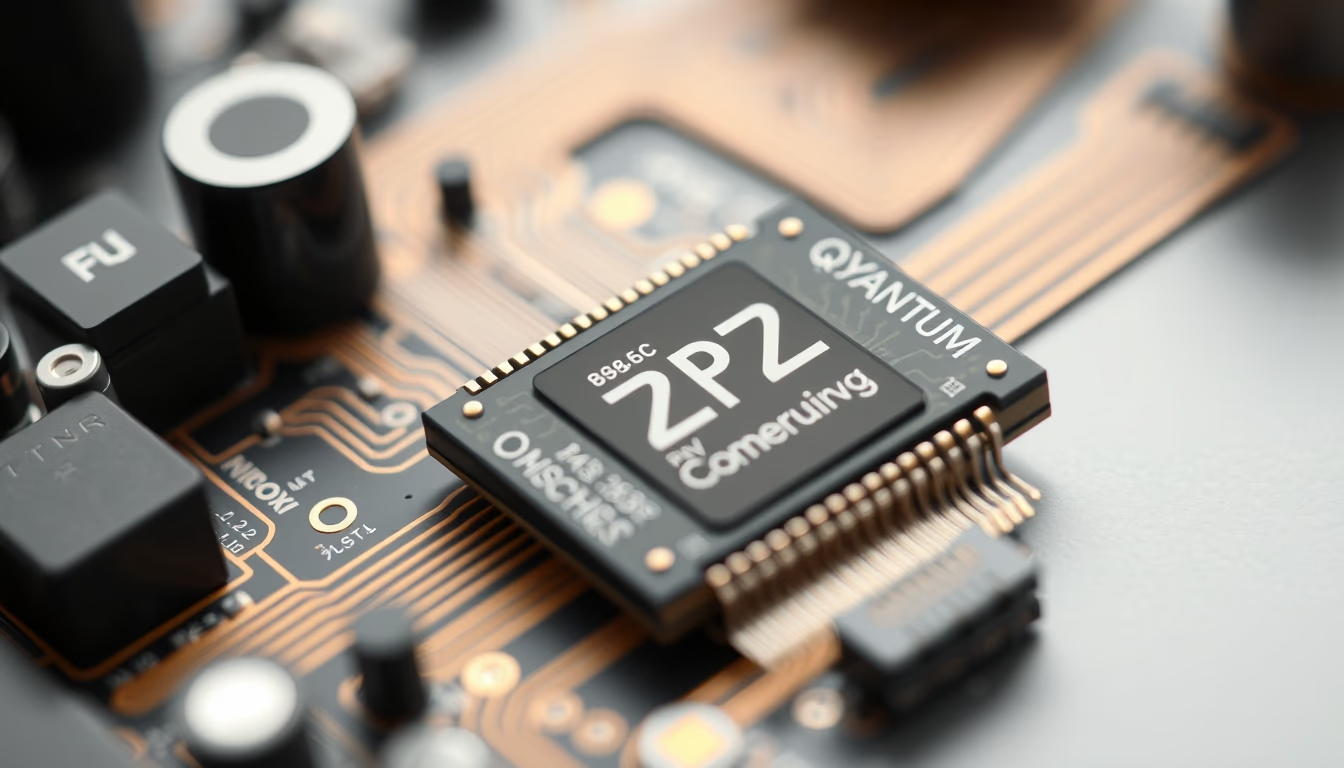
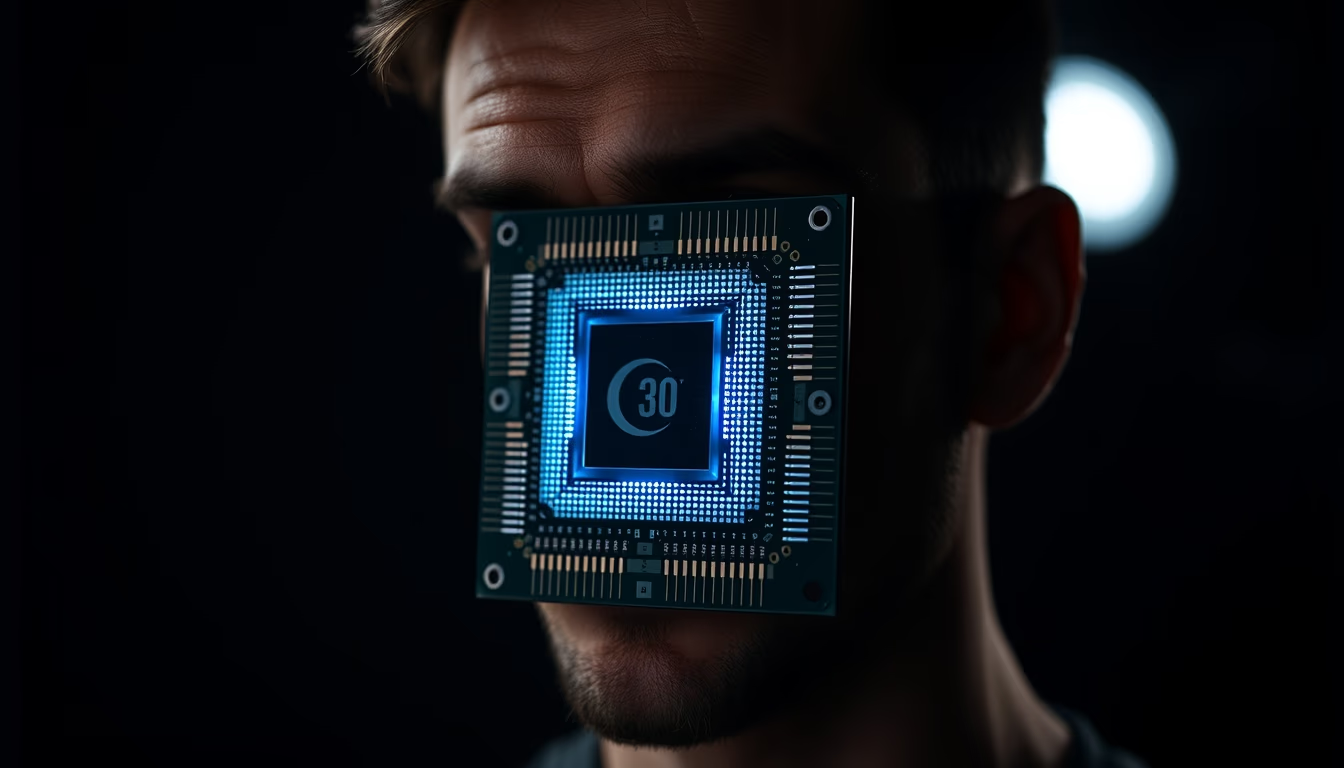
Quantum computer chip detail
1344×768 · AVIF · CC BY 4.0
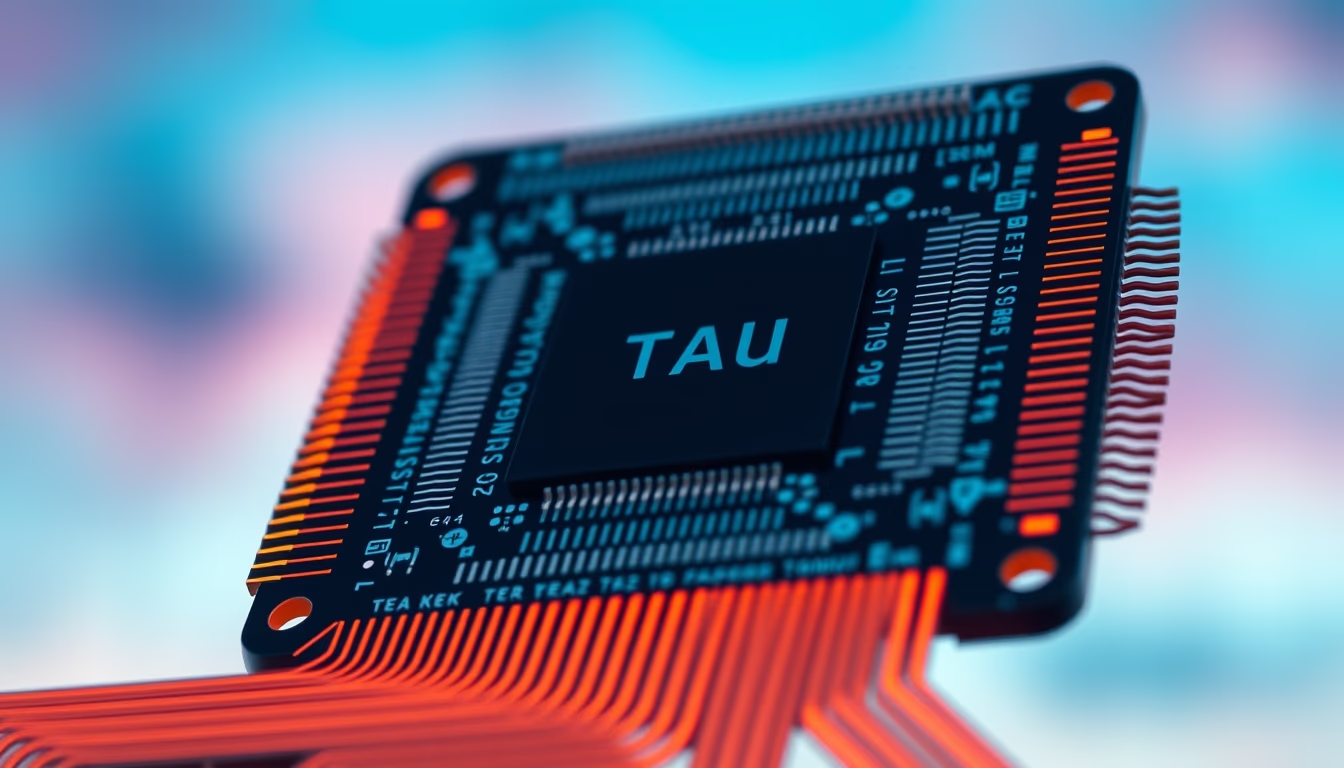
Details of a quantum computer chip, the central component that uses qubits for exponentially superior processing compared to classical chips.
About this subject
The chip of a quantum computer is the heart of the system, where qubits (quantum bits) are physically implemented. Unlike classical bits, which can be 0 or 1, qubits exploit quantum mechanical principles like superposition and entanglement, allowing them to represent multiple states simultaneously. This capability enables quantum computers to solve complex problems in seconds, while classical machines would take millennia.
Manufacturing these chips involves advanced technologies such as superconducting circuits cooled to near absolute zero (about -273°C), trapped ions in electromagnetic fields, or quantum dots in semiconductors. Each approach has advantages and challenges: superconductors offer higher speed but require complex cryostats; trapped ions have longer coherence times but are slower. The main difficulty is decoherence, where qubits lose their quantum state due to environmental interactions, demanding robust error correction systems.
Currently, companies like IBM, Google, and startups like Rigetti lead the development of quantum chips, with prototypes of 50 to 100 qubits. In 2019, Google's Sycamore performed a calculation in 200 seconds that would take 10,000 years on a classical supercomputer, demonstrating quantum supremacy. However, these chips are still experimental and suffer from high error rates. The race for more stable and scalable chips continues, aiming for thousands of logical qubits for practical applications in cryptography, molecular simulation, and optimization.
The potential impact is immense: from drug discovery and materials science to logistics and finance optimization. But the technology is still in its infancy, and the transition to commercial use will require advances in materials, engineering, and algorithms. The quantum chip will not replace the classical computer but will act as a specialized coprocessor, transforming strategic sectors.
Frequently Asked Questions
What is a quantum computer chip?
It is the hardware that contains qubits, the fundamental units of quantum information. Unlike classical chips, it operates with superposition and entanglement, allowing it to process complex problems much more efficiently for certain tasks.
How does a quantum chip differ from a classical chip?
Classical chips use transistors and binary bits (0 or 1), while quantum chips use qubits that can be in multiple states simultaneously due to superposition. Additionally, entanglement allows correlated qubits to exponentially enhance computational power.
What are the main challenges in manufacturing quantum chips?
Major challenges include decoherence (loss of quantum state), the need for extremely low temperatures for superconducting circuits, scalability to thousands of qubits with low error rates, and efficient quantum error correction.
Direct URL
https://pub-c7d6a6ea828543ac903a74a341ccb2e1.r2.dev/imagens/quantum-computer-chip-detail-long-exposure-p0.avifHow to credit
Include a visible link back to UtilizAí. Copy one of the snippets below:
<a href="https://xn--utiliza-eza.com/en/midia/imagens/quantum-computer-chip-detail-long-exposure-p0">Quantum computer chip detail</a> by <a href="https://xn--utiliza-eza.com">UtilizAí</a>, licensed under <a href="https://creativecommons.org/licenses/by/4.0/">CC BY 4.0</a>.
[Quantum computer chip detail](https://xn--utiliza-eza.com/en/midia/imagens/quantum-computer-chip-detail-long-exposure-p0) by [UtilizAí](https://xn--utiliza-eza.com), CC BY 4.0
License: CC-BY-4.0