Pyrite gold cubes
1344×768 · AVIF · CC BY 4.0
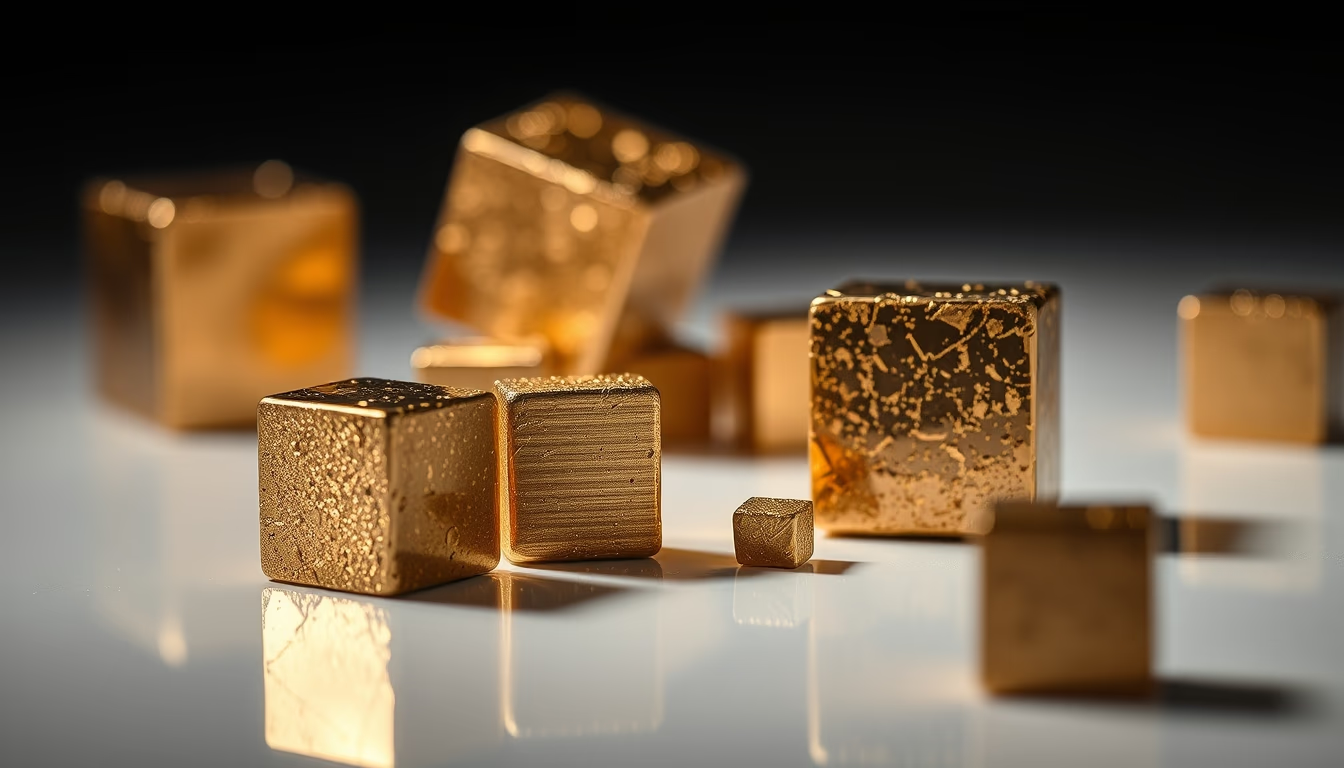
Golden pyrite cubes, also known as fool's gold, are cubic crystals of iron disulfide with a metallic luster.
About this subject
Pyrite is a mineral composed of iron disulfide (FeS2), known for its metallic luster and gold-yellow color that often deceives inexperienced prospectors, earning it the nickname fool's gold. Its hardness on the Mohs scale ranges from 6 to 6.5, higher than native gold, and its density is lower, making distinction easy for professionals. The cubic crystals are the most iconic form of pyrite, resulting from an isometric crystal system, and can reach sizes of up to several centimeters under ideal formation conditions.
Pyrite deposits are found worldwide, often associated with hydrothermal veins, sedimentary and metamorphic rocks. Famous localities include the Huanzala region in Peru, the Navajún mine in Spain, and the state of Illinois in the United States, where perfect cubic crystals are extracted. In Brazil, notable occurrences are in the states of Minas Gerais, Goiás, and Bahia, often in association with native gold, historically leading to deceptive explorations.
Besides its value as a collection specimen, pyrite has industrial applications in the production of sulfuric acid and as a source of sulfur. In mining, its presence can indicate proximity to gold or copper deposits. Historically, pre-Columbian civilizations used polished pyrite as mirrors, and in the Victorian era, pyrite pieces were cut as jewelry, though their luster tends to oxidize over time. Mineral collectors especially value well-formed cubes, which can fetch high prices in the fine mineral market.
Frequently Asked Questions
Why is pyrite called fool's gold?
Pyrite gets this nickname due to its color and metallic luster similar to gold, fooling inexperienced prospectors. It differs from gold by being harder, less dense, and breaking with conchoidal fractures, while gold is malleable.
Where are the largest pyrite cubes found?
The largest and most perfect pyrite cubes come from mines like Navajún in Spain and Huanzala in Peru. In Brazil, occurrences are found in Minas Gerais and Bahia, but crystals are usually smaller.
What is the crystal structure of pyrite?
Pyrite crystallizes in the isometric system, forming cubes, octahedra, and pyritohedra. The faces of the cubes often show parallel striations, a result of crystal growth.
Direct URL
https://pub-c7d6a6ea828543ac903a74a341ccb2e1.r2.dev/imagens/pyrite-gold-cubes-fine-art-photography-p1.avifHow to credit
Include a visible link back to UtilizAí. Copy one of the snippets below:
<a href="https://xn--utiliza-eza.com/en/midia/imagens/pyrite-gold-cubes-fine-art-photography-p1">Pyrite gold cubes</a> by <a href="https://xn--utiliza-eza.com">UtilizAí</a>, licensed under <a href="https://creativecommons.org/licenses/by/4.0/">CC BY 4.0</a>.
[Pyrite gold cubes](https://xn--utiliza-eza.com/en/midia/imagens/pyrite-gold-cubes-fine-art-photography-p1) by [UtilizAí](https://xn--utiliza-eza.com), CC BY 4.0
License: CC-BY-4.0