Puffin nesting cliff
1344×768 · AVIF · CC BY 4.0
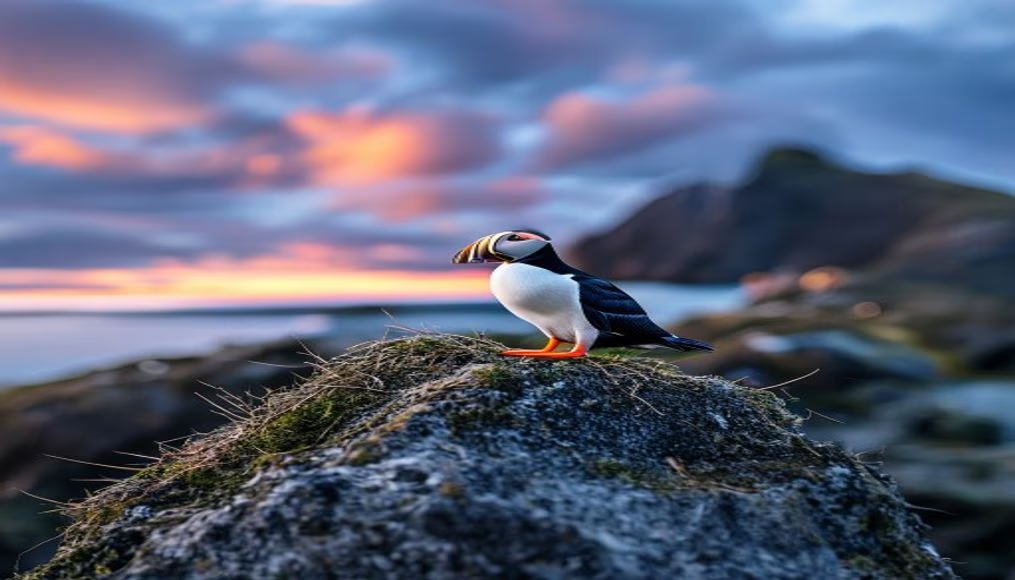
Discover how Atlantic puffins (Fratercula arctica) use coastal cliffs in the North Atlantic to nest in dense colonies, digging burrows with their colorful beaks.
About this subject
Atlantic puffins, scientifically known as Fratercula arctica, are iconic seabirds of the North Atlantic. During the breeding season from April to August, they form dense colonies on steep cliffs and rocky islands, such as those in Iceland, Norway, Scotland, and Newfoundland. These birds are expert excavators: using their strong beaks and clawed feet, they dig burrows up to 1.5 meters deep in turf soil or crevices, where they lay a single egg. The nest is lined with feathers and grass, providing thermal insulation.
The choice of nesting site is crucial for protection against terrestrial predators like foxes and gulls. Cliffs offer additional security due to difficult access. Moreover, proximity to the sea ensures abundant food: puffins feed mainly on small fish such as herring and Atlantic sand lance, caught during dives that can reach up to 60 meters deep. Interestingly, they can carry multiple fish crosswise in their bill thanks to adaptations in their tongue and palate.
After hatching, the chick stays in the nest for about 40 to 50 days, being fed by both parents. When leaving the nest at night, the young puffin flies directly to the sea without parental help, starting a solitary life. The average lifespan is 20 years, but some individuals reach 30. Despite their charismatic appearance, puffin populations face threats such as climate change (altering fish availability), pollution, and predation by invasive species. In 2021, the IUCN classified the species as 'Vulnerable' globally, with significant declines in some colonies.
Nesting cliffs are natural spectacles: thousands of birds gather in synchronized flights, their colorful beaks (which change color seasonally) and expressive eyes captivating observers. During the non-breeding season, puffins lose the colorful plates on their beaks and spend most of their time at sea, returning to land only to reproduce. The long exposure mentioned in the image tags captures the dynamic movement of these colonies, highlighting the birds' vibrant energy against the solidity of the rocks.
Frequently Asked Questions
Why do puffins nest on cliffs?
Cliffs provide protection from terrestrial predators like foxes and gulls, as well as easy access to the sea for feeding. The turf soil or crevices facilitate digging safe burrows.
What do puffins eat?
They mainly feed on small fish such as herring and Atlantic sand lance. They can dive up to 60 meters deep to catch them and carry multiple fish in their bill at once.
Are puffins endangered?
The species is classified as 'Vulnerable' by the IUCN. Major threats include climate change (reducing fish availability), pollution, and predation by invasive species in their colonies.
Direct URL
https://pub-c7d6a6ea828543ac903a74a341ccb2e1.r2.dev/imagens/puffin-nesting-cliff-long-exposure-p2.avifHow to credit
Include a visible link back to UtilizAí. Copy one of the snippets below:
<a href="https://xn--utiliza-eza.com/en/midia/imagens/puffin-nesting-cliff-long-exposure-p2">Puffin nesting cliff</a> by <a href="https://xn--utiliza-eza.com">UtilizAí</a>, licensed under <a href="https://creativecommons.org/licenses/by/4.0/">CC BY 4.0</a>.
[Puffin nesting cliff](https://xn--utiliza-eza.com/en/midia/imagens/puffin-nesting-cliff-long-exposure-p2) by [UtilizAí](https://xn--utiliza-eza.com), CC BY 4.0
License: CC-BY-4.0