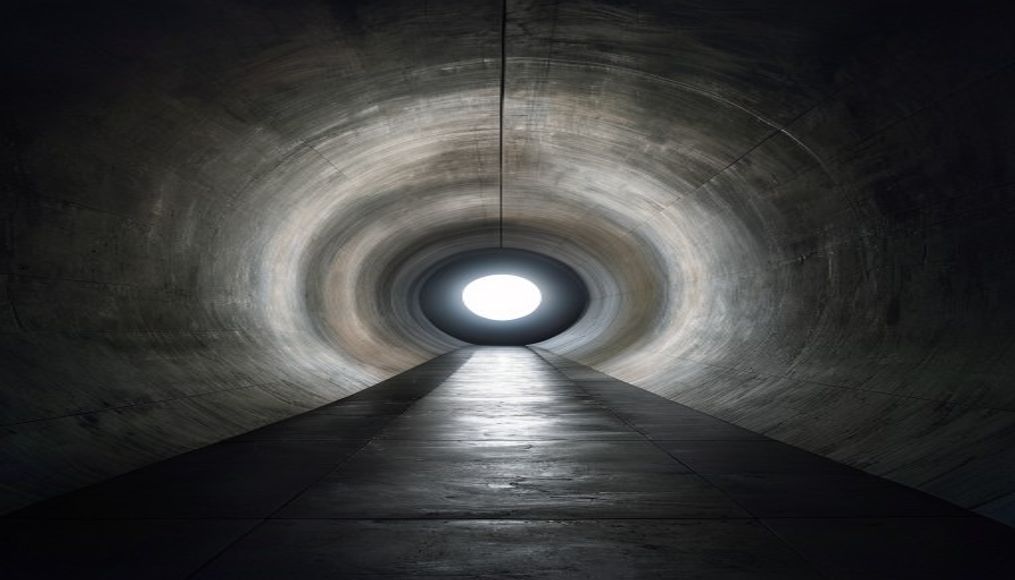
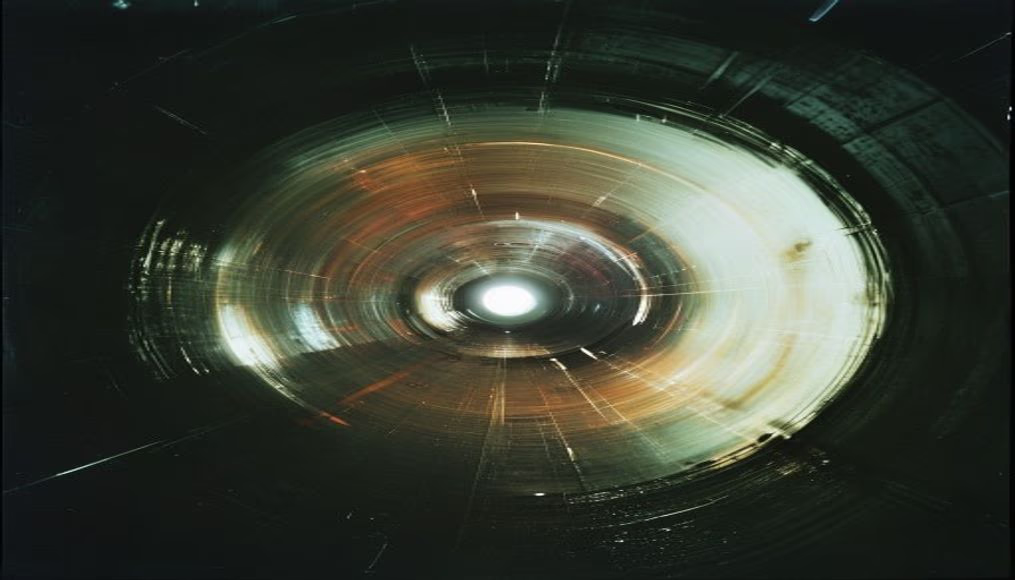
Protoplanetary disk forming
1344×768 · AVIF · CC BY 4.0
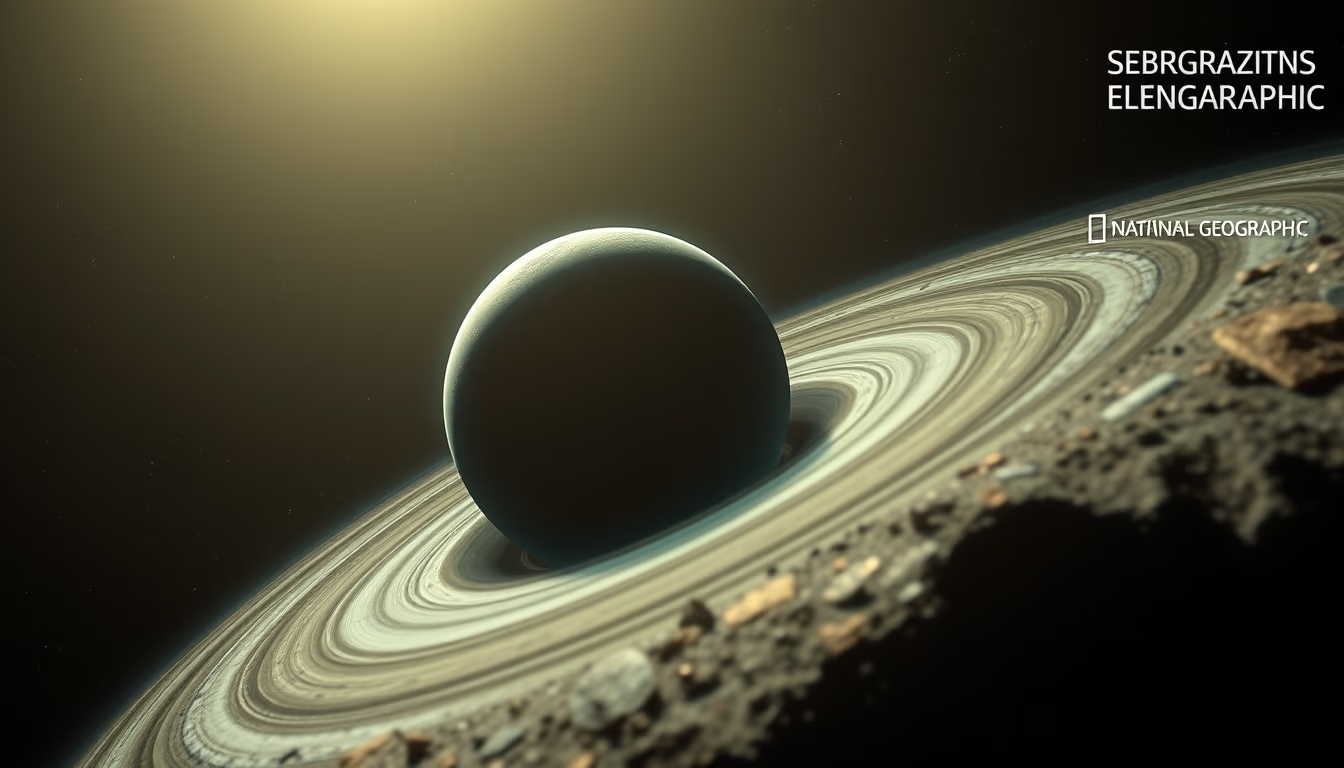
Protoplanetary disks are rotating structures of gas and dust around young stars, where planets like Earth form.
About this subject
A protoplanetary disk is a flattened cloud of molecular gas and dust that orbits a newly formed star, or protostar. These structures are the nurseries of planetary systems, as accretion of material within them gives rise to planets, asteroids, and comets. The disks are composed mostly of hydrogen and helium, but also contain solid particles like silicates and ices, which aggregate into larger grains over time.
The planet formation process begins with the collision and sticking of dust grains, forming larger bodies: planetesimals, protoplanets, and eventually planets. Astronomical observations, particularly with telescopes like ALMA (Atacama Large Millimeter/submillimeter Array), have revealed disks with rings and gaps, indicating where planets are already forming and clearing their orbits. Notable examples include the HL Tauri system, whose disk exhibits a complex ring structure.
Protoplanetary disks have a short lifespan, typically lasting 1 to 10 million years before being dissipated by stellar radiation and winds. Studying them is therefore crucial to understanding how our own Solar System formed. The Sun is believed to have had a similar disk, which gave rise to the rocky planets, gas giants, and the Kuiper Belt. Images of disks around young stars, such as those captured by the Hubble Space Telescope in the Orion Nebula, provide direct clues about the initial conditions of planetary formation.
Frequently Asked Questions
How long does a protoplanetary disk last?
The average lifespan of a protoplanetary disk is 1 to 10 million years. After that, radiation and winds from the central star dissipate the gas and dust, halting planet formation.
How do planets form from the disk?
Planets form through accretion: dust particles collide and stick together into larger grains, which become planetesimals. These then merge to form protoplanets and eventually full-fledged planets.
What are the gaps observed in these disks?
Gaps are regions in the disk where material density is reduced. They are often interpreted as evidence of forming planets clearing their orbits by accumulating gas and dust around them.
Direct URL
https://pub-c7d6a6ea828543ac903a74a341ccb2e1.r2.dev/imagens/protoplanetary-disk-forming-national-geographic-style-p11.avifHow to credit
Include a visible link back to UtilizAí. Copy one of the snippets below:
<a href="https://xn--utiliza-eza.com/en/midia/imagens/protoplanetary-disk-forming-national-geographic-style-p11">Protoplanetary disk forming</a> by <a href="https://xn--utiliza-eza.com">UtilizAí</a>, licensed under <a href="https://creativecommons.org/licenses/by/4.0/">CC BY 4.0</a>.
[Protoplanetary disk forming](https://xn--utiliza-eza.com/en/midia/imagens/protoplanetary-disk-forming-national-geographic-style-p11) by [UtilizAí](https://xn--utiliza-eza.com), CC BY 4.0
License: CC-BY-4.0