Power supply unit
1344×768 · AVIF · CC BY 4.0
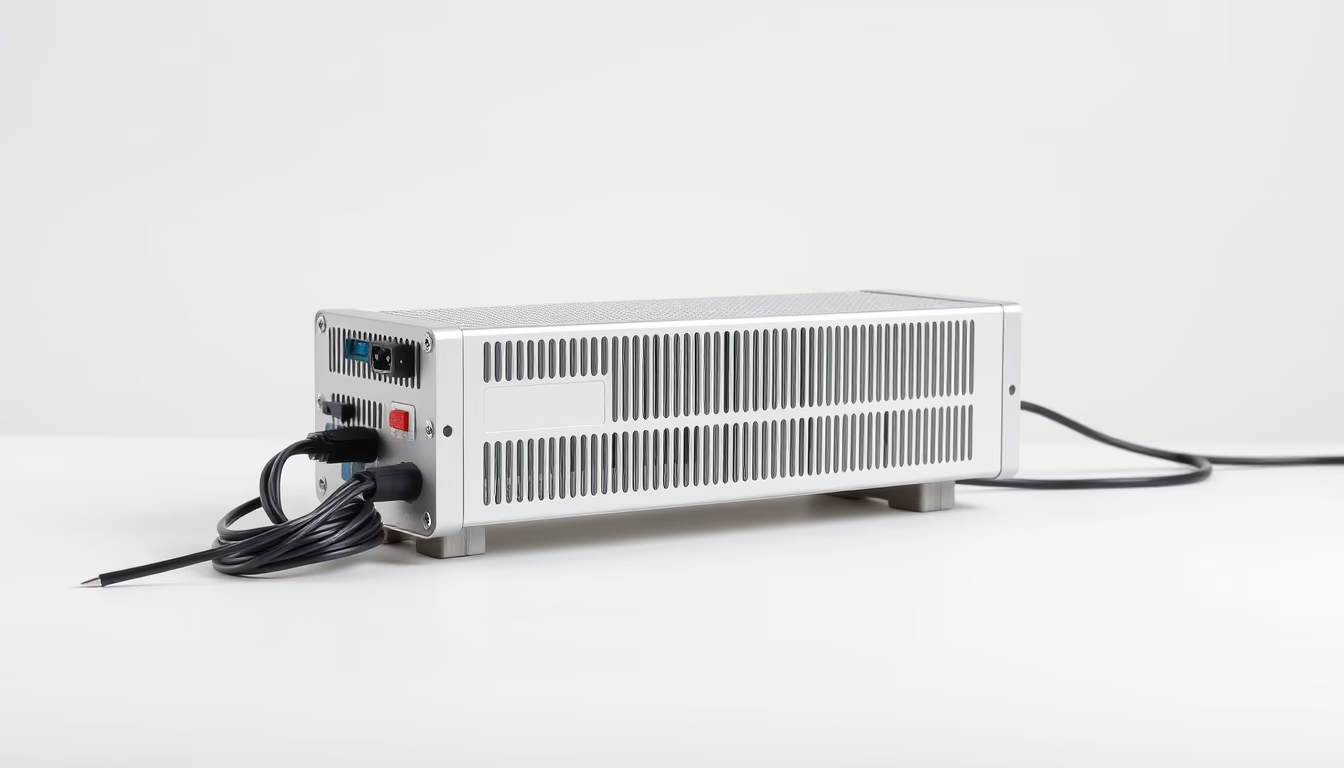
The power supply unit (PSU) converts AC power to regulated DC voltages for all computer components, crucial for system stability and safety.
About this subject
The power supply unit (PSU) is a critical component in any computer, responsible for converting alternating current (AC) from the wall outlet (110V or 220V) into regulated direct current (DC) voltages: +3.3V, +5V, and +12V. These voltages power the motherboard, CPU, graphics card, storage drives, and peripherals. Without a proper PSU, the system may experience instability, crashes, or permanent damage. PSUs are categorized by wattage, efficiency (80 Plus certification), and form factor (ATX, SFX, TFX).
The 80 Plus certification, introduced in 2004, ensures at least 80% efficiency at 20%, 50%, and 100% loads. Higher tiers like Bronze, Silver, Gold, Platinum, and Titanium indicate superior efficiency, up to 96% for Titanium. More efficient units produce less heat, reduce electricity bills, and extend component lifespan. Additionally, modular PSUs allow connecting only necessary cables, improving airflow and cable management inside the case.
Common standards include ATX12V (version 2.x for standard desktops) and EPS12V (for servers and workstations). Required wattage depends on components: a basic office PC may need 300W, while a high-end gaming rig with a top-tier GPU can require 750W or more. Reputable brands like Corsair, EVGA, Seasonic, and Cooler Master offer models with protections against overcurrent, short circuit, and undervoltage, essential for safety.
A fun fact: the first PSU for personal computers appeared in the 1981 IBM PC, delivering 63W with a voltage selector switch. Today, 1000W units are common, and 2000W supplies exist for cryptocurrency mining or extreme overclocking. When choosing a PSU, prioritize models with 80 Plus certification, adequate wattage, and good technical reviews, an investment that protects the entire system.
Frequently Asked Questions
What does 80 Plus certification mean for a power supply?
80 Plus certification ensures the PSU operates with at least 80% efficiency at 20%, 50%, and 100% loads. Higher tiers (Bronze, Silver, Gold, Platinum, Titanium) indicate even greater efficiency, reducing energy waste as heat.
How do I determine the required wattage for my PC?
Add up the power consumption of each component (CPU, GPU, drives, etc.) and add a 20-30% safety margin. Online calculators (like OuterVision or Cooler Master) can help. Gaming PCs with high-end GPUs typically need 650W or more.
What is the difference between modular and non-modular PSUs?
Modular PSUs allow connecting only the necessary cables, reducing clutter and improving airflow. Non-modular units have all cables fixed, which can lead to excess wires. Semi-modular PSUs combine essential fixed cables with detachable optional ones.
Direct URL
https://pub-c7d6a6ea828543ac903a74a341ccb2e1.r2.dev/imagens/power-supply-unit-commercial-product-photography-p8.avifHow to credit
Include a visible link back to UtilizAí. Copy one of the snippets below:
<a href="https://xn--utiliza-eza.com/en/midia/imagens/power-supply-unit-commercial-product-photography-p8">Power supply unit</a> by <a href="https://xn--utiliza-eza.com">UtilizAí</a>, licensed under <a href="https://creativecommons.org/licenses/by/4.0/">CC BY 4.0</a>.
[Power supply unit](https://xn--utiliza-eza.com/en/midia/imagens/power-supply-unit-commercial-product-photography-p8) by [UtilizAí](https://xn--utiliza-eza.com), CC BY 4.0
License: CC-BY-4.0