Power supply unit
1344×768 · AVIF · CC BY 4.0
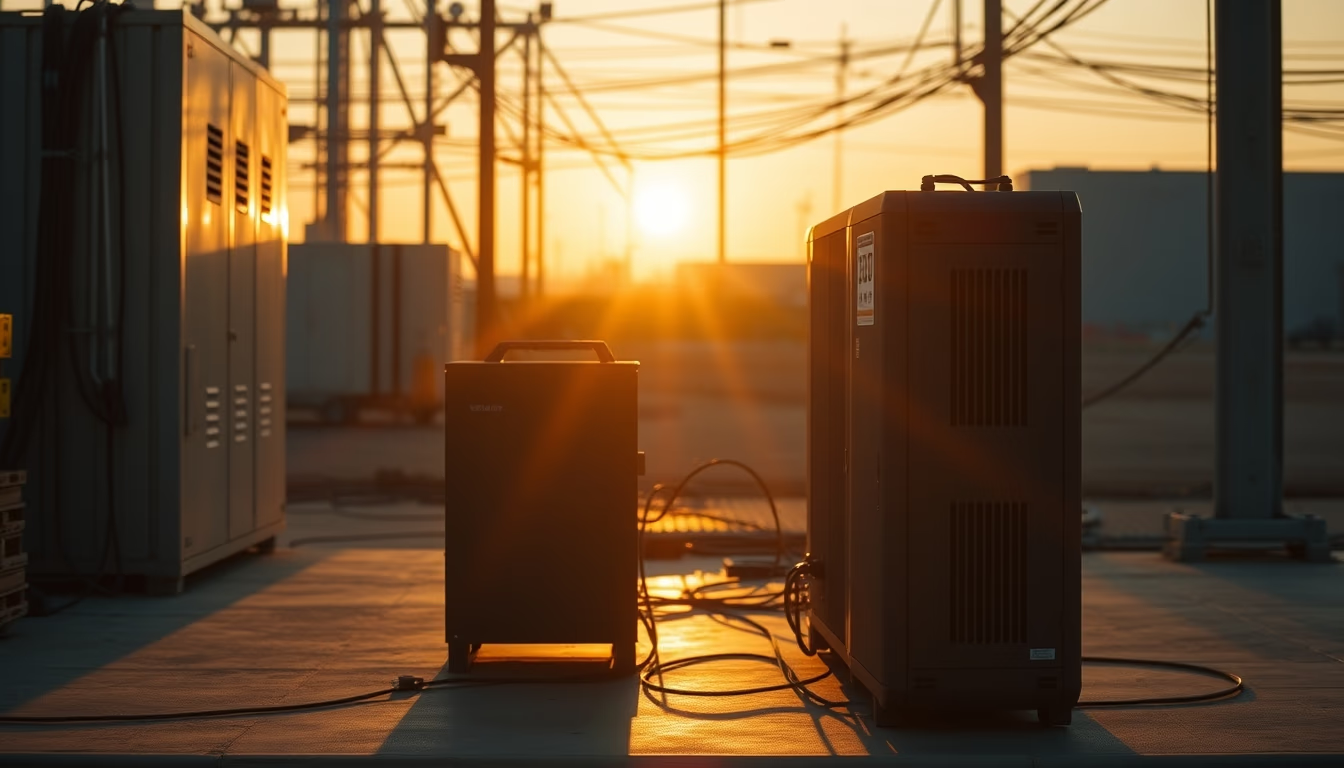
The power supply unit (PSU) converts electrical power to feed computer components, featuring efficiency and essential protections.
About this subject
The power supply unit (PSU) is the component responsible for converting alternating current (AC) from the wall outlet into low-voltage direct current (DC) required by a computer. This process involves rectification, filtering, and regulation, ensuring stable voltages on the +3.3V, +5V, and +12V rails. The ATX standard, introduced by Intel in 1995, became the dominant form factor, evolving into versions such as ATX12V and EPS12V, which provide additional connectors for modern processors and graphics cards.
Energy efficiency is measured by the 80 Plus certification, which classifies PSUs from Bronze (82% efficiency at 50% load) to Titanium (96%). A more efficient unit wastes less heat and reduces electricity costs. Quality PSUs also include protections such as OVP (overvoltage protection), UVP (undervoltage protection), OCP (overcurrent protection), OPP (overpower protection), and SCP (short-circuit protection), preventing component damage during faults.
PSUs are categorized by cable modularity: non-modular units have fixed cables, semi-modular allow detaching non-essential cables, and fully modular let you connect only needed cables, improving case organization and airflow. Choosing the right wattage depends on total component power draw, typically calculated by summing the TDP (Thermal Design Power) of the CPU and GPU, plus a 20% to 30% safety margin.
Interestingly, internal PSU design involves transformers, electrolytic capacitors, and inductors, with capacitor quality (Japanese vs. Chinese) affecting longevity. Brands like Corsair, EVGA, and Seasonic are recognized for robust components. Units with 120mm or 140mm fans using sleeve or fluid dynamic bearings ensure quiet cooling and long lifespan.
Frequently Asked Questions
What is the difference between modular and non-modular PSUs?
Modular PSUs let you connect only needed cables, improving case organization and airflow. Non-modular units have fixed cables, which can lead to excess wires and reduced air circulation.
What does 80 Plus certification mean?
80 Plus certification indicates PSU efficiency: higher levels (Bronze, Silver, Gold, Platinum, Titanium) mean more efficient AC-to-DC conversion, generating less heat and saving energy.
How do I choose the right wattage for my computer?
Calculate total component power draw (especially CPU and GPU) using online calculators or TDP sums. Add a 20% to 30% margin for peak loads and future upgrades.
Direct URL
https://pub-c7d6a6ea828543ac903a74a341ccb2e1.r2.dev/imagens/power-supply-unit-cinematic-wide-shot-p1.avifHow to credit
Include a visible link back to UtilizAí. Copy one of the snippets below:
<a href="https://xn--utiliza-eza.com/en/midia/imagens/power-supply-unit-cinematic-wide-shot-p1">Power supply unit</a> by <a href="https://xn--utiliza-eza.com">UtilizAí</a>, licensed under <a href="https://creativecommons.org/licenses/by/4.0/">CC BY 4.0</a>.
[Power supply unit](https://xn--utiliza-eza.com/en/midia/imagens/power-supply-unit-cinematic-wide-shot-p1) by [UtilizAí](https://xn--utiliza-eza.com), CC BY 4.0
License: CC-BY-4.0