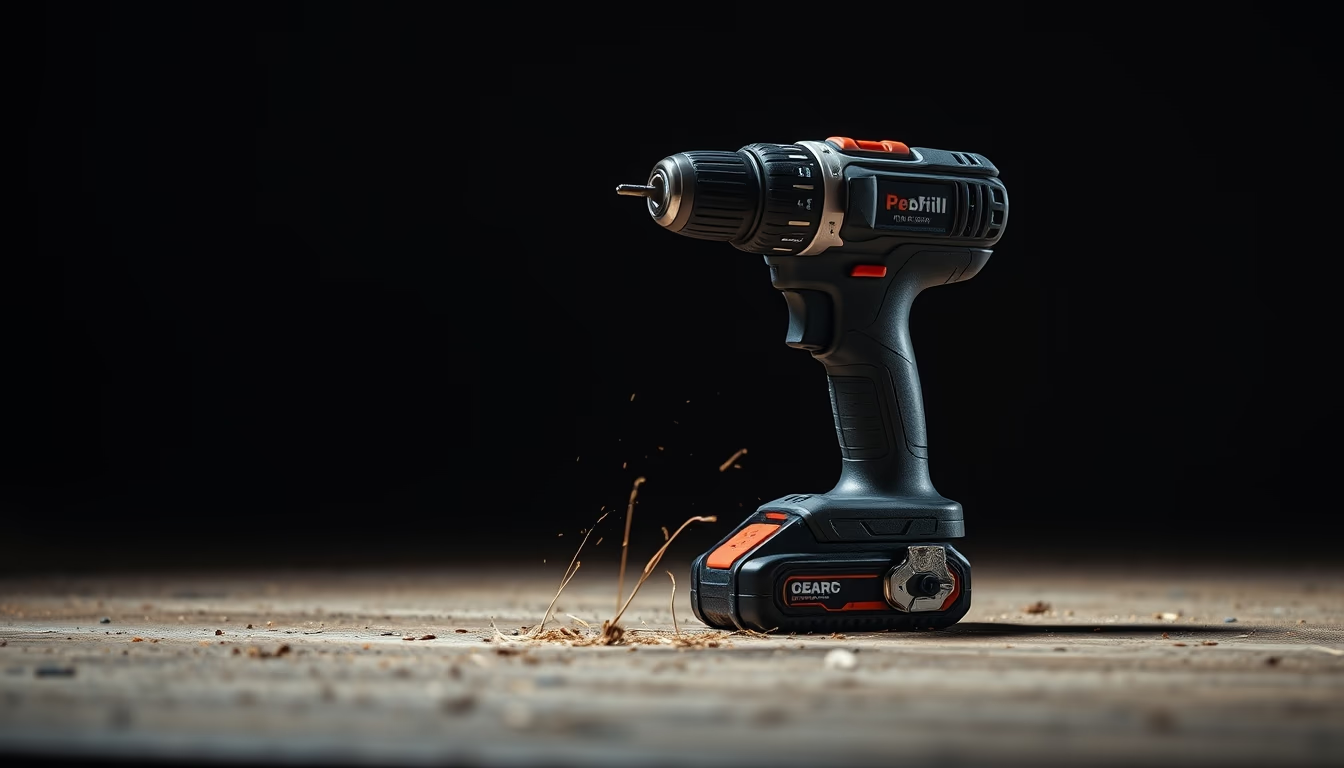
Power drill cordless
1344×768 · AVIF · CC BY 4.0

The cordless power drill revolutionized construction and DIY with freedom of movement and lithium-ion battery power.
About this subject
The cordless power drill is a portable electric tool that replaced corded models, offering complete mobility without dependence on outlets. Popularized from the 2000s with advances in lithium-ion batteries, it now equips construction sites and home workshops alike. Most current models use brushless motors, which increase energy efficiency and reduce wear, providing greater runtime and torque. Common voltages are 12V, 18V, and 20V, with interchangeable batteries among tools from the same brand.
Keyless chucks are standard on modern drills, accepting bits from 0.8 mm to 13 mm. Functions such as drilling, screwdriving, and hammer action (in combi drills) expand usage from furniture assembly to light masonry drilling. Brands like Bosch, DeWalt, Makita, and Milwaukee lead the market with professional and consumer lines. Voltage and battery capacity (Ah) determine power and runtime; a 5.0 Ah battery can deliver hundreds of holes in drywall before needing a recharge.
The evolution of cordless drills enabled shared battery platforms, such as Makita's 18V system or DeWalt's 20V Max, reducing costs for professionals. Ergonomic design with rubberized grips and auxiliary handles reduces fatigue. Safety features include lock-on triggers and electric brakes that stop the motor in seconds. In Brazil, the availability of service centers and spare parts is a key factor in brand choice.
Curiosity: the first portable electric drill was invented in 1895 by Fein, but it was corded. The cordless version only became viable decades later with NiCd batteries, later replaced by lithium-ion, which has no memory effect and offers fast charging. Today, cordless drills account for over 60% of global drill sales, driven by the growth of the battery-powered tool market.
Frequently Asked Questions
What is the difference between a hammer drill and a regular drill?
A hammer drill has a mechanism that produces axial hammering, ideal for drilling into masonry, brick, and light concrete. A regular drill (or driver) is better suited for wood, metal, and drywall as it lacks impact.
How do I choose the right voltage for a cordless drill?
For light home use, 12V is sufficient. For semi-professional use, 18V offers a good balance of weight and power. 20V or higher is recommended for heavy-duty tasks and continuous professional use.
Is it worth buying a kit with multiple tools that share the same battery?
Yes. Shared battery systems reduce cost and storage space, as one battery works for a drill, saw, sander, etc. This is a key advantage of brands like Makita, Bosch, and DeWalt.
Direct URL
https://pub-c7d6a6ea828543ac903a74a341ccb2e1.r2.dev/imagens/power-drill-cordless-studio-editorial-portrait-p2.avifHow to credit
Include a visible link back to UtilizAí. Copy one of the snippets below:
<a href="https://xn--utiliza-eza.com/en/midia/imagens/power-drill-cordless-studio-editorial-portrait-p2">Power drill cordless</a> by <a href="https://xn--utiliza-eza.com">UtilizAí</a>, licensed under <a href="https://creativecommons.org/licenses/by/4.0/">CC BY 4.0</a>.
[Power drill cordless](https://xn--utiliza-eza.com/en/midia/imagens/power-drill-cordless-studio-editorial-portrait-p2) by [UtilizAí](https://xn--utiliza-eza.com), CC BY 4.0
License: CC-BY-4.0