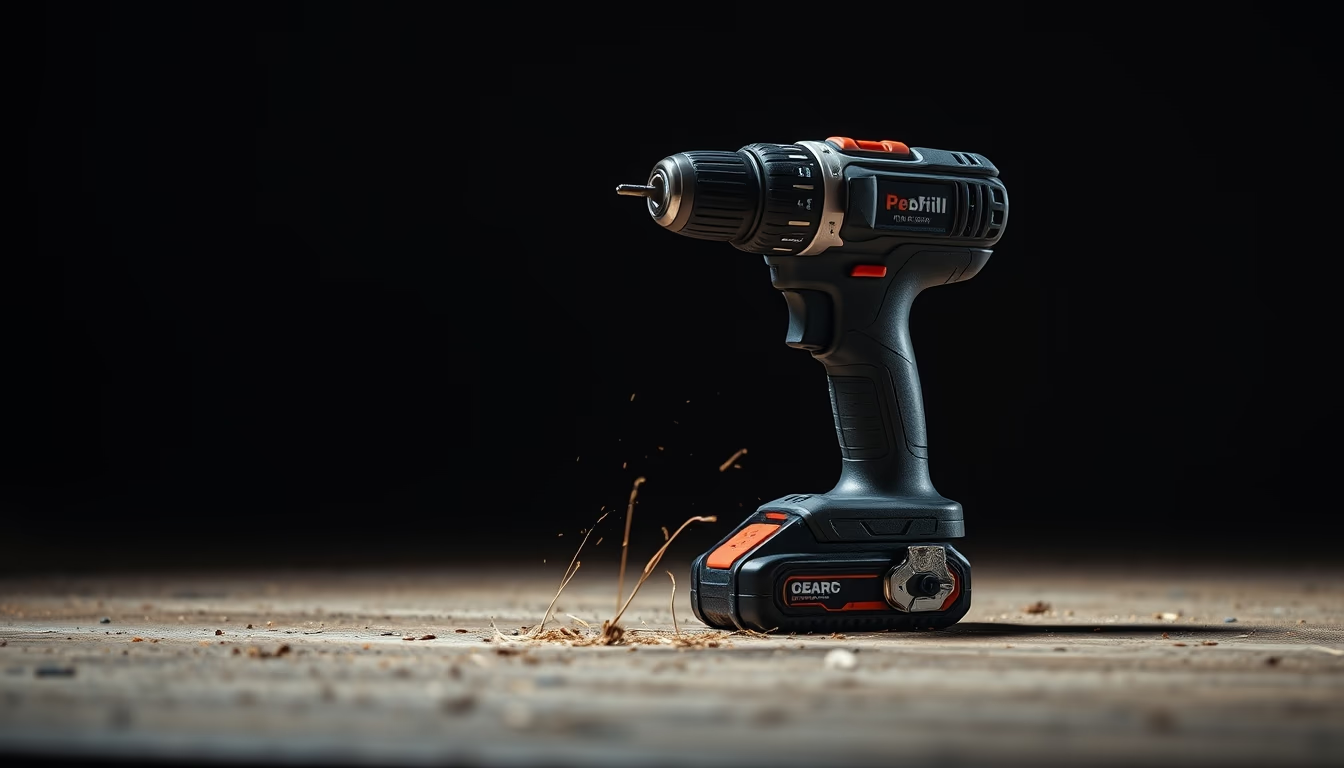
Power drill cordless
1344×768 · AVIF · CC BY 4.0

Cordless power drill: power and portability for versatile work in construction, renovation and DIY, with long-lasting lithium-ion batteries.
About this subject
The cordless power drill has become an indispensable tool for both construction professionals and DIY enthusiasts. Unlike corded models, it offers total mobility, allowing work in places without electrical outlets, such as roofs, outdoor areas, or job sites. Lithium-ion battery technology, introduced on a large scale from the 2000s, replaced old nickel-cadmium batteries, providing higher energy density, less memory effect, and faster charging.
Cordless drills are primarily classified by battery voltage, ranging from 12V to 36V or more. Models with 12V to 18V are ideal for light to medium tasks like furniture assembly, drilling drywall or wood. Higher voltage models (20V and above) can drill reinforced concrete with the aid of a hammer mechanism. Major manufacturers such as Bosch, Makita, DeWalt, and Milwaukee offer interchangeable battery systems, allowing the same battery to be used across different tools of the same brand.
A critical performance factor is torque, measured in Newton-metres (Nm). Drills with torque above 50 Nm can screw and drill dense materials without stalling. Features like variable speed control, mechanical clutch, and integrated LED light improve precision and safety. Modern batteries have charge indicators and electronic systems that prevent overcharging, overheating, and deep discharge, extending lifespan.
In the global market, cordless drills have seen increased adoption due to advances in battery technology and the rise of DIY culture. Safety standards such as ISO 17024 or local regulations require proper use and maintenance. For professionals, ergonomic design and vibration reduction are key to preventing repetitive strain injuries. For home users, choosing a drill with a comfortable grip and sufficient power for intended tasks is essential.
Frequently Asked Questions
What is the difference between corded and cordless drills?
Corded drills need a power outlet and offer unlimited continuous power, ideal for heavy work. Cordless drills are battery-powered and portable, but have limited runtime and generally lower power. Choose based on needed mobility and intensity of use.
How do I choose the right voltage for a cordless drill?
For light home use (furniture assembly, drilling wood/drywall), 12V to 14.4V is sufficient. For renovations and masonry drilling, prefer 18V to 20V. For professional heavy drilling in concrete or steel, models with 24V to 36V are recommended.
How should I care for my cordless drill battery?
Avoid fully discharging lithium-ion batteries; recharge when they reach about 20%. Store in a cool, dry place away from extreme heat. Use only original chargers to prevent damage. For long-term storage, keep battery at a partial charge (around 40-60%).
Direct URL
https://pub-c7d6a6ea828543ac903a74a341ccb2e1.r2.dev/imagens/power-drill-cordless-cinematic-wide-shot-p1.avifHow to credit
Include a visible link back to UtilizAí. Copy one of the snippets below:
<a href="https://xn--utiliza-eza.com/en/midia/imagens/power-drill-cordless-cinematic-wide-shot-p1">Power drill cordless</a> by <a href="https://xn--utiliza-eza.com">UtilizAí</a>, licensed under <a href="https://creativecommons.org/licenses/by/4.0/">CC BY 4.0</a>.
[Power drill cordless](https://xn--utiliza-eza.com/en/midia/imagens/power-drill-cordless-cinematic-wide-shot-p1) by [UtilizAí](https://xn--utiliza-eza.com), CC BY 4.0
License: CC-BY-4.0