Pottery wheel hands clay
1344×768 · AVIF · CC BY 4.0
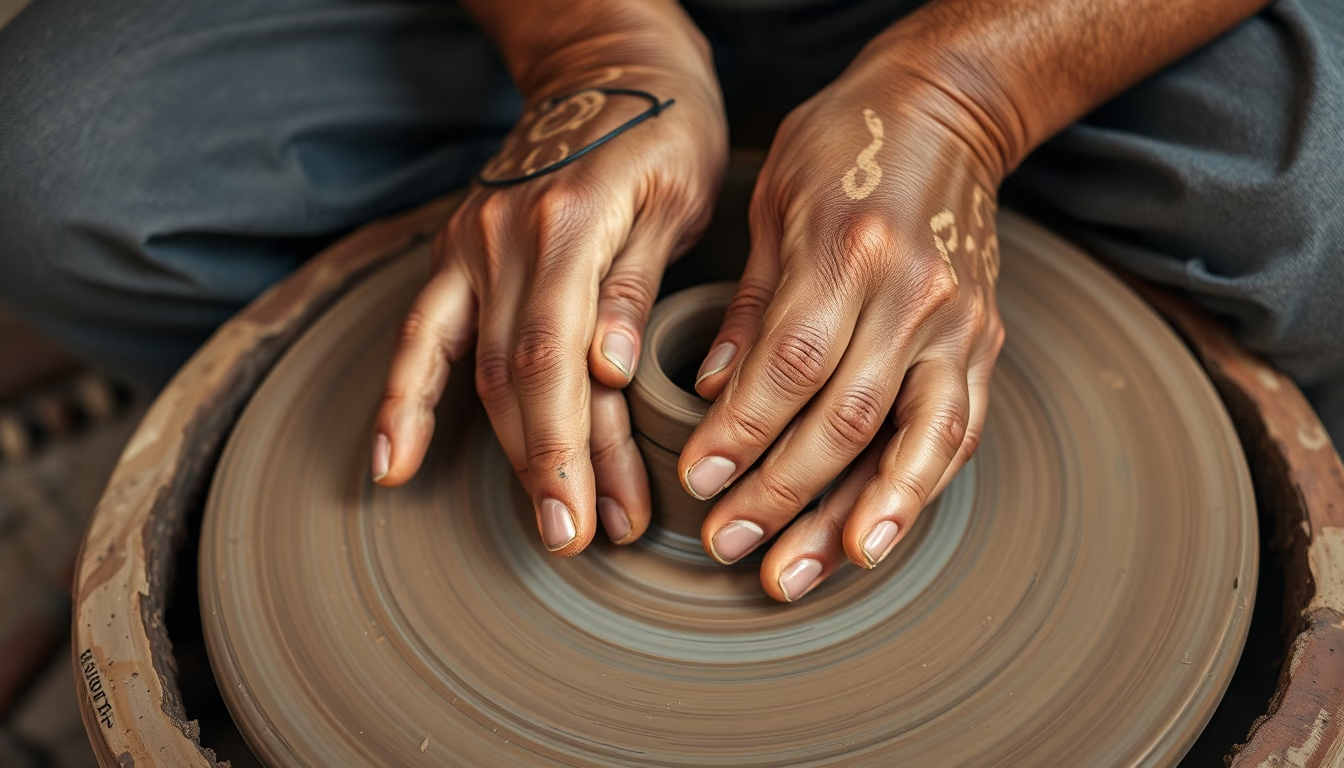
The craft of the pottery wheel, where hands shape clay in circular motion, is one of humanity's oldest techniques.
About this subject
The pottery wheel, also known as a potter's wheel, is a tool that shapes clay through continuous rotation. Its invention dates back to around 3000 BCE in Mesopotamia, revolutionizing ceramic production by enabling symmetry and efficiency. In Brazil, the technique was introduced by European colonizers but found fertile ground among indigenous and quilombola communities that already mastered hand modeling. Today, wheel use is common in studios across the country, notably in the Vale do Jequitinhonha region of Minas Gerais, where artisans preserve centuries-old traditions.
The basic process involves centering the clay on the spinning disk, followed by opening, pulling, and shaping. Centrifugal force demands precise hand control, with hands acting as living tools. Master potters emphasize the importance of clay moisture and wheel speed to avoid collapse. Decorative techniques such as sgraffito and incising are often applied before firing. The resulting ceramics can be utilitarian (vases, pots) or artistic, with pieces attaining high cultural and economic value.
In Brazil, the pottery wheel is also linked to Marajoara ceramics, produced on Marajó Island in Pará, which use unique modeling and painting techniques. Although the Marajoara people did not use the wheel, contemporary influences blend methods. Other important centers include São Miguel das Missões (RS), where missionary ceramics incorporate European and indigenous forms. Manual wheel practice requires years of learning, and many artisans describe the meditation inherent in the repetitive motion, connecting past and present.
Interestingly, the potter's wheel is considered one of the first machines created by humans, predating even the wheeled cart. Archaeological studies indicate independent invention in several cultures, such as China and Central America. Despite industrialization, manual wheel work persists as an artistic and sustainable expression, valued in national fairs and exhibitions.
Frequently Asked Questions
What is the origin of the potter's wheel?
The potter's wheel was invented around 3000 BCE in Mesopotamia, making it one of the first machines created by humans. It later emerged independently in other cultures, such as China and Central America.
How is clay prepared for use on the wheel?
Clay must have proper moisture to be malleable without sticking to the hands. It is commonly kneaded to homogenize and remove air bubbles, a process called wedging.
What are the main decoration techniques for wheel-thrown pieces?
Common techniques include sgraffito (scratching the surface), incising (cutting lines), and applying engobes (colored clays) before firing. Firing can be done in electric or wood-fired kilns.
Direct URL
https://pub-c7d6a6ea828543ac903a74a341ccb2e1.r2.dev/imagens/pottery-wheel-hands-clay-national-geographic-style-p4.avifHow to credit
Include a visible link back to UtilizAí. Copy one of the snippets below:
<a href="https://xn--utiliza-eza.com/en/midia/imagens/pottery-wheel-hands-clay-national-geographic-style-p4">Pottery wheel hands clay</a> by <a href="https://xn--utiliza-eza.com">UtilizAí</a>, licensed under <a href="https://creativecommons.org/licenses/by/4.0/">CC BY 4.0</a>.
[Pottery wheel hands clay](https://xn--utiliza-eza.com/en/midia/imagens/pottery-wheel-hands-clay-national-geographic-style-p4) by [UtilizAí](https://xn--utiliza-eza.com), CC BY 4.0
License: CC-BY-4.0