Pottery shards ancient
1344×768 · AVIF · CC BY 4.0
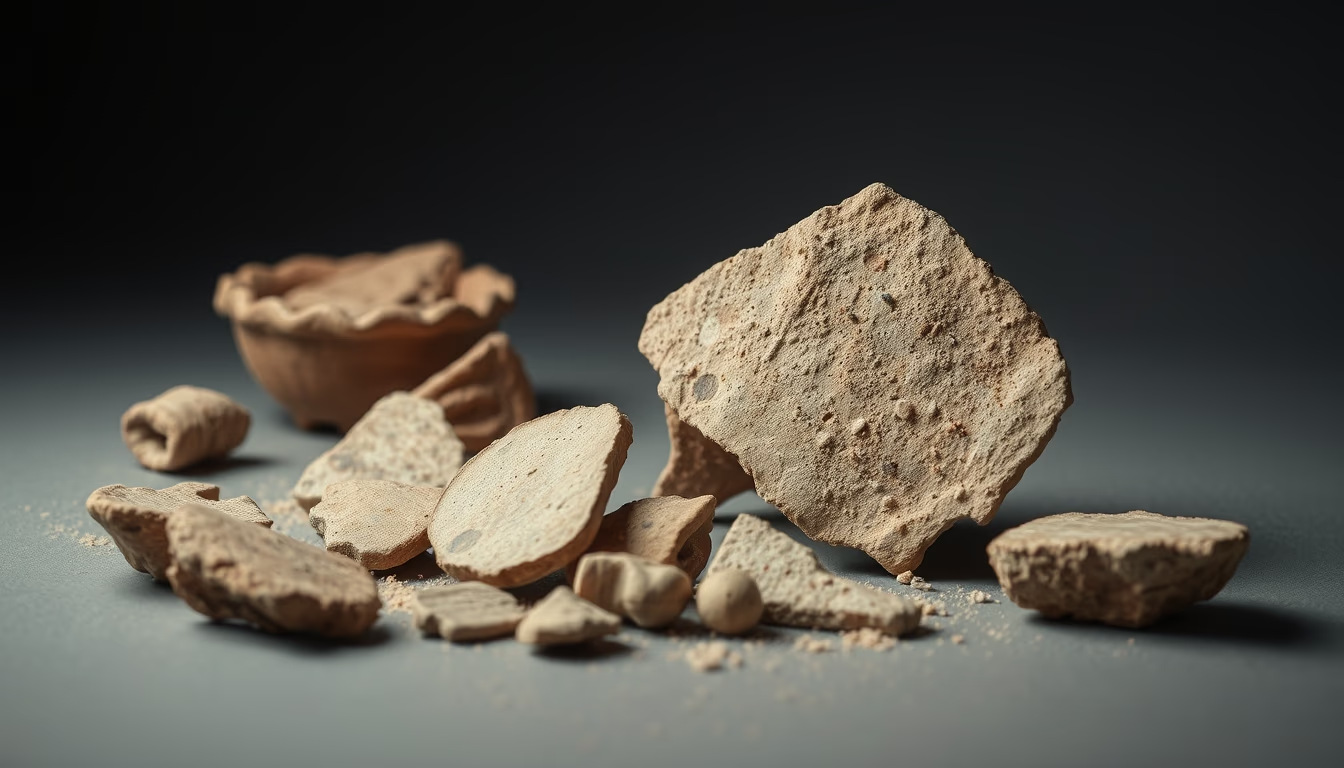
Ancient pottery shards, dating back thousands of years, are essential sources for understanding past cultures and technologies.
About this subject
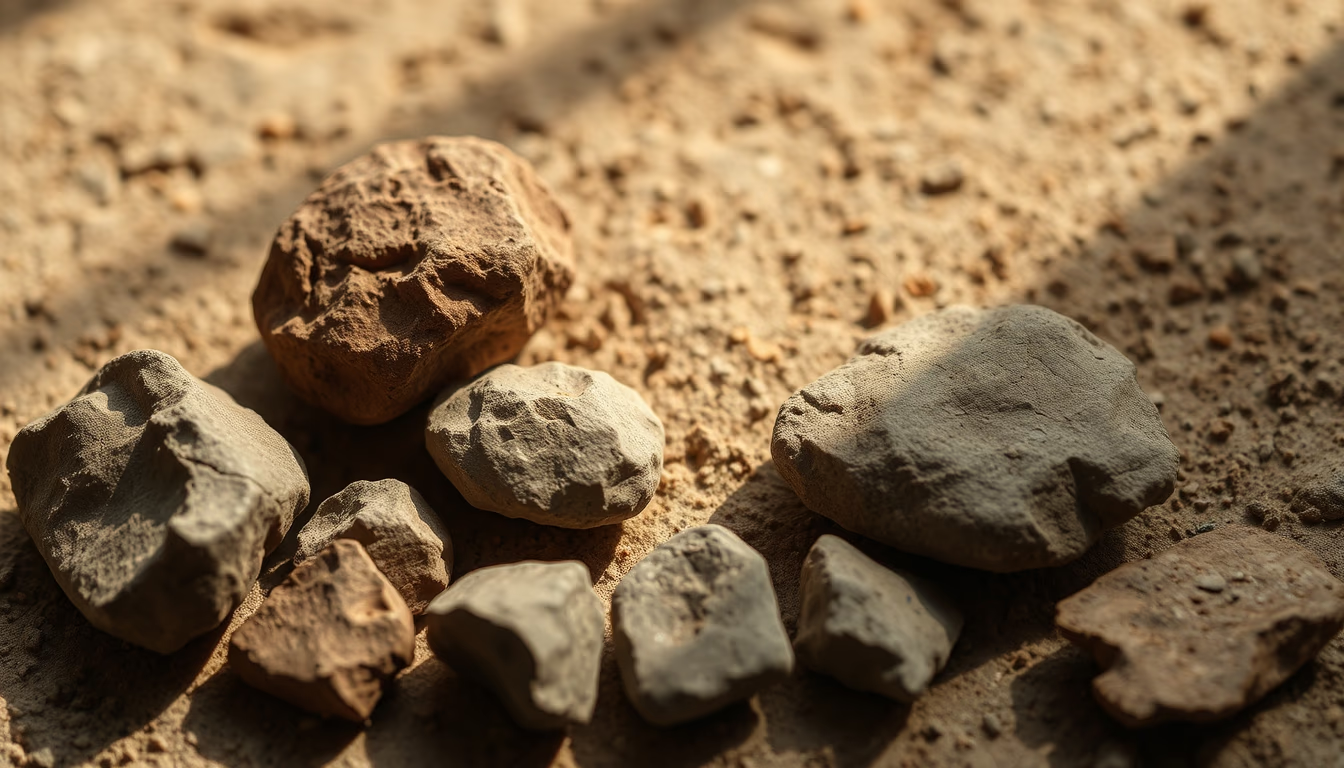
Pottery shards, commonly called sherds, are the most frequent artifacts found at archaeological sites worldwide. Their durability allows them to survive for centuries or millennia, offering valuable clues about the societies that produced them. Archaeologists analyze clay composition, manufacturing techniques (such as hand-building or wheel-throwing), temper types, and decorations to identify periods, trade routes, and cultural influences.
In Brazil, sites from the Tupi-Guarani or Marajoara traditions reveal shards with geometric paintings and red slip, indicating rituals and social hierarchies. In Europe, fragments of Roman amphorae or Greek vases help date layers and reconstruct trade in olive oil and wine. Thermoluminescence and radiocarbon dating of organic residues trapped in the pottery pores allow precise age estimates.
Beyond dating, shards tell stories of daily life: food remains, use-wear marks, repairs with metal staples. Petrographic studies identify the geological origin of clays, revealing exchange networks between distant regions. Each fragment is a piece of a puzzle that archaeologists assemble to reconstruct lifestyles, beliefs, and human interactions over time.
The importance of shards extends beyond academic research. They are protected by cultural heritage laws, and their illegal trade is a crime. Museums and laboratories dedicate themselves to the curation and conservation of these fragments, which, even small, carry the weight of history.
Frequently Asked Questions
How do archaeologists date pottery shards?
They use methods such as thermoluminescence (measuring accumulated radiation since last firing) and radiocarbon dating of organic residues trapped in the pottery. Stylistic analysis and stratigraphy also help establish relative chronologies.
What do the patterns and decorations on ancient pottery reveal?
Geometric patterns, colors, and decorative techniques indicate cultural identity, religious beliefs, social status, and trade contacts. For example, Marajoara pottery in Brazil features complex designs associated with shamanic rituals.
Why are pottery shards so common at archaeological sites?
Pottery is resistant to decay, unlike organic materials such as wood or fabric. It was also widely used in daily life for storage, cooking, and serving, generating large amounts of discard over time.
Direct URL
https://pub-c7d6a6ea828543ac903a74a341ccb2e1.r2.dev/imagens/pottery-shards-ancient-studio-still-life-p8.avifHow to credit
Include a visible link back to UtilizAí. Copy one of the snippets below:
<a href="https://xn--utiliza-eza.com/en/midia/imagens/pottery-shards-ancient-studio-still-life-p8">Pottery shards ancient</a> by <a href="https://xn--utiliza-eza.com">UtilizAí</a>, licensed under <a href="https://creativecommons.org/licenses/by/4.0/">CC BY 4.0</a>.
[Pottery shards ancient](https://xn--utiliza-eza.com/en/midia/imagens/pottery-shards-ancient-studio-still-life-p8) by [UtilizAí](https://xn--utiliza-eza.com), CC BY 4.0
License: CC-BY-4.0