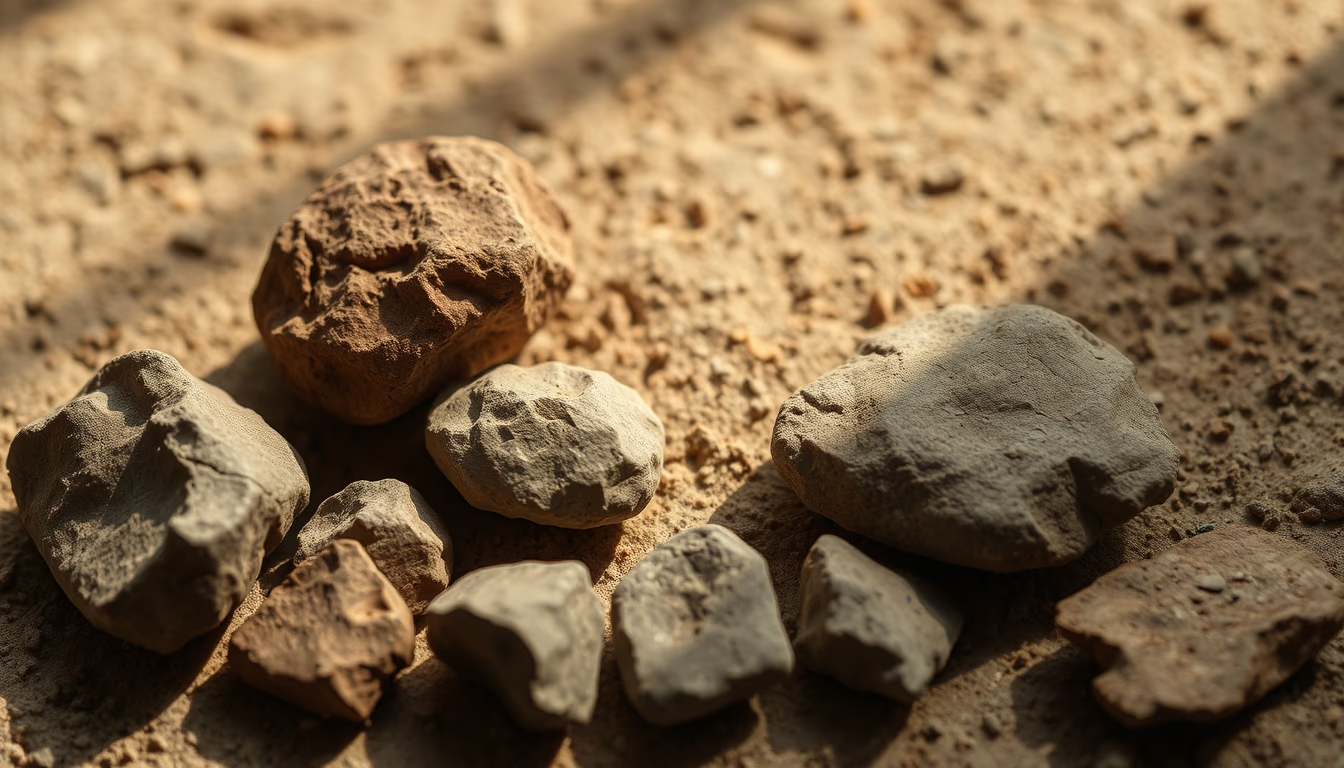
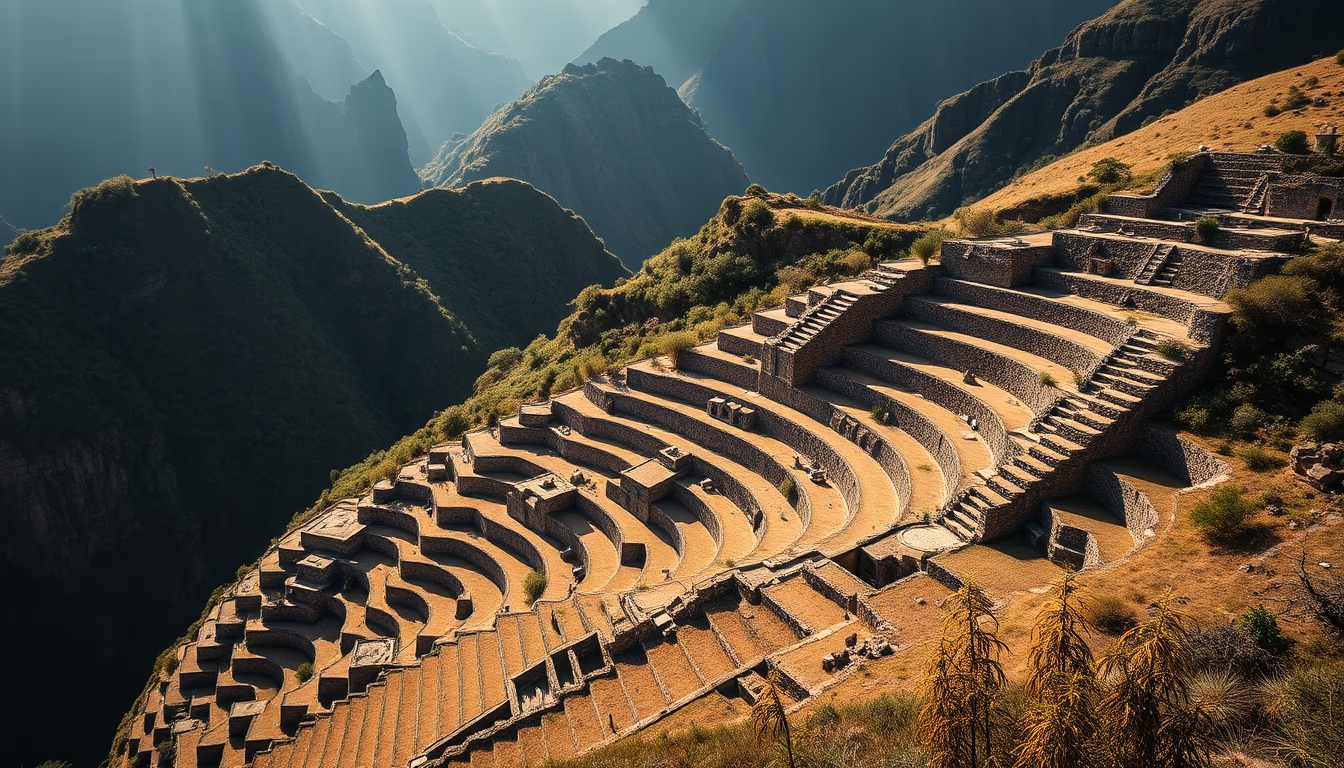
Pottery shards ancient
1344×768 · AVIF · CC BY 4.0
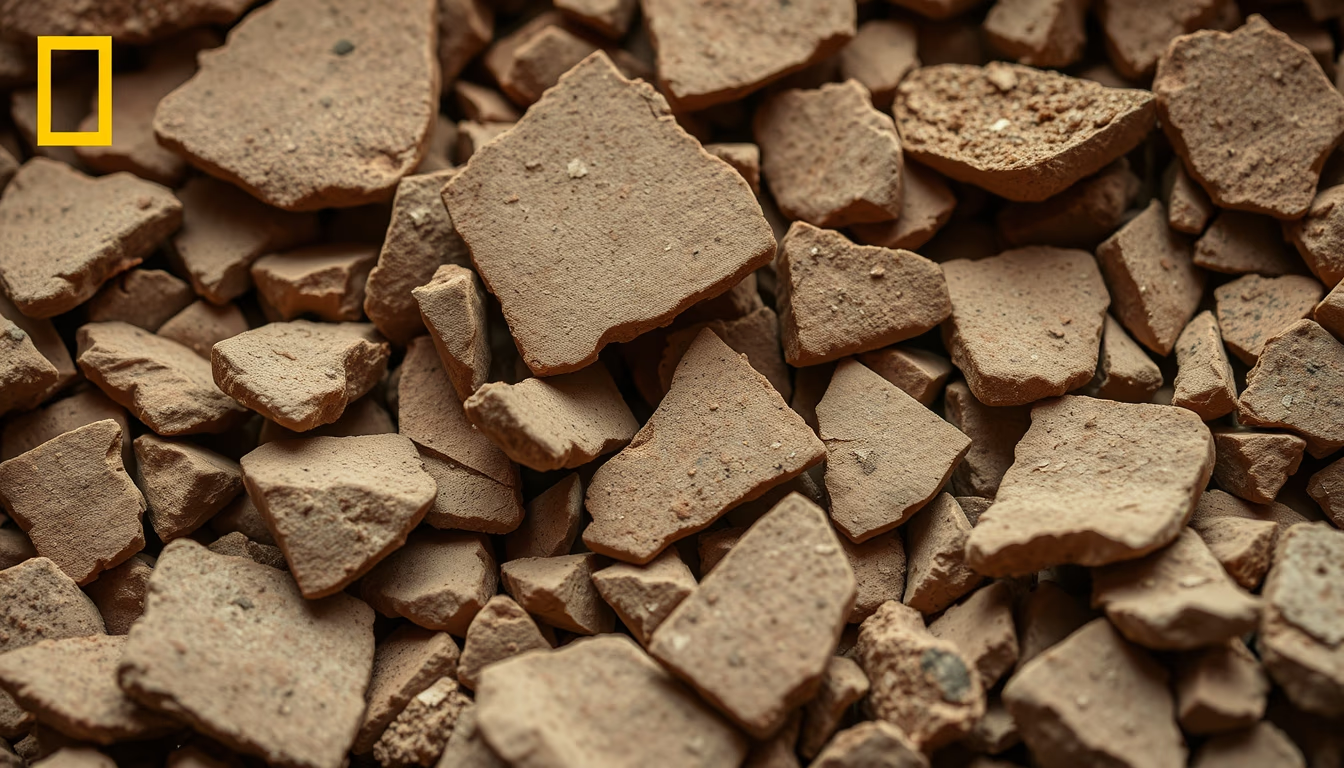
Ancient pottery shards are the most abundant archaeological evidence, revealing production techniques and trade networks of extinct civilizations.
About this subject
Pottery shards, or sherds, are fundamental artifacts in archaeology. Because they are nearly indestructible, they survive centuries or millennia, enabling relative dating through analysis of shapes and decorations, as well as absolute methods like thermoluminescence. The paste composition, added minerals (temper), and firing techniques reveal the technological knowledge of each human group.
On a global scale, these fragments yield vital information. In ancient Greece, sherds from Attic vases reveal trade routes across the Mediterranean. In Brazil, Marajoara pottery from Marajó Island (Pará) displays complex decoration indicating hierarchical societies. Organic residues (lipids, proteins) adhered to sherds are analyzed by chromatography and isotopes, reconstructing diets and ritual uses.
The original vessels were produced by techniques such as coiling (superimposed clay rolls) or hand modeling, followed by firing in kilns or bonfires. Use-wear marks, like external soot or internal abrasion, indicate functions: cooking, storage, or serving. Each culture developed unique styles, such as Roman amphorae or funerary urns in Brazilian shell mounds (sambaquis).
Finally, pottery shards are pillars of regional chronologies. In the Neolithic, pottery adoption is linked to sedentism and agriculture. In Brazil, sites like Pedra Pintada (Pará) yielded sherds dated to 9,000 years ago. Despite newer dating methods, ceramics remain the main guide fossils for archaeologists.
Frequently Asked Questions
How are pottery shards dated?
Sherds can be dated by thermoluminescence (heating the clay to measure emitted light), relative dating through stratigraphy and style, or radiocarbon dating of adhered organic residues.
What can a pottery shard reveal about ancient diets?
Lipid and protein residues extracted from the porous surface reveal which foods were cooked or stored, such as meats, dairy, or plants.
Why is pottery so important in archaeology?
Pottery is durable, abundant, and changes over time. Its shapes and decorations allow creation of chronological sequences, identification of cultures, and mapping of trade networks.
Direct URL
https://pub-c7d6a6ea828543ac903a74a341ccb2e1.r2.dev/imagens/pottery-shards-ancient-national-geographic-style-p3.avifHow to credit
Include a visible link back to UtilizAí. Copy one of the snippets below:
<a href="https://xn--utiliza-eza.com/en/midia/imagens/pottery-shards-ancient-national-geographic-style-p3">Pottery shards ancient</a> by <a href="https://xn--utiliza-eza.com">UtilizAí</a>, licensed under <a href="https://creativecommons.org/licenses/by/4.0/">CC BY 4.0</a>.
[Pottery shards ancient](https://xn--utiliza-eza.com/en/midia/imagens/pottery-shards-ancient-national-geographic-style-p3) by [UtilizAí](https://xn--utiliza-eza.com), CC BY 4.0
License: CC-BY-4.0