Pottery glaze fired
1344×768 · AVIF · CC BY 4.0
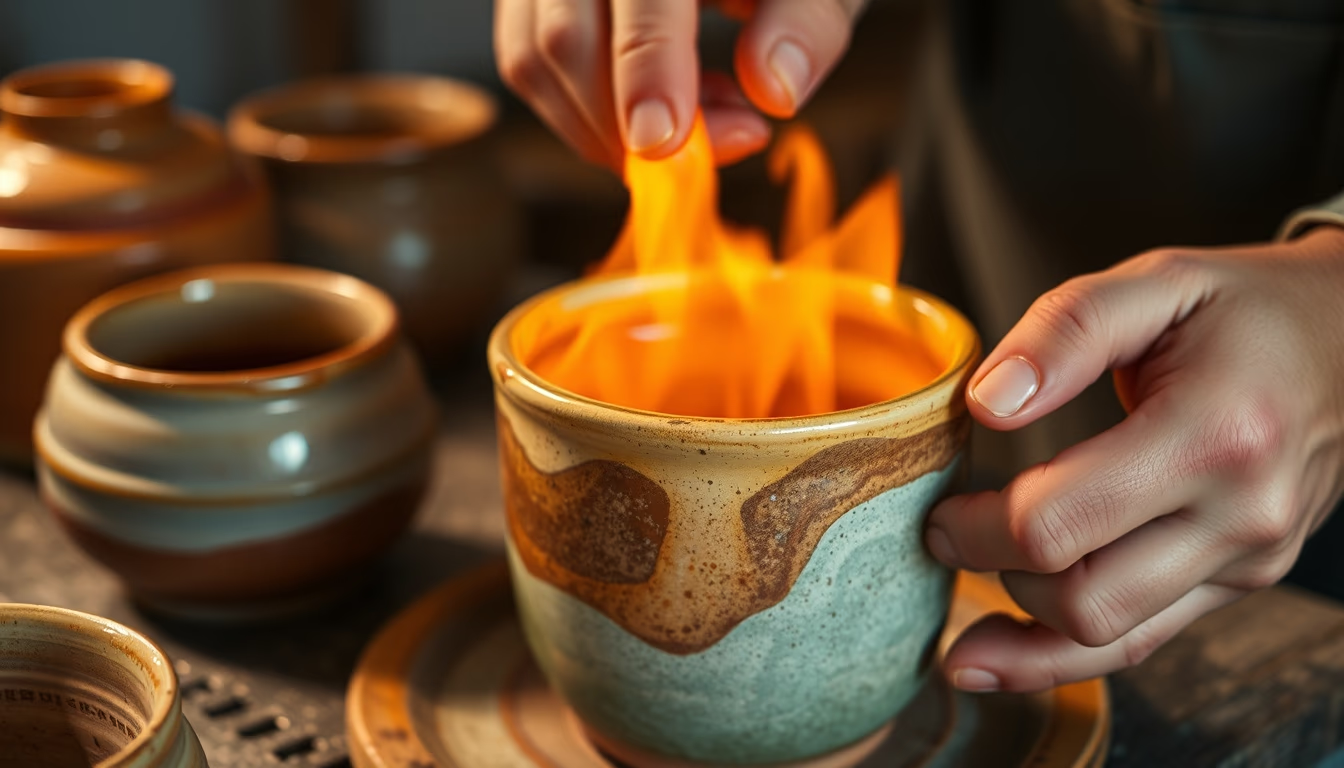
The pottery glaze firing process transforms clay into vitrified, durable, and colorful pieces, essential in Brazilian and global ceramic art.
About this subject
Glaze firing is the second critical stage in vitrified pottery production, occurring after the bisque firing. In this step, the piece has already been fired at a low temperature (around 900-1000°C) to harden the clay and make it porous, ready to receive glaze. Glaze is a suspension of ground minerals, such as silica, feldspar, and metallic oxides, which impart color and texture. Once applied, the piece is fired in a kiln at temperatures ranging from 1000°C to 1300°C, depending on the clay type and desired effect. During firing, the glaze melts and forms a glassy layer that waterproofs and decorates the ceramic.
In Brazil, ceramic tradition is rich and diverse, notably the Marajoara pottery from Marajó Island, which used rudimentary firing techniques, and the Tatuí ceramics in São Paulo, which inherited Portuguese methods. Glaze firing allows for glossy, vibrant, and durable pieces, widely used in tableware, tiles, and decorative objects. A iconic example are Brazilian colonial tiles, which often underwent multiple firings to fix complex patterns.
Technically, kiln atmosphere control is crucial. Electric or gas kilns allow oxidizing or reducing firing, altering glaze colors. For instance, copper can yield greens or reds depending on oxidation. The firing cycle can last from hours to days, with slow cooling to prevent cracking. Glaze firing not only finishes the piece but also makes it food-safe and washable, expanding its uses.
Interestingly, glazing originated in ancient Mesopotamia and China, arriving in Brazil with colonizers. Today, Brazilian artisans experiment with ash glazes and local oxides, keeping a 1,000-year tradition alive. Glaze firing thus bridges science, art, and culture.
Frequently Asked Questions
What is the typical temperature for glaze firing?
Glaze firing temperatures range between 1000°C and 1300°C, depending on the clay body and glaze maturity. Porcelain, for example, fires around 1250°C to 1300°C.
What is the difference between bisque firing and glaze firing?
Bisque firing is the first, lower-temperature firing (900-1000°C) to harden the clay and make it porous. Glaze firing is the second, higher-temperature firing to melt the glaze and vitrify the piece, making it waterproof and decorated.
Can glaze firing be done in a home oven?
No, it requires a kiln that reaches high temperatures (above 1000°C). Electric or gas kilns are common in studios. Regular kitchen ovens cannot achieve the necessary temperature.
Direct URL
https://pub-c7d6a6ea828543ac903a74a341ccb2e1.r2.dev/imagens/pottery-glaze-fired-lo-fi-disposable-camera-p5.avifHow to credit
Include a visible link back to UtilizAí. Copy one of the snippets below:
<a href="https://xn--utiliza-eza.com/en/midia/imagens/pottery-glaze-fired-lo-fi-disposable-camera-p5">Pottery glaze fired</a> by <a href="https://xn--utiliza-eza.com">UtilizAí</a>, licensed under <a href="https://creativecommons.org/licenses/by/4.0/">CC BY 4.0</a>.
[Pottery glaze fired](https://xn--utiliza-eza.com/en/midia/imagens/pottery-glaze-fired-lo-fi-disposable-camera-p5) by [UtilizAí](https://xn--utiliza-eza.com), CC BY 4.0
License: CC-BY-4.0