Pottery glaze fired
1344×768 · AVIF · CC BY 4.0
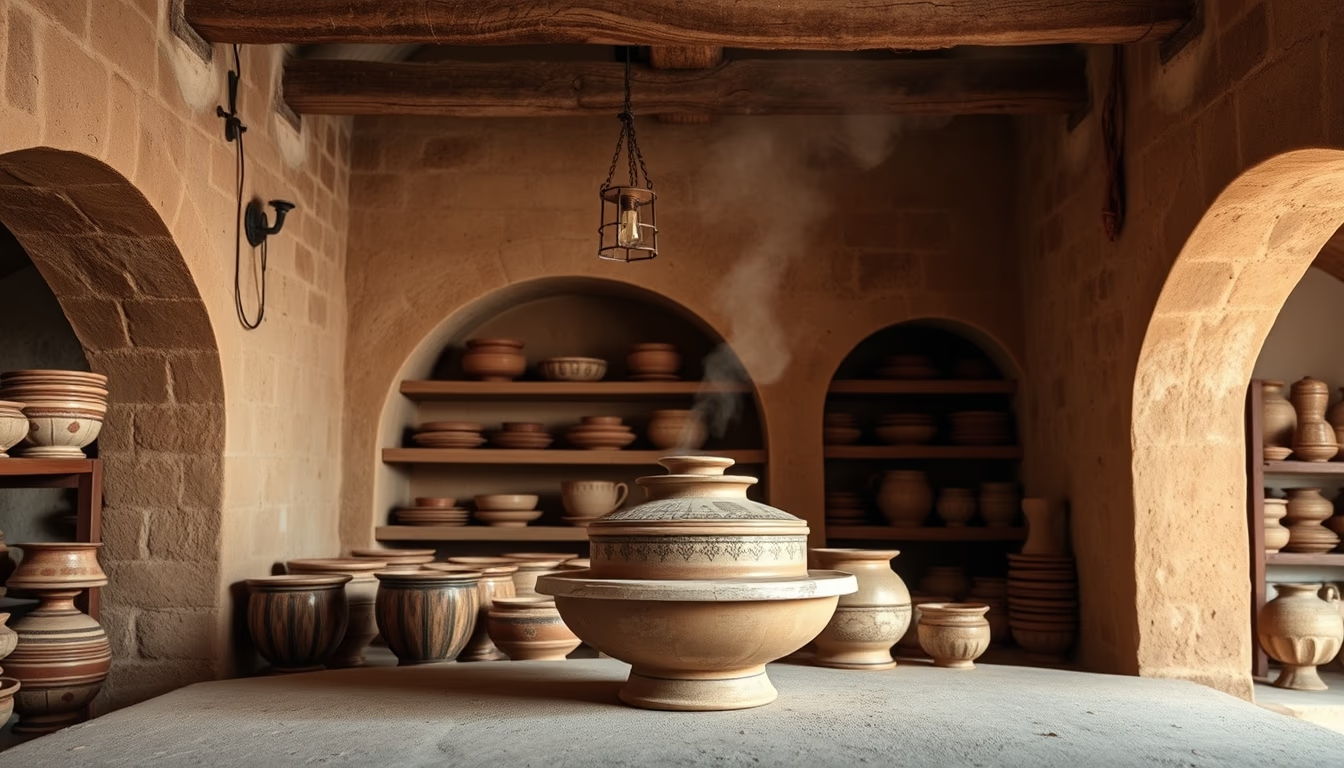
The firing of pottery glazes transforms clay and minerals into durable, decorative pieces, blending art and chemistry.
About this subject
Glaze firing is the final and decisive step in pottery production, where the shaped and dried piece receives a glaze coating and is subjected to high temperatures in a kiln. The glaze is a suspension of ground minerals (feldspar, silica, limestone, and metal oxides) in water, which during firing melts to form a glassy surface. Typical temperatures range from 900°C to 1300°C, depending on the clay type and desired effect. This process not only makes the piece waterproof but also imparts color and texture, being essential for tableware, tiles, and sculptures.
Historically, glazing techniques emerged millennia ago in the Middle East and China, where blue-and-white porcelain became a status symbol. In Brazil, glazed ceramics are traditional in the handicraft of the Jequitinhonha Valley and decorative tiles in cities like Olinda. Firing can be done in electric, gas, or wood-fired kilns, each yielding different results: wood-firing produces reducing atmospheres that create earthy tones, while electric kilns allow precise oxidation control.
Interestingly, the final color of the glaze often looks very different before firing. For example, copper oxide can produce green or red depending on the kiln atmosphere. Additionally, defects like crazing can be intentional for decorative effect, as in Raku style. In architecture, glazed tiles are used on facades and interiors, such as Athos Bulcão's panels in Brasília, combining aesthetics and durability.
The chemistry behind firing involves complex reactions: silica forms the glass, alumina provides stability, and metal oxides act as colorants and fluxes. Temperature and firing time are critical; an overheated kiln can melt the glaze completely or deform the piece. Therefore, potters use pyrometers and pyrometric cones to monitor the process. Today, digital technology allows programming heating and cooling ramps, ensuring repeatability.
Frequently Asked Questions
What is the difference between bisque firing and glaze firing?
Bisque firing is the first firing, done on the unglazed piece to harden the clay and make it porous. Glaze firing is the second, where glaze is applied and melted, vitrifying the surface.
What are the safety risks in glaze firing?
Kilns reach very high temperatures and can cause burns. Additionally, inhaling dust from glazes (containing silica and metals) is hazardous, requiring mask use and proper ventilation.
Why do some glazes craze after firing?
Crazing happens when the glaze and clay have different thermal expansion coefficients, creating stress during cooling. It can be a defect or a desired decorative effect, as in Raku style.
Direct URL
https://pub-c7d6a6ea828543ac903a74a341ccb2e1.r2.dev/imagens/pottery-glaze-fired-architectural-photography-p3.avifHow to credit
Include a visible link back to UtilizAí. Copy one of the snippets below:
<a href="https://xn--utiliza-eza.com/en/midia/imagens/pottery-glaze-fired-architectural-photography-p3">Pottery glaze fired</a> by <a href="https://xn--utiliza-eza.com">UtilizAí</a>, licensed under <a href="https://creativecommons.org/licenses/by/4.0/">CC BY 4.0</a>.
[Pottery glaze fired](https://xn--utiliza-eza.com/en/midia/imagens/pottery-glaze-fired-architectural-photography-p3) by [UtilizAí](https://xn--utiliza-eza.com), CC BY 4.0
License: CC-BY-4.0