Pop-up book opened
1344×768 · AVIF · CC BY 4.0

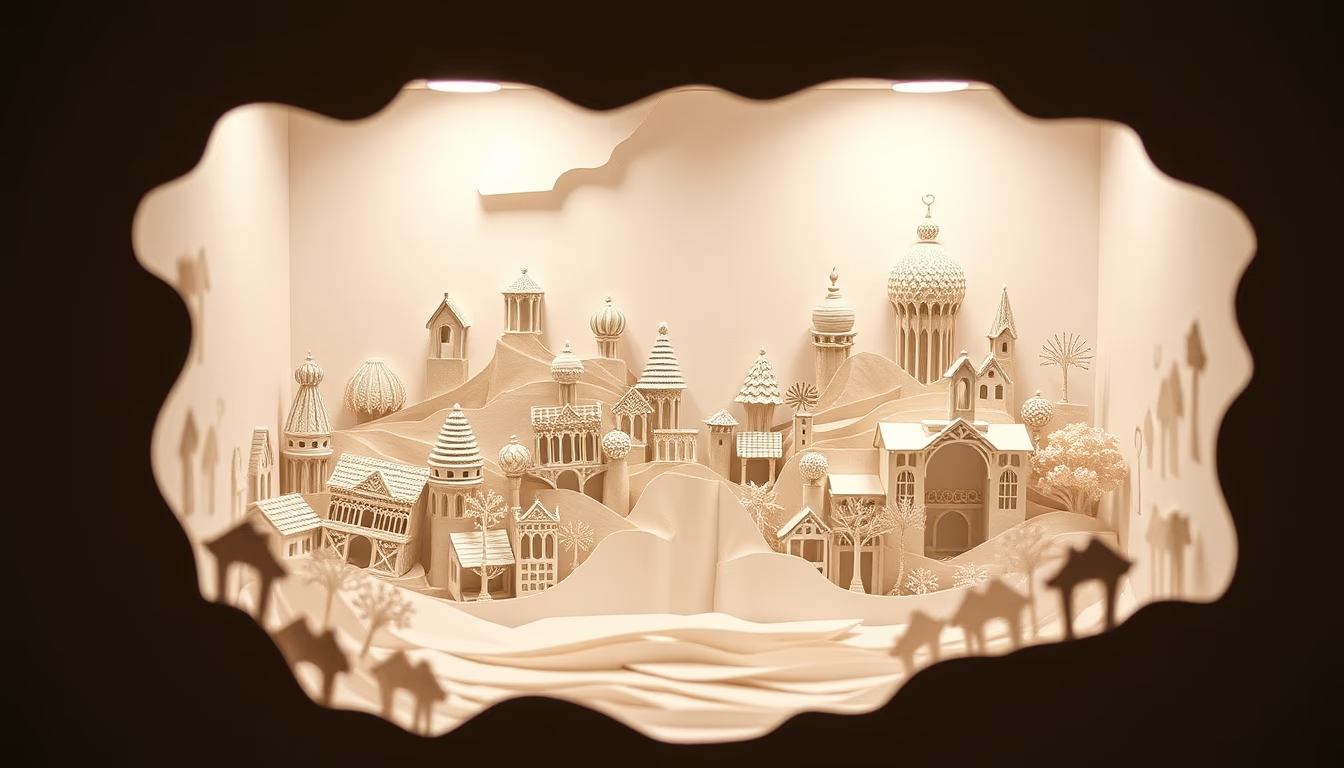
Pop-up books combine paper engineering with three-dimensional art, creating scenes that leap off the pages when the book is opened.
About this subject
Pop-up books, also known as movable books, use paper engineering techniques to create three-dimensional structures that rise when a page is turned. Their origins date back to the 13th century, when monk Matthew Paris created foldouts for astronomical calculations. In the 19th century, German Lothar Meggendorfer pioneered complex mechanisms for children's books, popularizing the format. Today, artists like Robert Sabuda and Matthew Reinhart elevate the craft to an art form, with pieces recreating castles, dinosaurs, and even the solar system in miniature.
Culturally, pop-ups are valued for their ability to educate and delight. They are used in anatomy textbooks where organs unfold, and in deluxe editions of fairy tales. The precision required is such that each page can take months to design. Materials range from cardstock to thin plastics, and printing often involves laser cutting for detail.
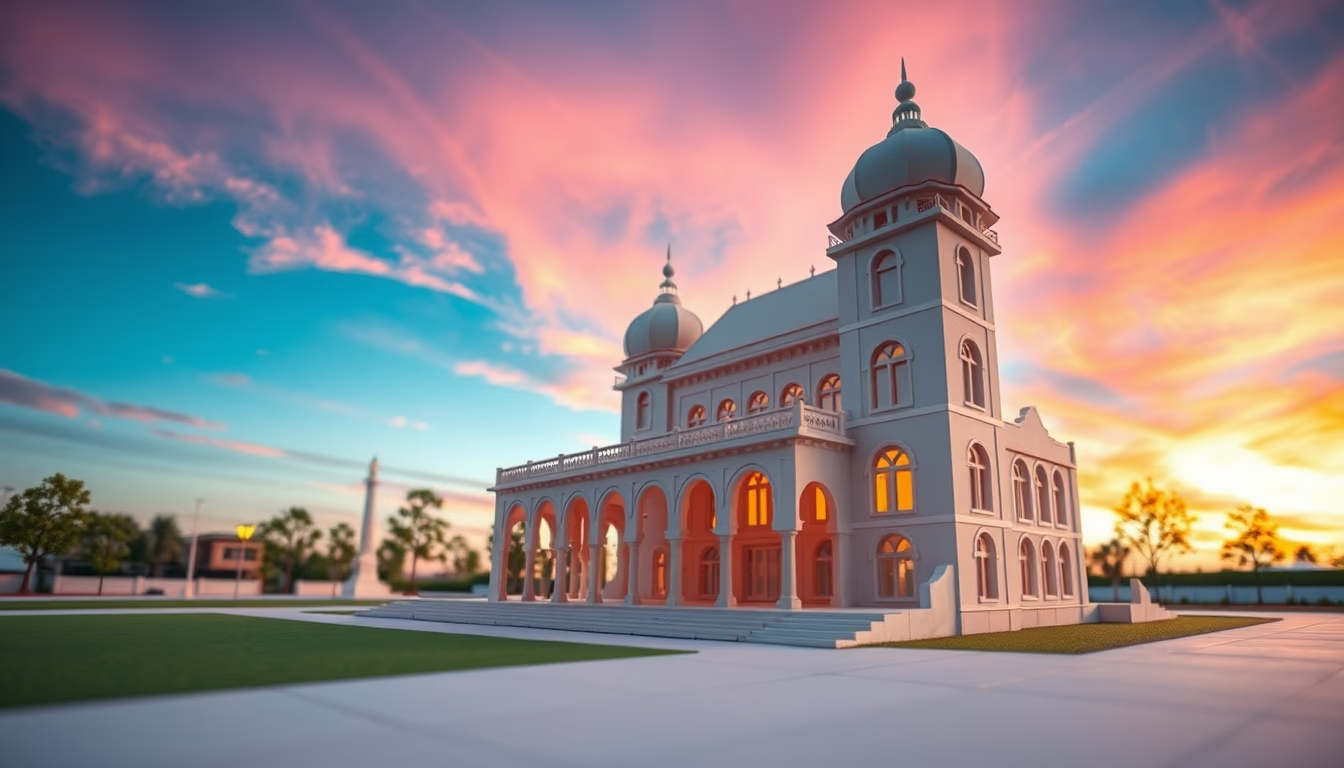
The tilt-shift miniature effect is a photographic technique that simulates reduced depth of field, making real objects appear as scale models. When applied to photographs of pop-up books, it enhances the illusion that the scenes are tiny dioramas. This happens because selective sharpness mimics human vision when observing small objects up close. The combination of paper engineering and tilt-shift creates images that play with perception of scale and reality.
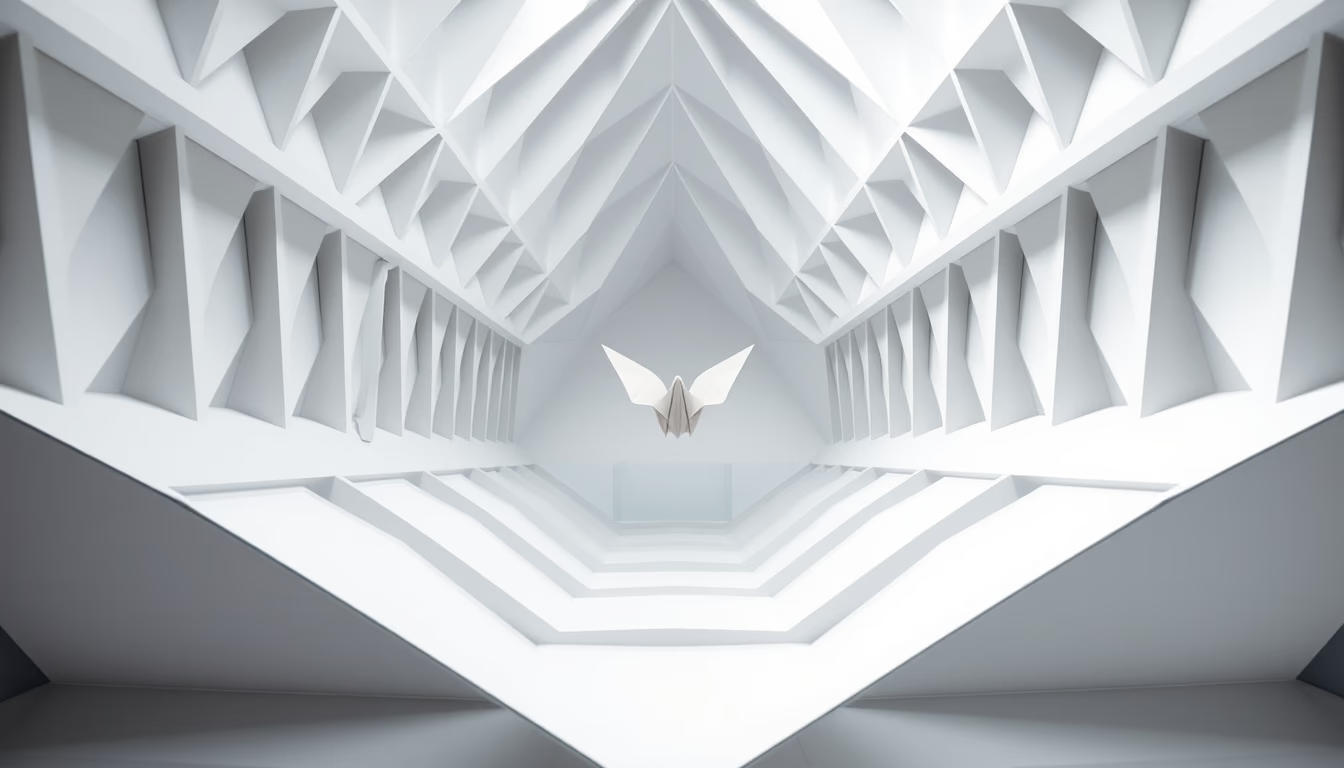
Intriguingly, the world's largest pop-up book, recorded by Guinness in 2020, is a replica of the Taj Mahal measuring over 2 meters tall when opened. The smallest fits in the palm of a hand and contains a flapping butterfly. These examples showcase the versatility of an art form that continues to innovate with modern techniques like 3D modeling and digital printing.
Frequently Asked Questions
How does a pop-up book work?
A pop-up book uses cuts, folds, and paper mechanisms (like tabs, wheels, and levers) that, when triggered by opening the page, raise three-dimensional structures. The design is done by hand or with 3D software, requiring millimeter precision for pieces to fit perfectly.
Who are the main pop-up artists?
Robert Sabuda, Matthew Reinhart, and David A. Carter are global references. Sabuda is known for books like 'The Frog Prince' and 'Alice in Wonderland', while Reinhart created 'Star Wars: A Pop-Up Guide'. Carter has interactive abstract art books.
What is the tilt-shift effect and how does it relate to pop-ups?
Tilt-shift is a photographic technique using special lenses or digital editing to create gradual blur, making real objects appear as miniatures. In pop-up photos, it enhances depth and scale perception, making scenes look even more like realistic dioramas.
Direct URL
https://pub-c7d6a6ea828543ac903a74a341ccb2e1.r2.dev/imagens/pop-up-book-opened-tilt-shift-miniature-fresh3.avifHow to credit
Include a visible link back to UtilizAí. Copy one of the snippets below:
<a href="https://xn--utiliza-eza.com/en/midia/imagens/pop-up-book-opened-tilt-shift-miniature-fresh3">Pop-up book opened</a> by <a href="https://xn--utiliza-eza.com">UtilizAí</a>, licensed under <a href="https://creativecommons.org/licenses/by/4.0/">CC BY 4.0</a>.
[Pop-up book opened](https://xn--utiliza-eza.com/en/midia/imagens/pop-up-book-opened-tilt-shift-miniature-fresh3) by [UtilizAí](https://xn--utiliza-eza.com), CC BY 4.0
License: CC-BY-4.0