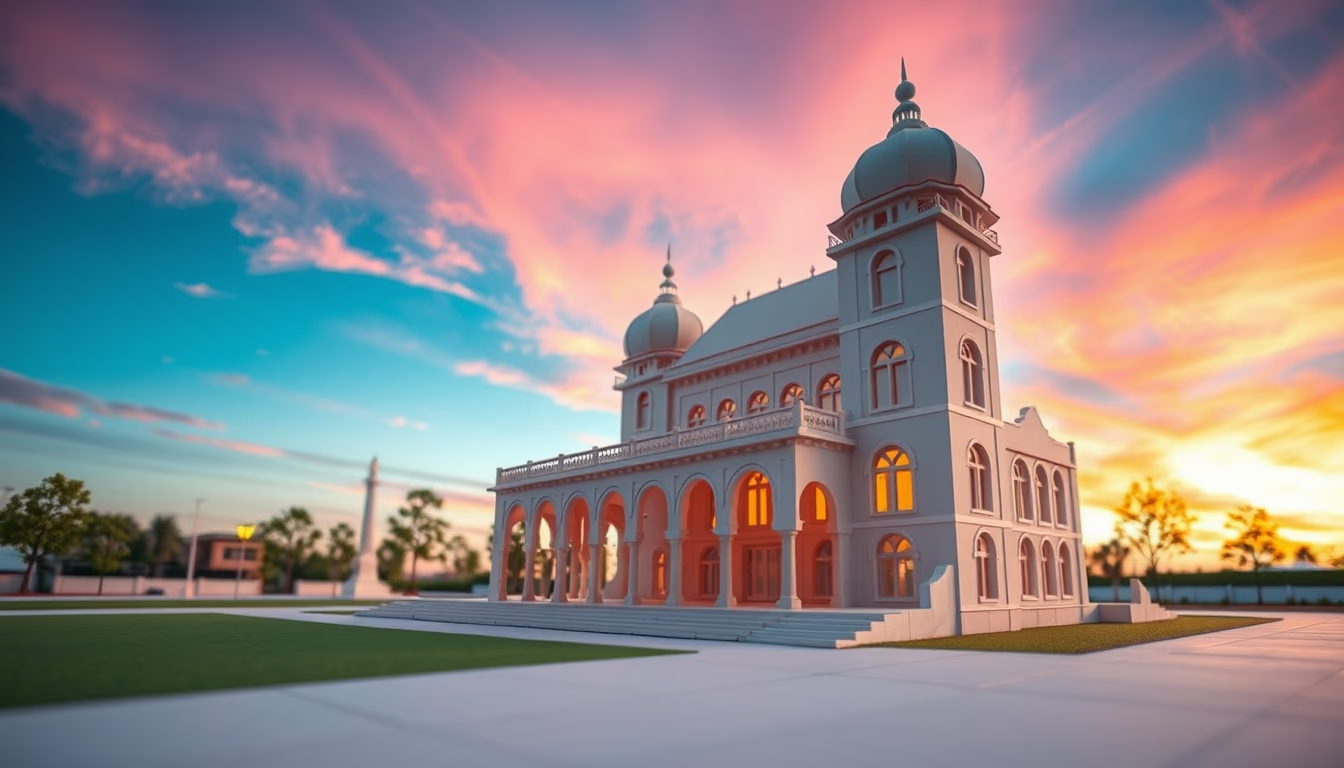
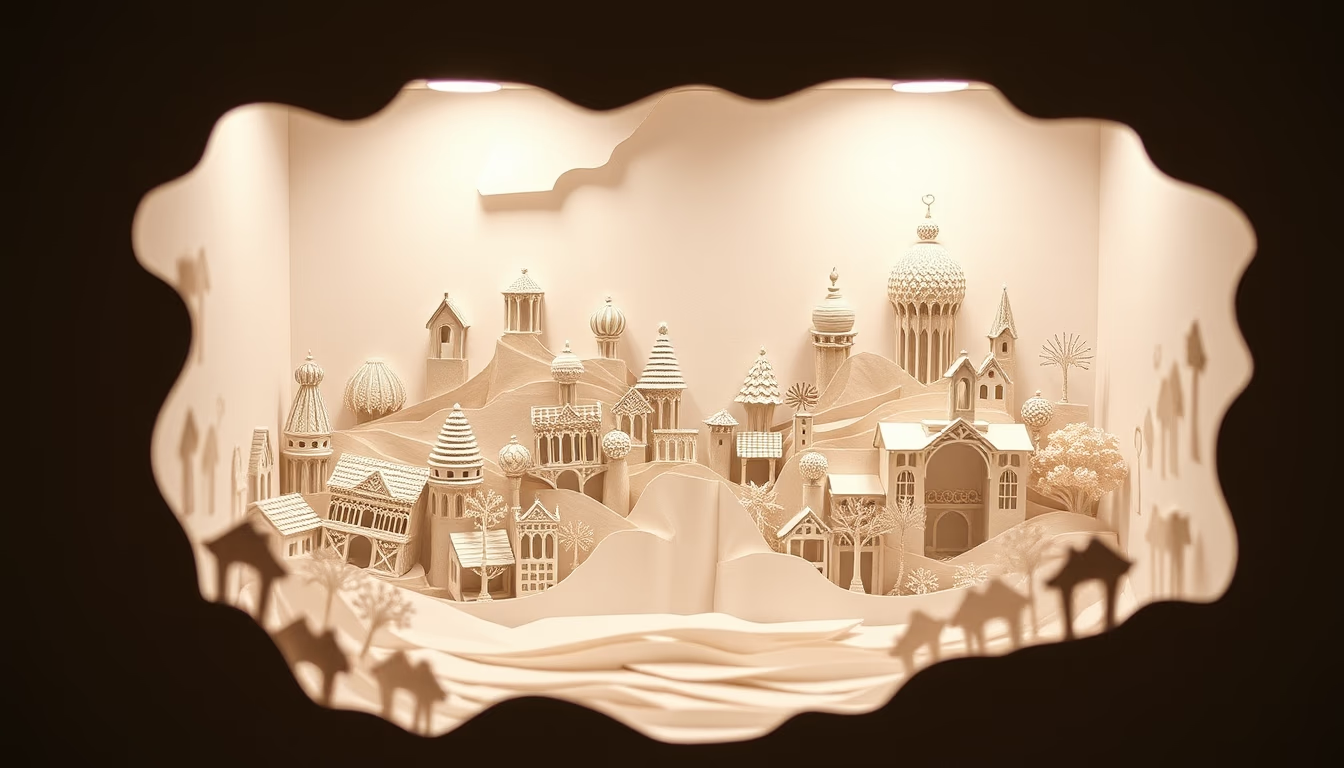
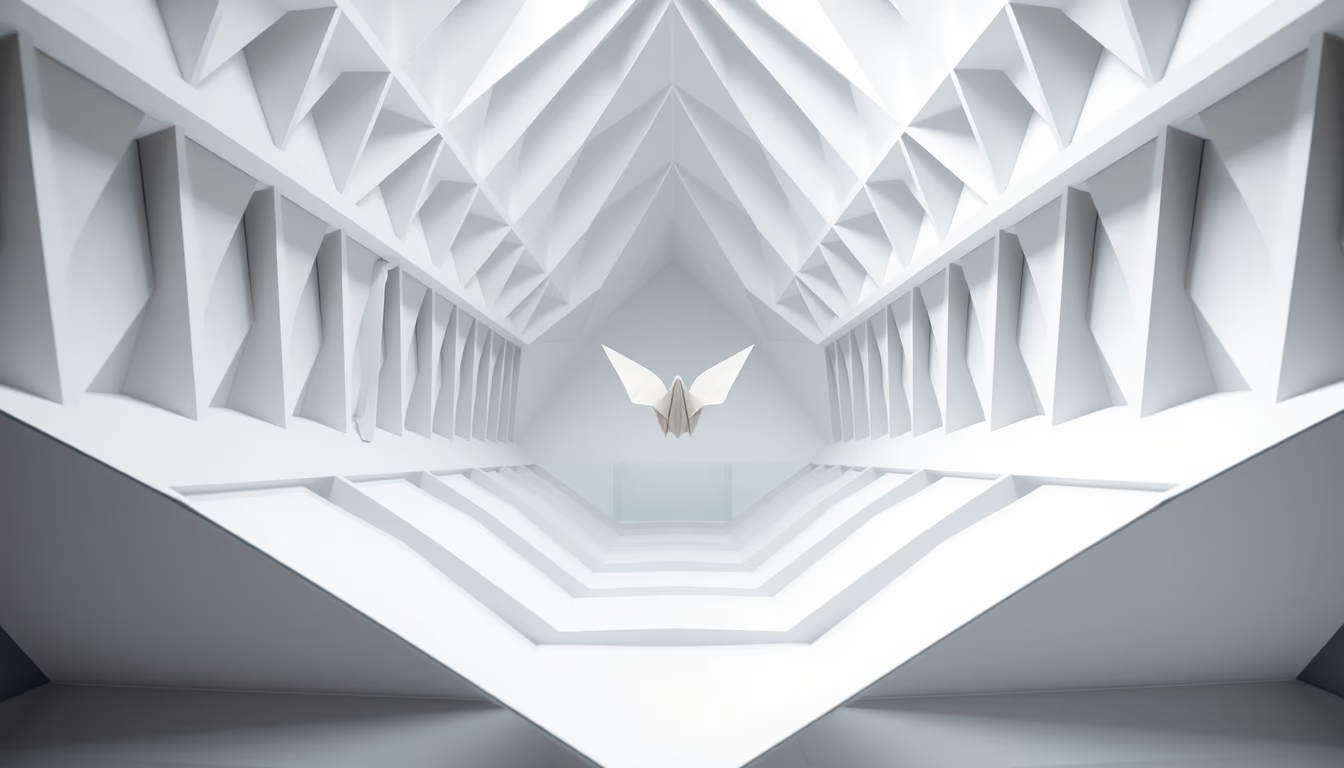
Pop-up book opened
1344×768 · AVIF · CC BY 4.0

Pop-up book: paper engineering that transforms flat pages into three-dimensional sculptures, delighting readers of all ages.
About this subject
Pop-up books, also known as movable or animated books, are an art form that combines textual narrative with paper engineering. Each page, when opened, reveals three-dimensional structures that rise automatically. The technique dates back to the 13th century when English monk and mathematician Matthew Paris created the first paper pulleys in manuscripts. However, it was in the 18th century that pop-ups became popular in Europe, mainly in educational books on astronomy and anatomy.
In the 20th century, artists like Czech Vojtěch Kubašta and Americans Robert Sabuda and Matthew Reinhart elevated the technique to new heights. Sabuda, for instance, uses laser cutting and complex mechanisms such as the 'v-fold' and 'box fold' to create detailed scenes from fairy tales or dinosaurs. Each book can take months to design and assemble by hand, requiring millimetric precision. In Brazil, notable examples include 'O Livro das Maravilhas' by Lúcia Hiratsuka, which combines pop-up with watercolor illustrations.
Beyond entertainment, pop-ups are used in medicine for organ models, in architecture for mockups, and in advertising as promotional gifts. Despite their fragility, collectors value old and limited editions. International fairs like the 'Movable Book Society' celebrate this art. Fun fact: the largest pop-up book in the world, 'China: The Grand Tour', stands 1.8 meters tall when opened.
Frequently Asked Questions
What is the difference between a pop-up book and a lift-the-flap book?
Pop-up books have paper mechanisms that create automatic three-dimensional figures when the page is opened, while lift-the-flap books require the reader to lift or pull parts to reveal surprises.
Who are the leading pop-up artists today?
Robert Sabuda and Matthew Reinhart stand out for complex works like 'The Wonderful Wizard of Oz' and 'Encyclopedia Prehistorica'. In Brazil, Lúcia Hiratsuka is a reference.
How are pop-ups made?
The process involves graphic design, laser or scissor cutting, manual creasing, and assembly. Each piece is designed to fit perfectly, using V-folds, boxes, and paper rivets.
Direct URL
https://pub-c7d6a6ea828543ac903a74a341ccb2e1.r2.dev/imagens/pop-up-book-opened-studio-editorial-portrait-fresh7.avifHow to credit
Include a visible link back to UtilizAí. Copy one of the snippets below:
<a href="https://xn--utiliza-eza.com/en/midia/imagens/pop-up-book-opened-studio-editorial-portrait-fresh7">Pop-up book opened</a> by <a href="https://xn--utiliza-eza.com">UtilizAí</a>, licensed under <a href="https://creativecommons.org/licenses/by/4.0/">CC BY 4.0</a>.
[Pop-up book opened](https://xn--utiliza-eza.com/en/midia/imagens/pop-up-book-opened-studio-editorial-portrait-fresh7) by [UtilizAí](https://xn--utiliza-eza.com), CC BY 4.0
License: CC-BY-4.0