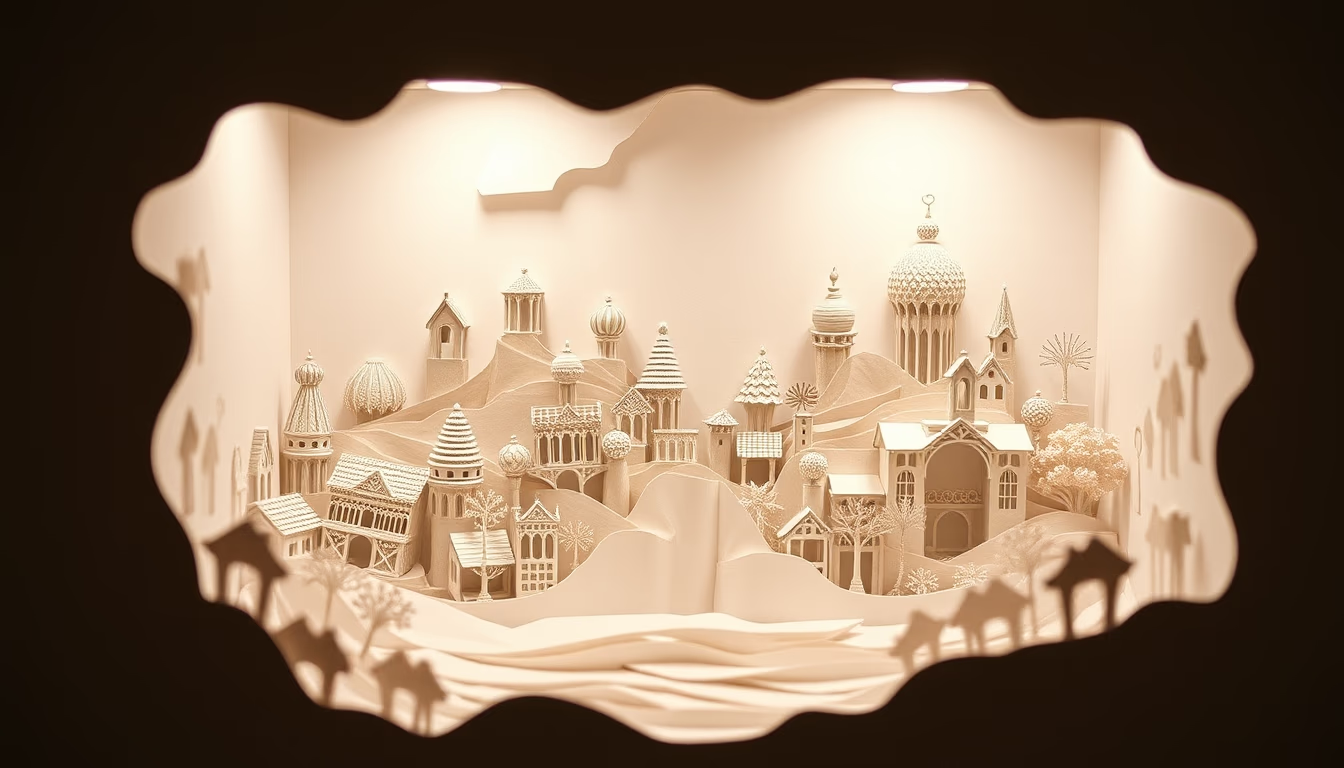
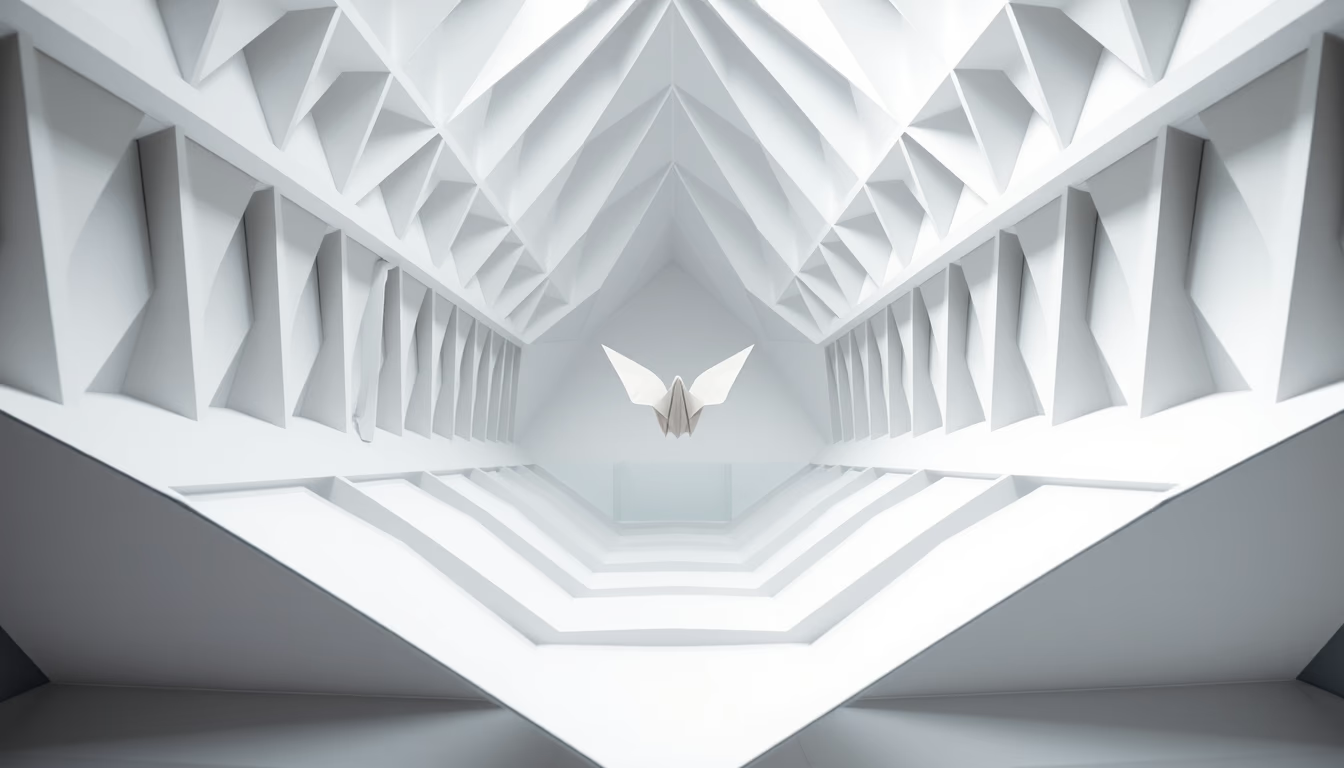
Pop-up book opened
1344×768 · AVIF · CC BY 4.0
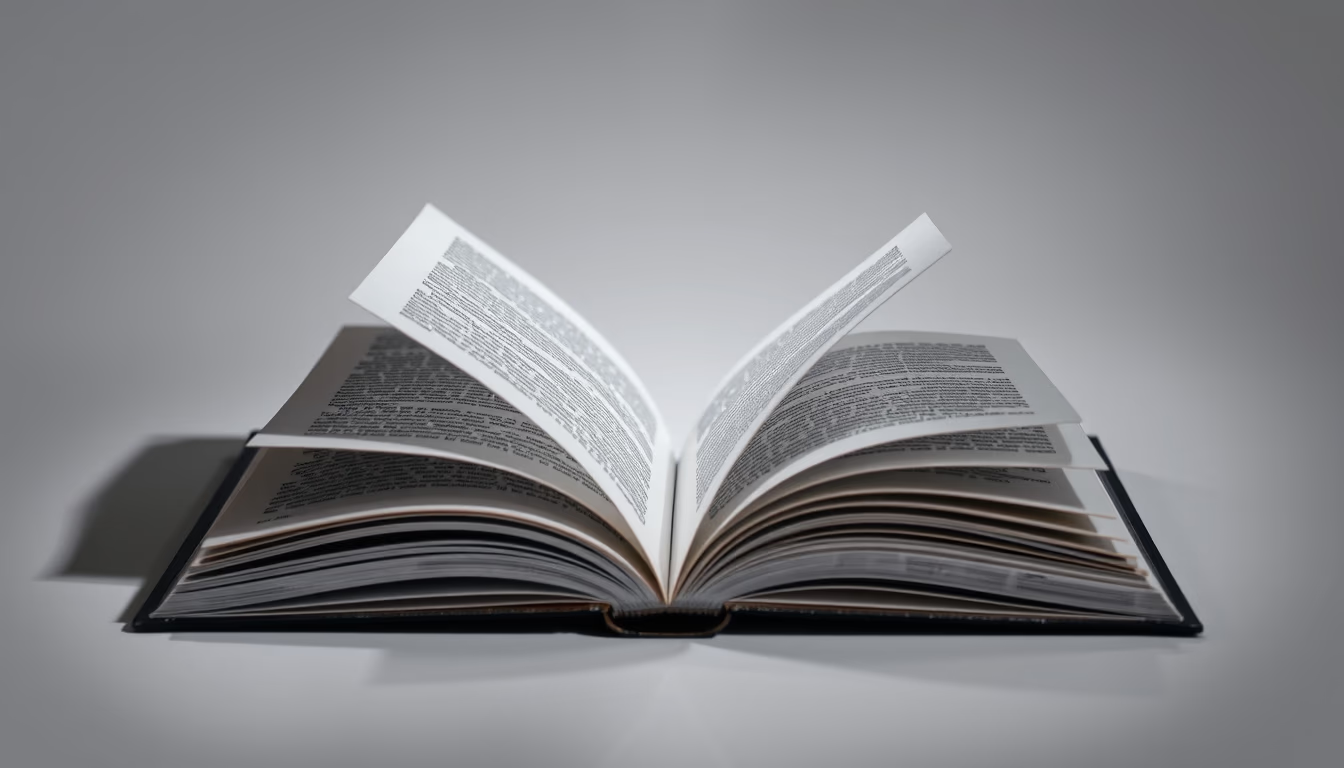
Pop-up books, or three-dimensional books, combine artisanal paper engineering with visual storytelling, delighting readers of all ages.
About this subject
A pop-up book is a work that uses paper engineering to create three-dimensional structures that rise when the page is opened. Unlike regular illustrated books, they require meticulous planning of cuts, creases, and gluing for the forms to come to life. These books are also known as movable or animated books and are enjoyed by both children and collectors.
The history of pop-ups dates back to the 13th century, when Catalan monk Ramon Llull created a manuscript with rotating parts. In the 19th century, German designer Lothar Meggendorfer is considered the father of modern pop-up books, with intricate mechanisms. From the 1930s, Disney popularized the format with titles based on films, and in the 1970s, Jan Pienkowski brought innovations with his flap and pop-up books.
Techniques involve various mechanisms: simple flaps, rotors, pull-tabs, and complex three-dimensional elements. Artists like Robert Sabuda and Matthew Reinhart elevate paper engineering to the level of paper sculpture, creating detailed scenes that assemble and disassemble smoothly. Each book requires prototyping and rigorous testing to ensure durability and functionality.
In Brazil, pop-ups have gained prominence with artists like Lúcia Hiratsuka and exhibitions at the National Library. These books are used in education to teach sciences and history in a playful way, and are also collectible items valued for their artistry and rarity.
Frequently Asked Questions
What is the difference between a pop-up book and a regular book?
Pop-up books have paper mechanisms that create three-dimensional shapes when the page is opened, offering an interactive reading experience, unlike regular books with flat pages.
Who invented pop-up books?
The origins trace back to the 13th century with Ramon Llull, but the modern format was developed by Lothar Meggendorfer in the 19th century. Later artists like Robert Sabuda refined the techniques.
How to care for a pop-up book?
Handle carefully, store in a dry place, and avoid forcing flaps or pulling mechanisms. Many are fragile and require storage flat or with support.
Direct URL
https://pub-c7d6a6ea828543ac903a74a341ccb2e1.r2.dev/imagens/pop-up-book-opened-magazine-editorial-fresh12.avifHow to credit
Include a visible link back to UtilizAí. Copy one of the snippets below:
<a href="https://xn--utiliza-eza.com/en/midia/imagens/pop-up-book-opened-magazine-editorial-fresh12">Pop-up book opened</a> by <a href="https://xn--utiliza-eza.com">UtilizAí</a>, licensed under <a href="https://creativecommons.org/licenses/by/4.0/">CC BY 4.0</a>.
[Pop-up book opened](https://xn--utiliza-eza.com/en/midia/imagens/pop-up-book-opened-magazine-editorial-fresh12) by [UtilizAí](https://xn--utiliza-eza.com), CC BY 4.0
License: CC-BY-4.0