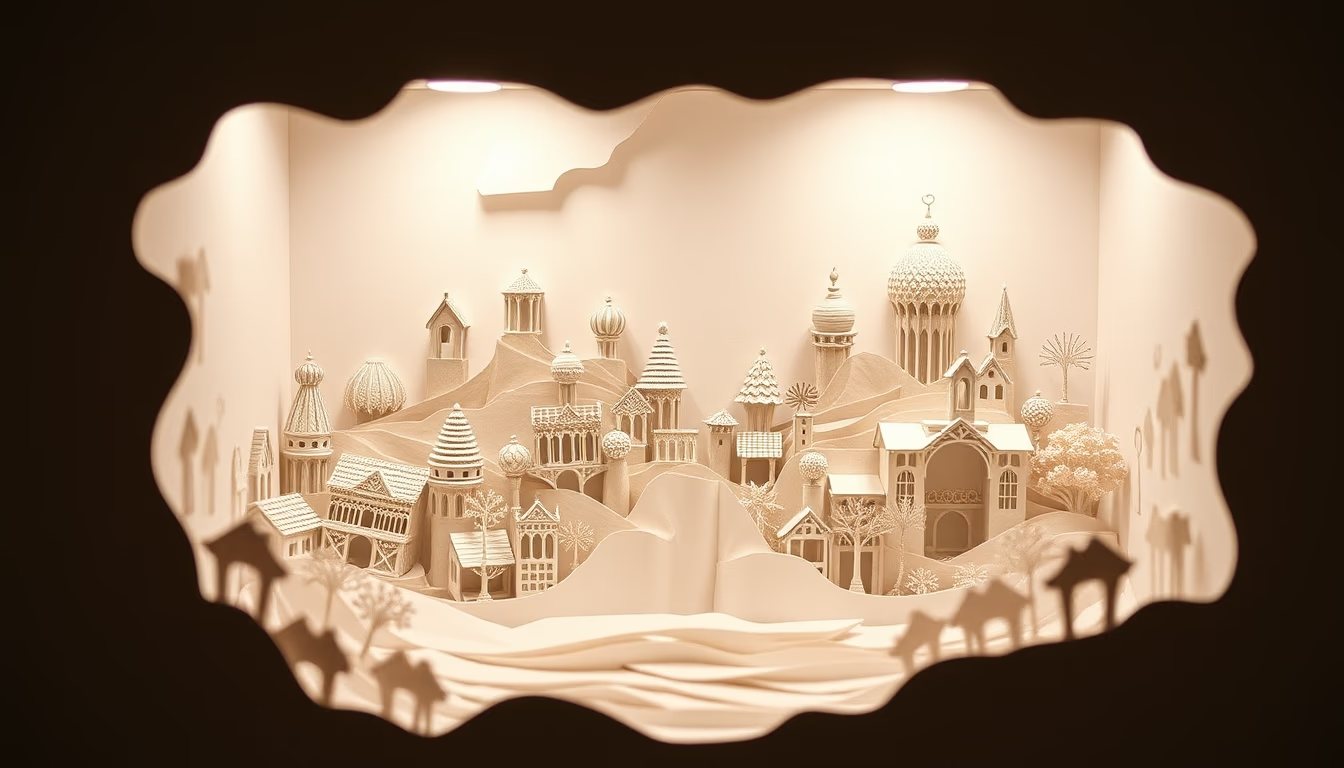
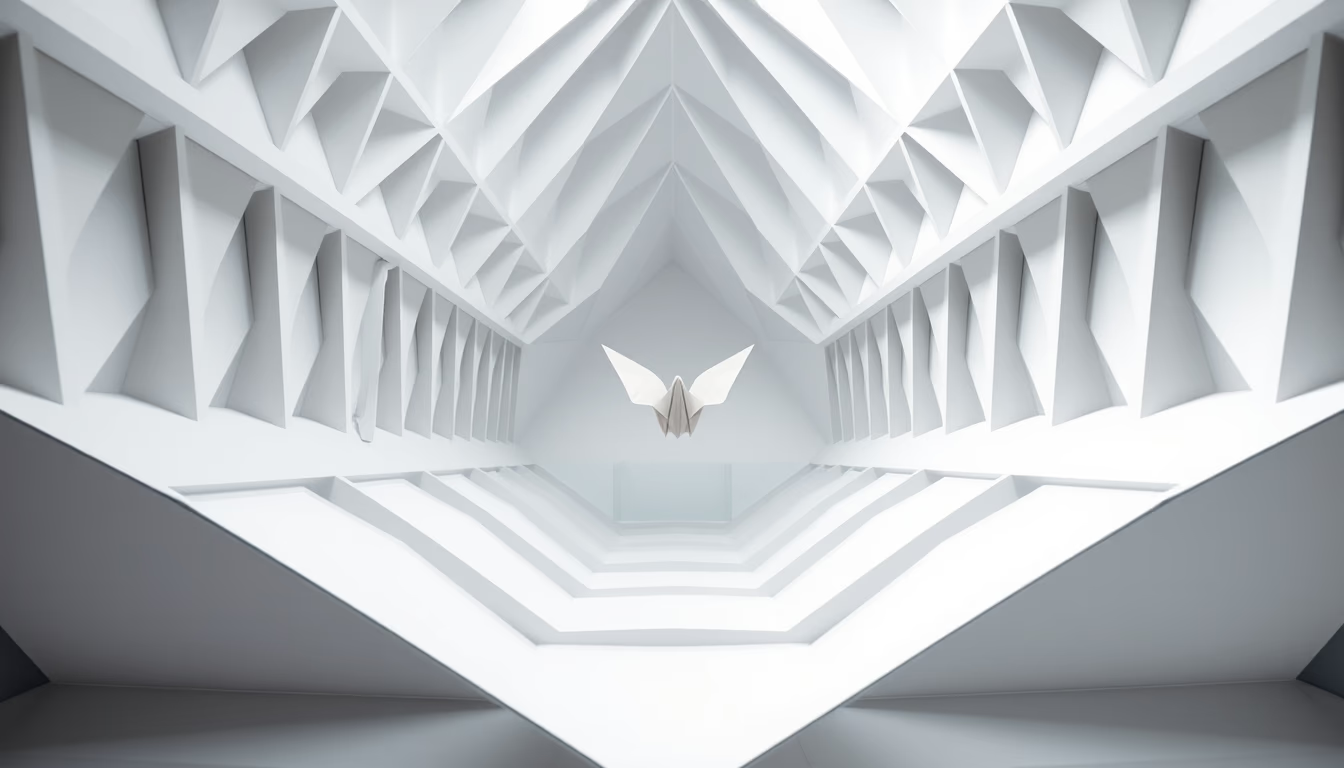
Pop-up book opened
1344×768 · AVIF · CC BY 4.0
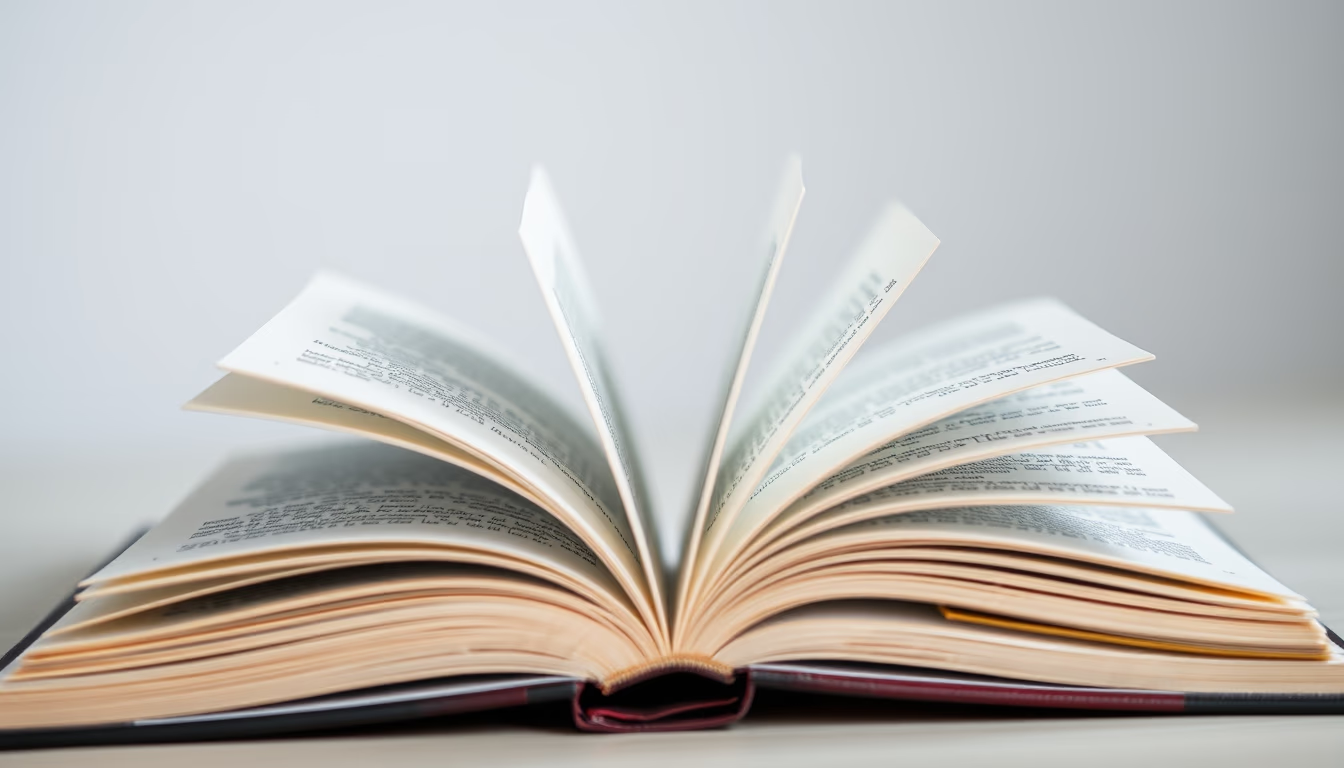
Pop-up books combine paper engineering and visual storytelling in three-dimensional works that delight readers of all ages.
About this subject
Pop-up books, also known as movable or animated books, are publications that use paper mechanisms to create three-dimensional scenes when the page is opened. This technique dates back to the 13th century with the use of volvelles (rotating discs) in scientific manuscripts, and gained popularity in the 18th century through educational and children's productions. Today, artists like Robert Sabuda and Matthew Reinhart elevate the art to levels of complexity and beauty, with works requiring months of planning and precise laser cutting.
The engineering behind pop-ups involves folds, flaps, guillotines, and parallelogram mechanisms that allow figures to pop up, rotate, or move. Each design is a challenge of geometry and paper strength, requiring exhaustive testing to ensure smooth operation without tearing. The process begins with a sketch, followed by prototypes in ordinary paper until the final version in high-weight paper.
In Brazil, a growing paper art scene includes designers like Renata B. R., who creates handmade pop-up books about Brazilian fauna and flora. The Brazilian publishing market also produces educational titles, such as those from Editora Melhoramentos, using pop-ups to explain science and history concepts. The technique is valued for both its playful appeal and pedagogical potential, stimulating motor skills and spatial understanding in children.
Interestingly, the term "pop-up" became popular in the 20th century, but the oldest known technique is the "lift-the-flap" book, used in medieval astronomical atlases. Famous pop-up books include "The Wonderful Wizard of Oz" (1996) by Sabuda and "Star Wars: A Pop-Up Guide to the Galaxy" by Reinhart, containing over 30 mechanisms. The complexity is such that some limited editions are hand-printed and sold as collector's items.
Frequently Asked Questions
How do pop-up book mechanisms work?
Mechanisms use strategic folds and cuts in paper. When the page is opened, the structures tension and rise, forming three-dimensional figures. Common types include the parallelogram (which lifts a figure), the guillotine (which makes an element rotate), and the flap (which reveals a hidden image).
What is the difference between a pop-up and a lift-the-flap book?
Pop-ups create three-dimensional structures that spring from the page, while lift-the-flap books use pieces of paper that lift to reveal hidden content. Pop-ups are generally more complex and require advanced paper engineering.
What materials are commonly used in pop-up book production?
Paper is the main material, with weights ranging from 120 gsm to 300 gsm. Thicker papers are used for structures that bear weight. Many books use card stock or coated paper. For moving mechanisms, strings or ribbons may be added, but most are all-paper.
Direct URL
https://pub-c7d6a6ea828543ac903a74a341ccb2e1.r2.dev/imagens/pop-up-book-opened-macro-closeup-fresh9.avifHow to credit
Include a visible link back to UtilizAí. Copy one of the snippets below:
<a href="https://xn--utiliza-eza.com/en/midia/imagens/pop-up-book-opened-macro-closeup-fresh9">Pop-up book opened</a> by <a href="https://xn--utiliza-eza.com">UtilizAí</a>, licensed under <a href="https://creativecommons.org/licenses/by/4.0/">CC BY 4.0</a>.
[Pop-up book opened](https://xn--utiliza-eza.com/en/midia/imagens/pop-up-book-opened-macro-closeup-fresh9) by [UtilizAí](https://xn--utiliza-eza.com), CC BY 4.0
License: CC-BY-4.0