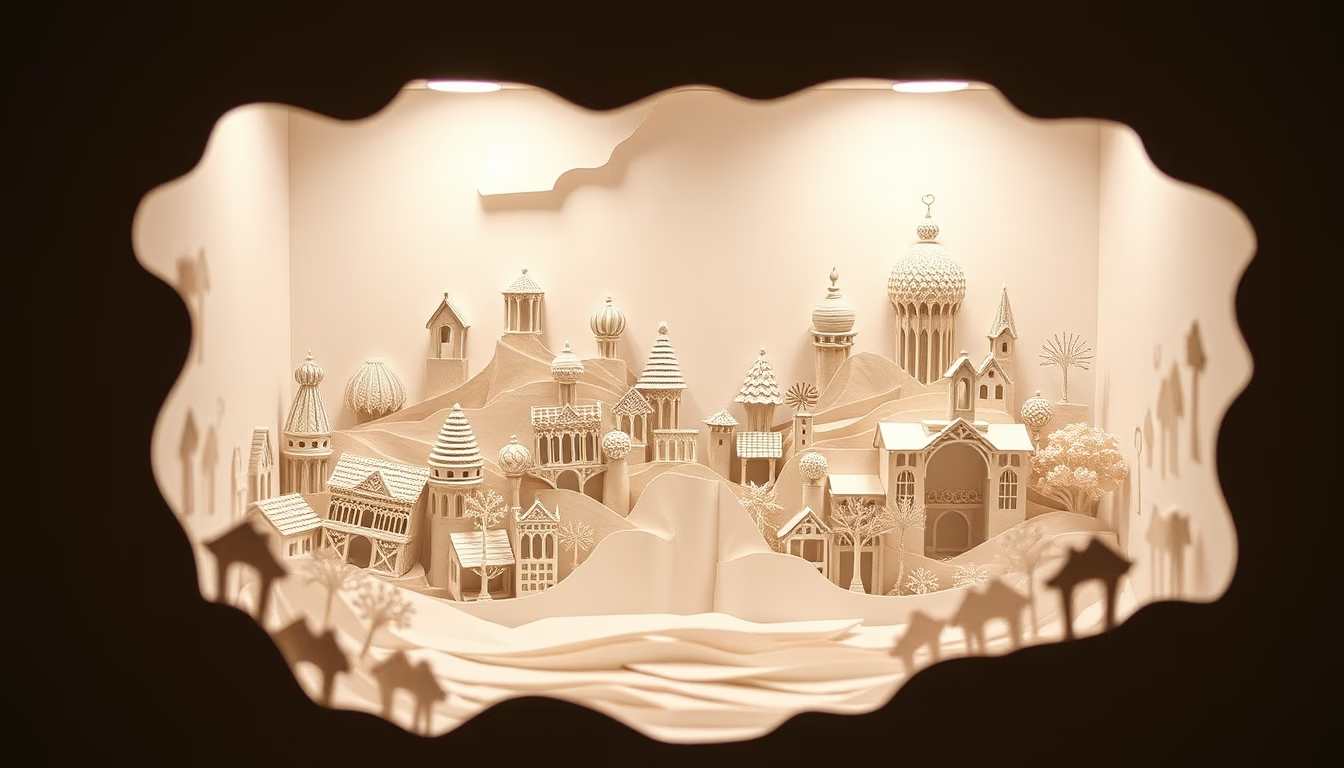
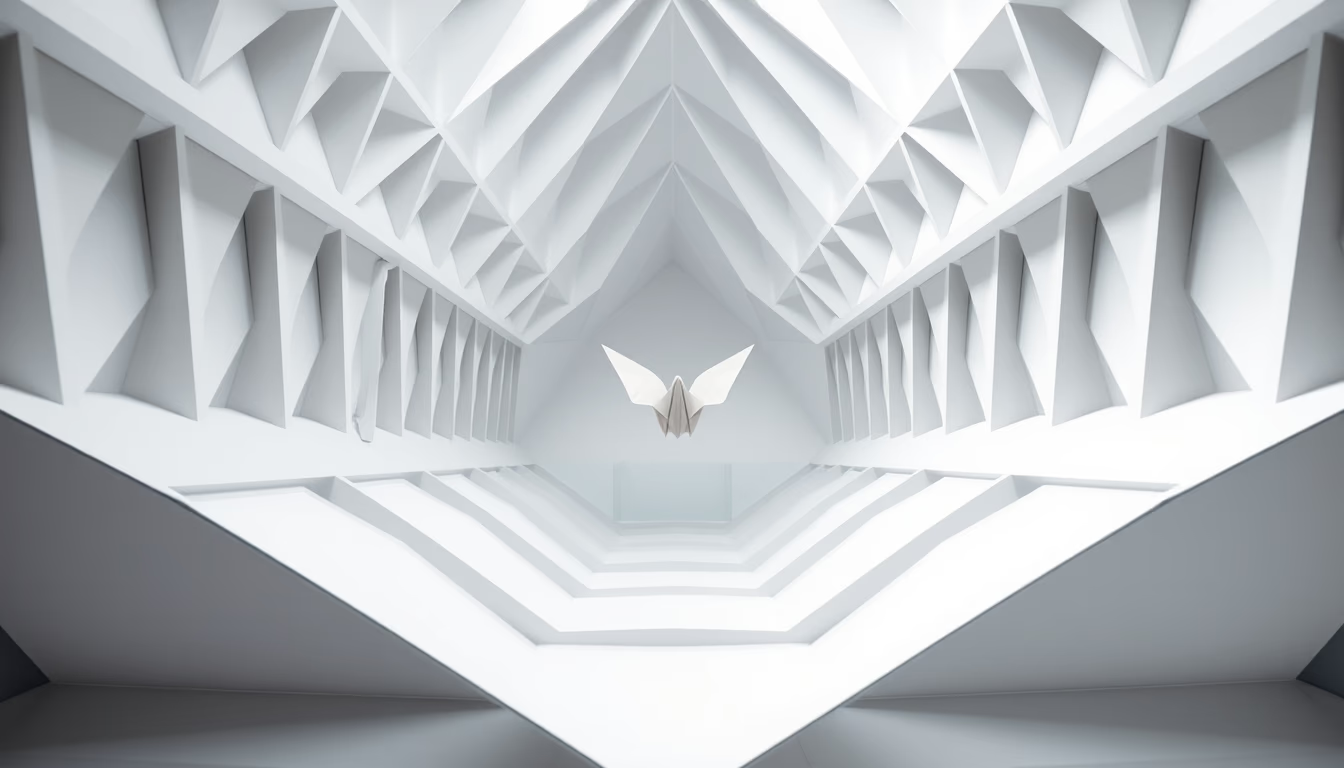
Pop-up book opened
1344×768 · AVIF · CC BY 4.0

Pop-up books combine paper engineering and visual storytelling. Discover their history, techniques, and cultural impact.
About this subject
Pop-up books, also known as movable or three-dimensional books, use paper engineering to create scenes that rise or move when a page is turned. The technique dates back to the 13th century, when monk Matthew Paris created a revolving diagram for calculating religious dates. However, the first pop-up book aimed at children's entertainment appeared in 1929 with the release of "Daily Express Children's Annual Number 1" by the British publisher Daily Express.
The real breakthrough came with the work of German artist Lothar Meggendorfer, who in the late 19th century developed complex movements using levers and wires, making illustrations animated. Contemporary artists like Robert Sabuda and Matthew Reinhart have elevated the technique to high complexity, creating books that are true paper sculptures. The production process involves design, laser or manual cutting, and meticulous assembly, requiring millimeter precision for all folds to work correctly.
Pop-up books are not limited to entertainment; they are used in education, architecture, and medicine to illustrate three-dimensional concepts. In Brazil, the Instituto Moreira Salles has a rich collection of pop-up books, although national production is still limited. The "lo-fi disposable camera" aesthetic mentioned in the tags suggests the image was captured with a disposable camera or a filter that mimics its grainy, vintage look, common in nostalgic records of physical objects. This combination of old technique with modern aesthetics reinforces the timeless nature of pop-ups.
Interestingly, the term "pop-up" was coined in the 1930s by the publisher Blue Ribbon Books, which popularized the genre in the US. Today, pop-up art is celebrated in exhibitions such as the one at the Morgan Library & Museum in New York, influencing graphic designers, paper engineers, and visual artists worldwide.
Frequently Asked Questions
Who invented the pop-up book?
The technique evolved over centuries. Monk Matthew Paris created a revolving mechanism in the 13th century, but the first commercial children's book was from 1929. Lothar Meggendorfer is considered the father of complex movements.
What materials are used to make a pop-up book?
High-weight paper (like cardstock), special glue, and sometimes wires or elastics. Modern processes include laser cutting and manual folding.
Are pop-up books only for children?
No. They are used in architecture for models, in medicine for anatomy, and in art books for adults. Works by Sabuda and Reinhart are collected by adults.
Direct URL
https://pub-c7d6a6ea828543ac903a74a341ccb2e1.r2.dev/imagens/pop-up-book-opened-lo-fi-disposable-camera-fresh18.avifHow to credit
Include a visible link back to UtilizAí. Copy one of the snippets below:
<a href="https://xn--utiliza-eza.com/en/midia/imagens/pop-up-book-opened-lo-fi-disposable-camera-fresh18">Pop-up book opened</a> by <a href="https://xn--utiliza-eza.com">UtilizAí</a>, licensed under <a href="https://creativecommons.org/licenses/by/4.0/">CC BY 4.0</a>.
[Pop-up book opened](https://xn--utiliza-eza.com/en/midia/imagens/pop-up-book-opened-lo-fi-disposable-camera-fresh18) by [UtilizAí](https://xn--utiliza-eza.com), CC BY 4.0
License: CC-BY-4.0