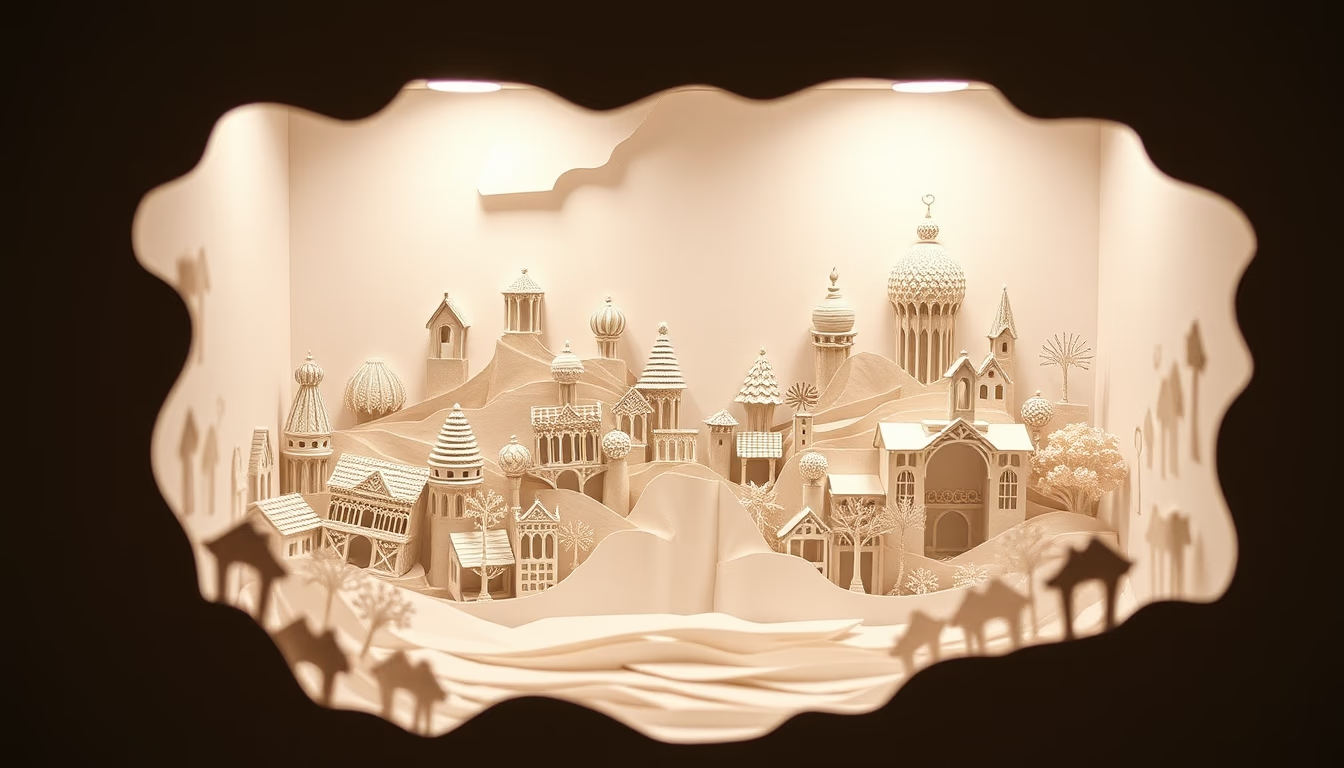
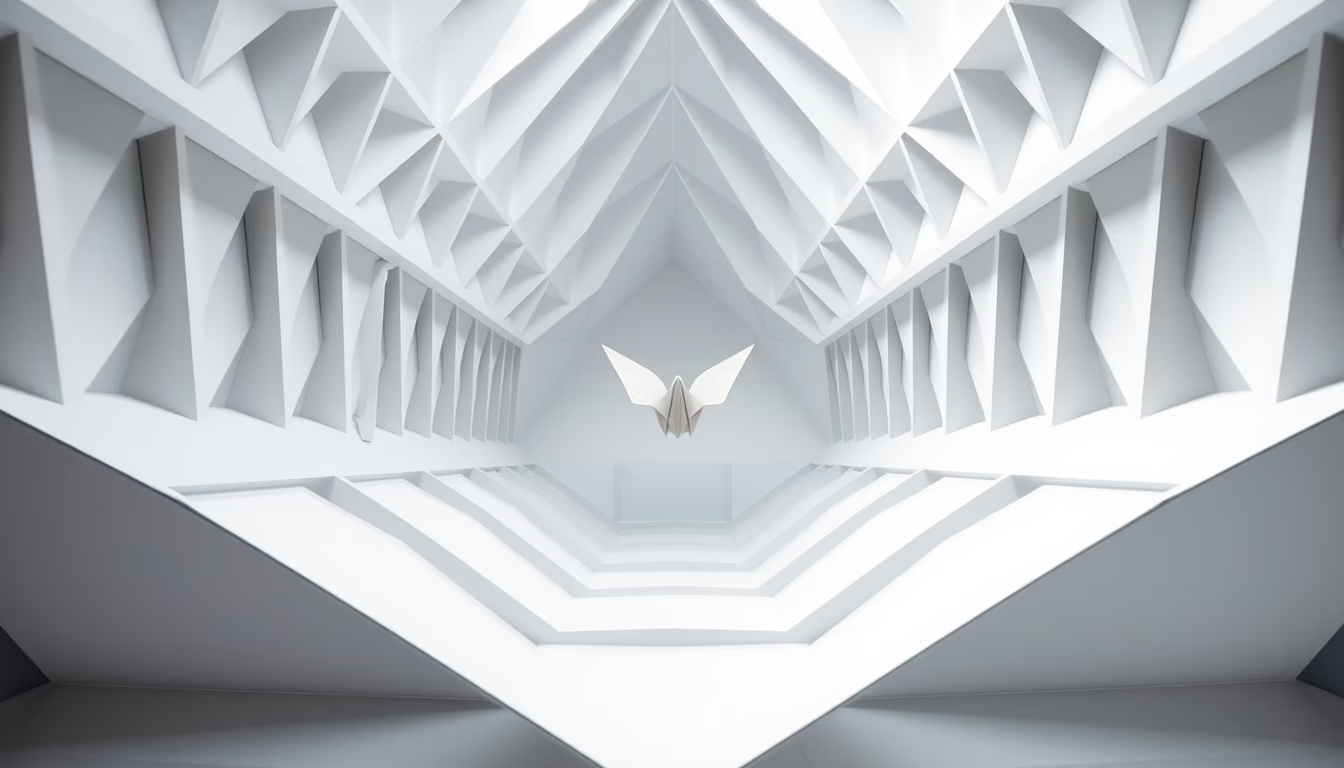
Pop-up book opened
1344×768 · AVIF · CC BY 4.0

Pop-up books blend paper engineering and artistry to create three-dimensional scenes that captivate readers of all ages.
About this subject
Pop-up books are publications that, when opened, reveal three-dimensional paper structures, the result of meticulous paper engineering. Unlike regular illustrated books, each page is designed with precise cuts, folds, and interlocking parts that, upon opening, rise to form figures, scenes, or movable mechanisms. This technique requires careful planning, as every fold must align perfectly to prevent tearing or deformation.
The history of pop-up books dates back to the 13th century, when medieval manuscripts included rotating wheels for astronomical calculations. In the 19th century, German creator Lothar Meggendorfer produced books with figures that moved via paper levers, considered a precursor to the genre. In the 20th century, the technique gained popularity with Blue Ribbon Books, which published the first Disney-licensed pop-ups in the 1930s. Today, artists like Robert Sabuda and Matthew Reinhart elevate the art to sophisticated levels, creating true paper sculptures that tell complex stories.
Common mechanisms include the V-fold, which creates a right angle when the page is opened, and the pull-tab, which moves parts of the scene through tabs. Each pop-up book can take months to design and test, with prototypes discarded until everything works flawlessly. Beyond entertainment, these books are used in education to teach concepts of geometry, physics, and even history, as many works recreate monuments or historical events in miniature.
Culturally, pop-ups are collected by adults and children alike, and exhibited in museums as works of art. The required precision and creativity make each page a surprise. Due to manual techniques and limited production, some copies become rare and valuable, such as those produced by independent publishers. The visual and interactive appeal ensures that pop-up books continue to delight generations, even in the digital age.
Frequently Asked Questions
How do pop-up book mechanisms work?
Mechanisms rely on folds, cuts, and paper interlocking. Common types are the V-fold, which lifts a figure when the page opens, and the pull-tab, which moves parts of the scene via pulled tabs. Each element is designed to move in sync with the book's opening.
What was the first pop-up book in history?
The first book with movable elements was Matthew Paris's 13th-century astronomical manuscript with rotating discs. The first modern pop-up for children was 'The Little Engineer' (1919), but popularity grew with Blue Ribbon Books' Disney pop-ups in the 1930s.
Why are pop-up books considered works of art?
They require meticulous design, surgical precision in cuts, and artistic creativity to tell stories in three dimensions. Artists like Robert Sabuda create complex pieces exhibited in galleries, blending paper engineering, illustration, and narrative.
Direct URL
https://pub-c7d6a6ea828543ac903a74a341ccb2e1.r2.dev/imagens/pop-up-book-opened-isometric-flat-lay-fresh1.avifHow to credit
Include a visible link back to UtilizAí. Copy one of the snippets below:
<a href="https://xn--utiliza-eza.com/en/midia/imagens/pop-up-book-opened-isometric-flat-lay-fresh1">Pop-up book opened</a> by <a href="https://xn--utiliza-eza.com">UtilizAí</a>, licensed under <a href="https://creativecommons.org/licenses/by/4.0/">CC BY 4.0</a>.
[Pop-up book opened](https://xn--utiliza-eza.com/en/midia/imagens/pop-up-book-opened-isometric-flat-lay-fresh1) by [UtilizAí](https://xn--utiliza-eza.com), CC BY 4.0
License: CC-BY-4.0