Pompeii ruins fresco
1344×768 · AVIF · CC BY 4.0
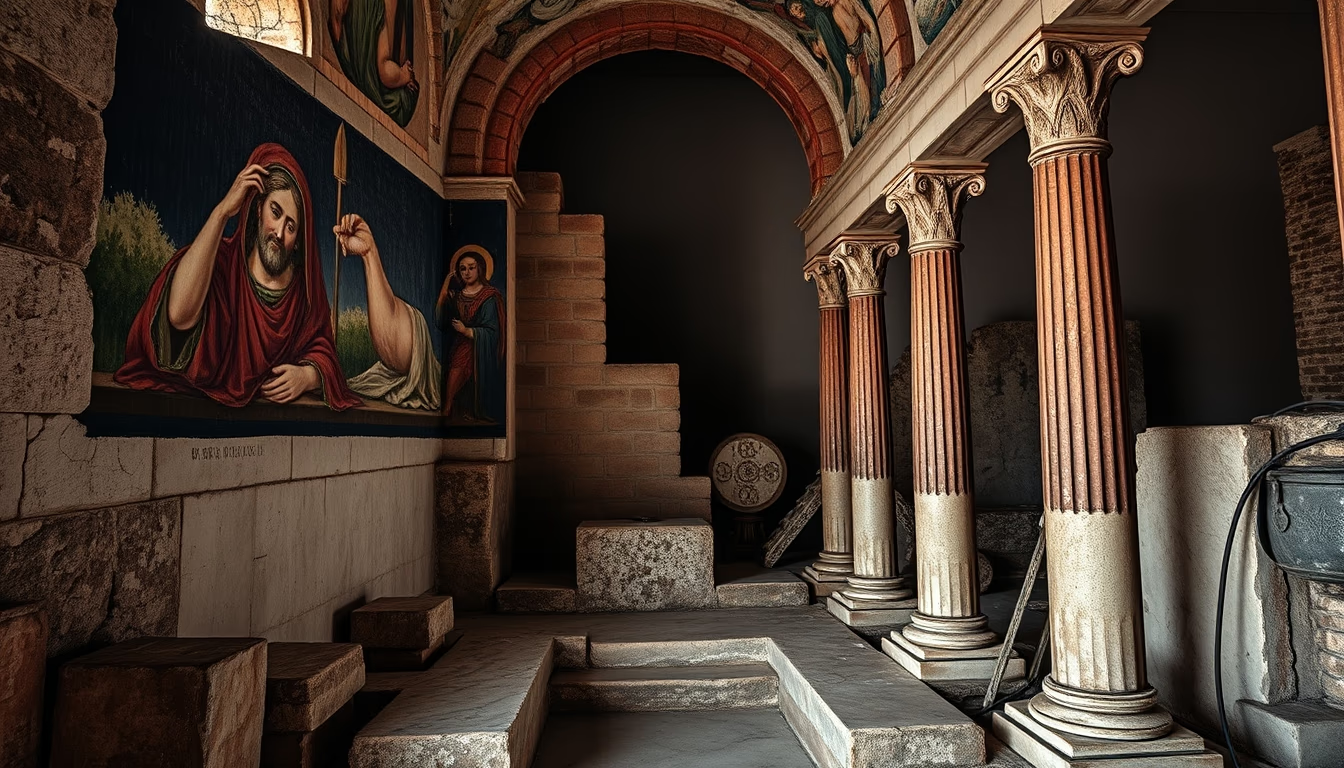
Pompeii frescoes: Roman wall paintings from the 1st century AD, buried by the eruption of Mount Vesuvius in 79 AD, reveal daily life and mythology of antiquity.
About this subject
The frescoes of Pompeii are among the most significant legacies of ancient Roman painting. Dating mainly from the 1st century AD, these murals decorated houses, villas, and public buildings in the prosperous Roman city. The eruption of Mount Vesuvius in 79 AD buried Pompeii under ash and pumice, preserving many of these works in extraordinary condition. Techniques ranged from the incrustation style (imitating marble) to architectural illusionism and the depiction of mythological scenes, landscapes, and still lifes. The frescoes were painted with natural pigments on wet plaster, requiring speed and precision. Vibrant colors such as Pompeian red and Egyptian blue were common.
The iconography of the frescoes provides a direct window into the lives of ancient Romans. Scenes of banquets, religious rituals, Greco-Roman myths (such as Perseus and Andromeda), and even erotic satire have been found. One of the most famous examples is the Garden fresco in the House of Livia, which depicts a lush garden with birds and fountains, showing the taste for natural environments. Another highlight is the Villa of the Mysteries, whose fresco cycle represents Dionysian initiation rituals for women, with life-like figures and dramatic movement. These paintings have helped archaeologists understand aspects of material culture, such as furniture, clothing, and architecture.
Preservation of the frescoes requires constant care. After the rediscovery of Pompeii in the 18th century, many murals were exposed to light, humidity, and tourism, suffering degradation. Modern restoration projects, such as the Great Pompeii Project funded by the European Union, use technologies like laser and micro-spraying to clean and consolidate the paint layers. Despite challenges, these frescoes continue to inspire artists and historians. It is estimated that only about one third of the city has been excavated, with thousands of paintings still underground, awaiting future discoveries that could change our understanding of the Roman Empire.
Frequently Asked Questions
What are the frescoes of Pompeii?
They are mural paintings made on fresh plaster, typical of Roman art from the 1st century AD, found in the ruins of Pompeii after the eruption of Mount Vesuvius in 79 AD.
Why are the Pompeii frescoes so well preserved?
Due to rapid burial by volcanic ash and pumice, which sealed the paintings, protecting them from air, light, and moisture for nearly 1700 years.
What themes appear in the Pompeii frescoes?
Themes include Greco-Roman mythology, everyday life scenes, landscapes, still lifes, religious rituals, and even erotic scenes, reflecting the culture and values of Roman society.
Direct URL
https://pub-c7d6a6ea828543ac903a74a341ccb2e1.r2.dev/imagens/pompeii-ruins-fresco-studio-editorial-portrait-p11.avifHow to credit
Include a visible link back to UtilizAí. Copy one of the snippets below:
<a href="https://xn--utiliza-eza.com/en/midia/imagens/pompeii-ruins-fresco-studio-editorial-portrait-p11">Pompeii ruins fresco</a> by <a href="https://xn--utiliza-eza.com">UtilizAí</a>, licensed under <a href="https://creativecommons.org/licenses/by/4.0/">CC BY 4.0</a>.
[Pompeii ruins fresco](https://xn--utiliza-eza.com/en/midia/imagens/pompeii-ruins-fresco-studio-editorial-portrait-p11) by [UtilizAí](https://xn--utiliza-eza.com), CC BY 4.0
License: CC-BY-4.0