Pompeii ruins fresco
1344×768 · AVIF · CC BY 4.0
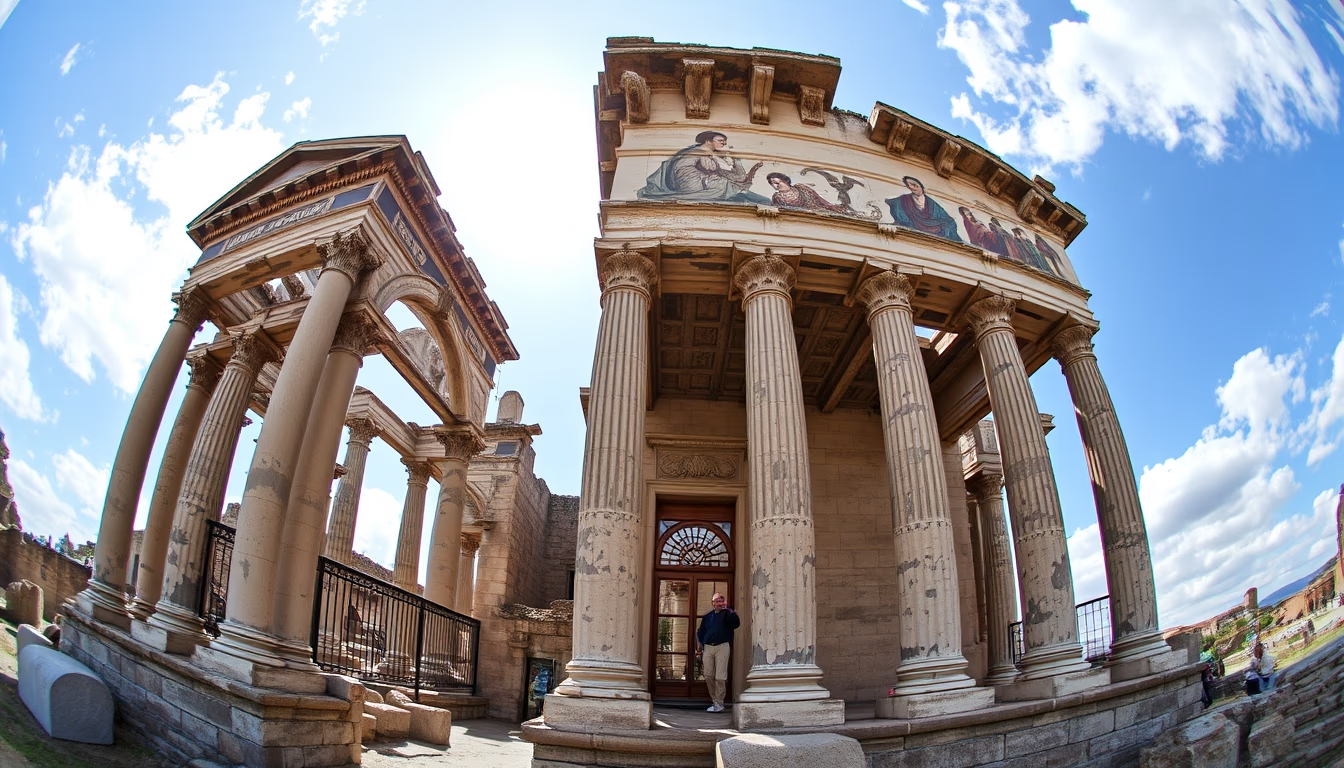
Pompeii frescoes, preserved by Vesuvius' eruption, reveal ancient Roman life in vibrant colors and everyday details.
About this subject
The frescoes of Pompeii are Roman wall paintings from the 1st century AD, preserved almost intact by the volcanic ash layer from the eruption of Mount Vesuvius in 79 AD. These works decorated houses, villas, and public buildings, depicting mythological scenes, landscapes, still lifes, and aspects of daily life, such as banquets and commerce. Systematic discoveries from the 18th century onward transformed the understanding of Roman art, offering a unique visual record of a buried society.
Classified into four Pompeiian styles, the frescoes evolved from the First Style (incrustation, imitating marble) to the Fourth Style (illusionistic, with complex scenes and theatrical perspectives). The Villa of the Mysteries, for example, displays a cycle of Second Style frescoes representing Dionysian rituals, considered of great artistic and historical value. The House of the Faun contains a mosaic of Alexander, but also frescoes that show the skill of local painters.
The fresco technique involved applying mineral pigments onto wet plaster, which fixed the colors as the plaster dried. Pigments included red and yellow ochre, Egyptian blue (calcium copper silicate), and charcoal black. The moisture of the ash protected the colors from air exposure, explaining the vividness still visible. Unfortunately, many frescoes have been damaged by time, looting, or improper exposure after excavation.
Today, Pompeii's frescoes are studied by archaeologists and conservators using modern techniques such as multispectral imaging to reveal hidden details. The archaeological site is a UNESCO World Heritage Site, and the frescoes continue to inspire artists and historians, being one of the main attractions of the Pompeii Archaeological Park.
Frequently Asked Questions
What are the Pompeii frescoes?
They are Roman wall paintings from the 1st century AD, preserved by the Vesuvius eruption, decorating houses and buildings in Pompeii with mythological, daily life, and decorative scenes.
How were the Pompeii frescoes preserved?
The volcanic eruption covered the city with ash and lapilli, creating a sealing layer that protected the paintings from light and air, keeping the colors vibrant for centuries.
What are the main styles of Pompeiian frescoes?
There are four styles: First (incrustation), Second (illusory architecture), Third (ornamental), and Fourth (illusionistic scenic), classified by archaeologist August Mau.
Direct URL
https://pub-c7d6a6ea828543ac903a74a341ccb2e1.r2.dev/imagens/pompeii-ruins-fresco-fish-eye-wide-angle-p7.avifHow to credit
Include a visible link back to UtilizAí. Copy one of the snippets below:
<a href="https://xn--utiliza-eza.com/en/midia/imagens/pompeii-ruins-fresco-fish-eye-wide-angle-p7">Pompeii ruins fresco</a> by <a href="https://xn--utiliza-eza.com">UtilizAí</a>, licensed under <a href="https://creativecommons.org/licenses/by/4.0/">CC BY 4.0</a>.
[Pompeii ruins fresco](https://xn--utiliza-eza.com/en/midia/imagens/pompeii-ruins-fresco-fish-eye-wide-angle-p7) by [UtilizAí](https://xn--utiliza-eza.com), CC BY 4.0
License: CC-BY-4.0