Pompeii ruins fresco
1344×768 · AVIF · CC BY 4.0
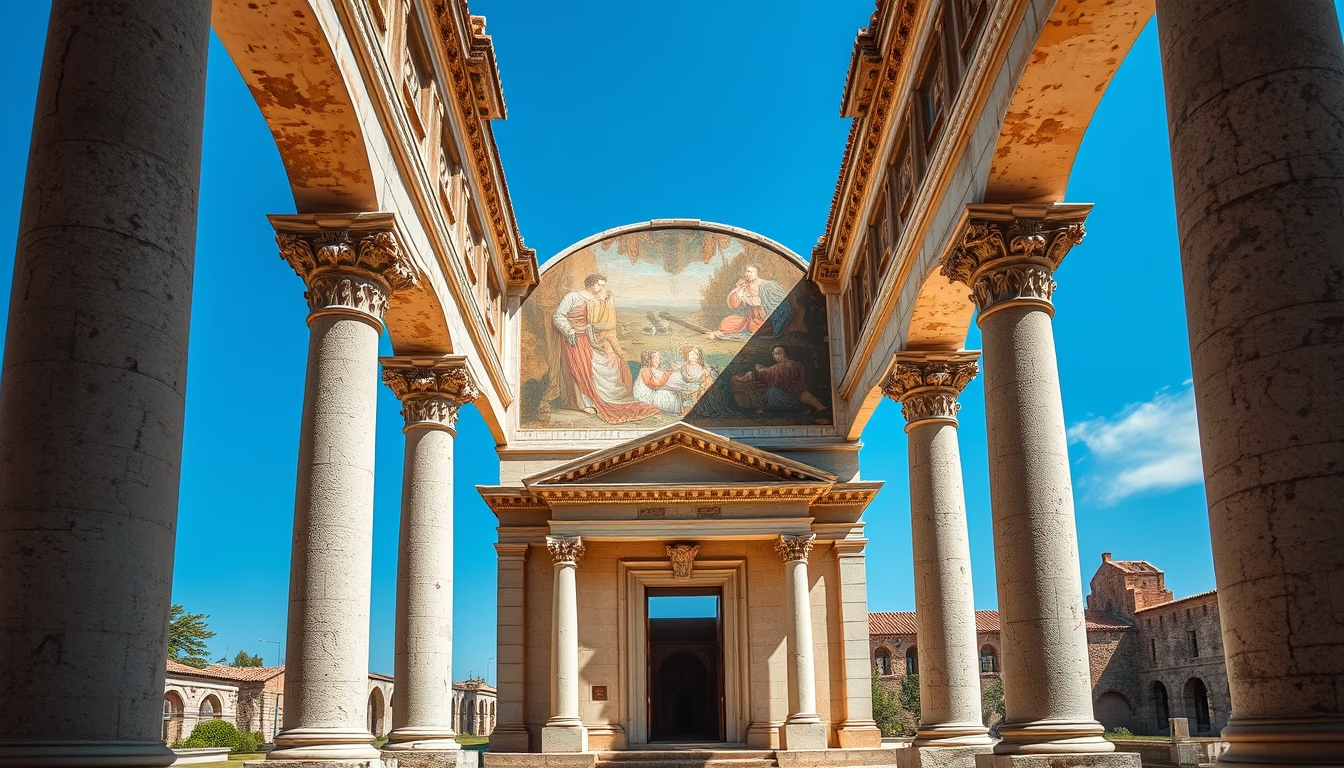
Pompeii's frescoes reveal everyday life and Roman art from the 1st century, preserved under Vesuvius' ash.
About this subject
The frescoes of Pompeii are exceptional testimonies of ancient Roman painting. Buried by the eruption of Vesuvius in 79 AD, these murals decorated houses, villas, and public buildings, depicting scenes from mythology to still lifes and landscapes. The volcanic eruption covered the city with a layer of ash and pumice that paradoxically protected the vibrant colors of the pigments, such as Pompeian red, obtained from cinnabar.
The fresco technique involved applying pigments onto fresh plaster, allowing the color to set permanently as it dried. Roman artists mastered perspective and chiaroscuro, as seen in famous examples like the Garden fresco from the House of Livia or the Dionysian scenes in the Villa of the Mysteries. Many frescoes were discovered intact during excavations that began in the 18th century, offering a direct glimpse into Roman aesthetics and social life.
The significance of these frescoes extends beyond art: they are historical sources on religious rituals, banquets, games, and even political graffiti. Unfortunately, exposure to air and tourism has caused deterioration, prompting conservation efforts like the Pompeii Project, which uses modern techniques to stabilize pigments. Even so, many frescoes remain buried or at risk, making each discovery a major archaeological event.
Frequently Asked Questions
How were the Pompeii frescoes preserved for so long?
The eruption of Vesuvius in 79 AD covered Pompeii with ash and pumice, creating an airtight seal that protected the frescoes' colors from light and air. This anaerobic environment prevented pigment degradation for almost 1,700 years.
What technique was used in Roman frescoes?
The buon fresco technique was used: natural ground pigments were applied onto wet lime plaster. As the plaster dried, the pigments became embedded in the surface, making the painting durable with vivid colors.
Are Pompeii frescoes still being discovered?
Yes. Recent excavations, such as in Regio V, have uncovered new frescoes in 2018 and 2024, including scenes from Greek mythology and still lifes, showing that much of the city remains unexplored.
Direct URL
https://pub-c7d6a6ea828543ac903a74a341ccb2e1.r2.dev/imagens/pompeii-ruins-fresco-architectural-photography-p1.avifHow to credit
Include a visible link back to UtilizAí. Copy one of the snippets below:
<a href="https://xn--utiliza-eza.com/en/midia/imagens/pompeii-ruins-fresco-architectural-photography-p1">Pompeii ruins fresco</a> by <a href="https://xn--utiliza-eza.com">UtilizAí</a>, licensed under <a href="https://creativecommons.org/licenses/by/4.0/">CC BY 4.0</a>.
[Pompeii ruins fresco](https://xn--utiliza-eza.com/en/midia/imagens/pompeii-ruins-fresco-architectural-photography-p1) by [UtilizAí](https://xn--utiliza-eza.com), CC BY 4.0
License: CC-BY-4.0