Pointillism seurat dots
1344×768 · AVIF · CC BY 4.0
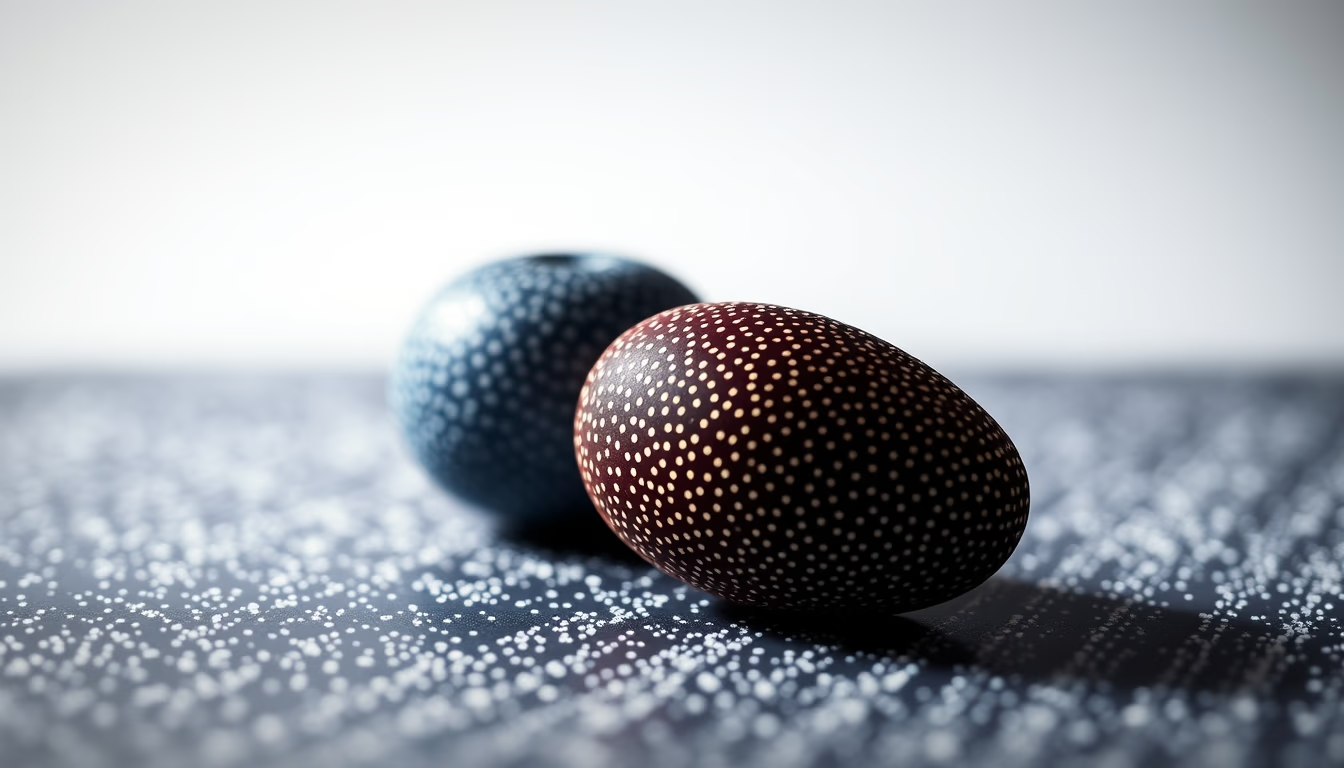
Pointillism is a post-impressionist painting technique that uses small dots of color to form images, developed by Georges Seurat in the late 19th century.
About this subject
Pointillism, also known as divisionism, was systematized by French artist Georges Seurat around 1884. The technique involves applying tiny dots of pure color that blend optically when viewed from a distance, creating greater luminosity and chromatic vibration. Seurat studied scientific color theories, such as those by Michel Eugène Chevreul and Ogden Rood, to underpin his approach.
Seurat's most iconic work is "A Sunday Afternoon on the Island of La Grande Jatte" (1884-1886), a massive canvas measuring about 2 x 3 meters that took two years to complete and contains thousands of dots. The painting depicts middle-class Parisians in a park along the Seine River. Seurat applied the dots meticulously, often preparing oil sketches in smaller formats before the final version.
Pointillism influenced other artists such as Paul Signac, who became the main advocate of the technique after Seurat's early death in 1891. Signac wrote the book "From Eugène Delacroix to Neo-Impressionism," defending divisionist principles. In Brazil, artists like Eliseu Visconti experimented with pointillism in the early 20th century, notably in works such as "Moinho" (1912) and "O Casamento da Princesa Isabel" (1917).
Today, pointillism is recognized as a milestone of modern art, although it was criticized at the time for being overly scientific and mechanical. The technique also influenced later movements, such as the pointillism of the Vienna Secession and even aspects of Pop Art. Its analytical approach to color and light foreshadowed perceptual experiments later taken up by Op Art in the 1960s.
Frequently Asked Questions
What is the difference between pointillism and divisionism?
Pointillism and divisionism are often used interchangeably, but divisionism refers more to the theory of optical color mixing, while pointillism is the practical application with dots. In practice, both describe the technique used by Seurat and his followers.
How many dots are in the painting 'A Sunday Afternoon on the Island of La Grande Jatte'?
It is estimated that the work contains around 10 million dots. Seurat applied each dot individually, requiring months of meticulous work for a canvas measuring approximately 2 x 3 meters.
Were there Brazilian artists who used pointillism?
Yes, Brazilian painter Eliseu Visconti (1866-1944) incorporated pointillism in several works, such as 'Moinho' (1912) and 'O Casamento da Princesa Isabel' (1917). He studied in France and brought neo-impressionist influences to Brazil.
Direct URL
https://pub-c7d6a6ea828543ac903a74a341ccb2e1.r2.dev/imagens/pointillism-seurat-dots-studio-still-life-fresh16.avifHow to credit
Include a visible link back to UtilizAí. Copy one of the snippets below:
<a href="https://xn--utiliza-eza.com/en/midia/imagens/pointillism-seurat-dots-studio-still-life-fresh16">Pointillism seurat dots</a> by <a href="https://xn--utiliza-eza.com">UtilizAí</a>, licensed under <a href="https://creativecommons.org/licenses/by/4.0/">CC BY 4.0</a>.
[Pointillism seurat dots](https://xn--utiliza-eza.com/en/midia/imagens/pointillism-seurat-dots-studio-still-life-fresh16) by [UtilizAí](https://xn--utiliza-eza.com), CC BY 4.0
License: CC-BY-4.0