Pointillism seurat dots
1344×768 · AVIF · CC BY 4.0
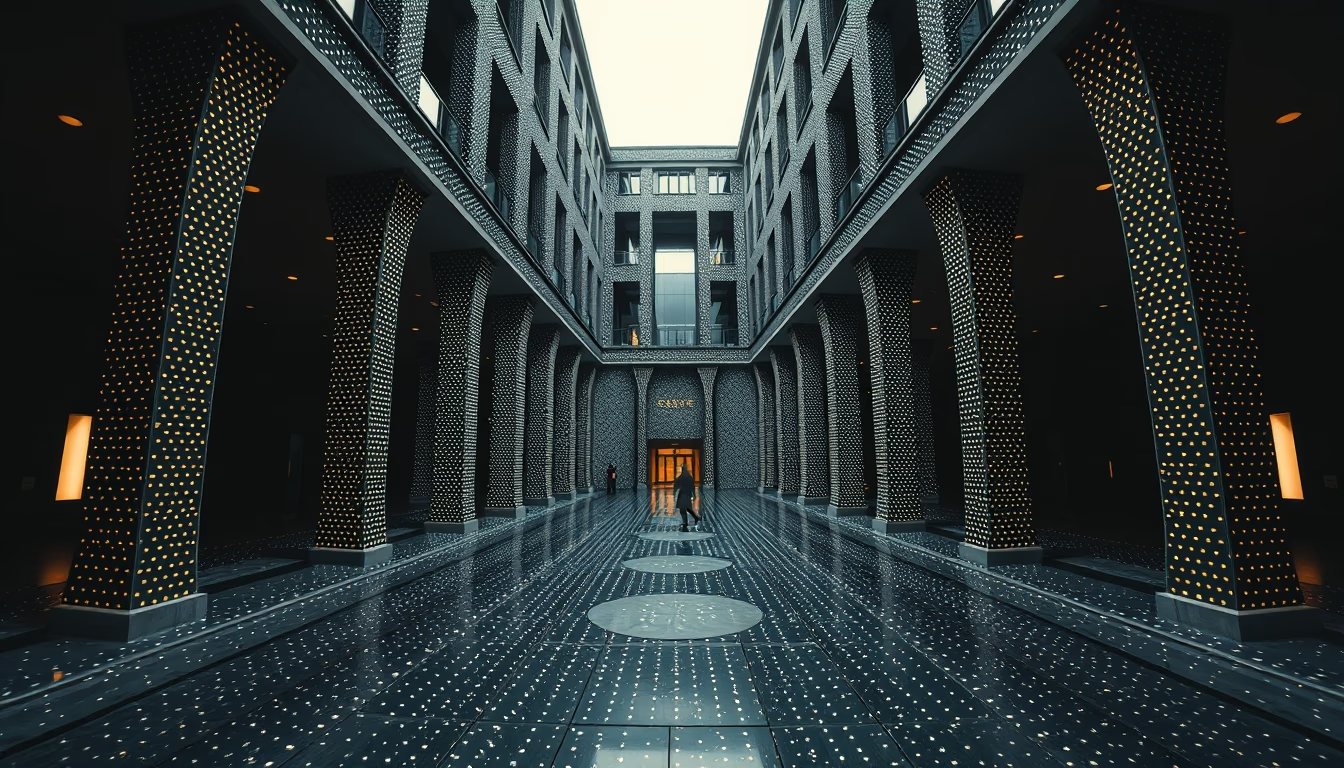
Pointillism, pioneered by Georges Seurat and Paul Signac, revolutionized painting by using small dots of pure color that optically blend in the viewer's eye.
About this subject
Pointillism is a painting technique that emerged in the late 19th century as part of the post-impressionist movement. Its main creator was French artist Georges Seurat (1859-1891), who sought to apply scientific principles of optics and color theory to art. Instead of mixing paints on a palette, Seurat applied tiny dots of primary and complementary colors side by side. When viewed from a distance, the human eye optically blends these dots, creating a vibrant and luminous image. This approach became known as divisionism or chromoluminarism.
Seurat's most iconic work, "A Sunday on La Grande Jatte" (1884-1886), exemplifies pointillism on a grand scale. The canvas, over 2 meters tall, required months of meticulous work with thousands of tiny dots. The technique influenced other artists like Paul Signac, who expanded the use of dots to landscapes and seascapes. Pointillism also echoed in neo-impressionism and fauvism, and its ideas on visual perception anticipated op art and digital pixel art.
Interestingly, the term "pointillism" was coined by art critics in a pejorative sense, but was soon adopted by the artists themselves. Seurat died young at 31, leaving only seven major works, but his legacy is immense. The technique demands patience and precision: each dot must be placed without overlap, respecting the ideal viewing distance. Modern studies confirm that optical blending in the brain indeed produces more intense colors than physical mixing of paints.
In the context of architectural photography, pointillism inspires compositions that explore patterns of light, shadow, and texture, as if buildings were reconstructed through dots of color. This approach dialogues with pixelation and digital aesthetics, showing how a 19th-century technique remains relevant in contemporary art.
Frequently Asked Questions
What is the difference between pointillism and divisionism?
The terms are often used interchangeably, but divisionism refers more to the theory of dividing colors into primary components, while pointillism is the practical application with dots. In practice, Seurat and Signac used both ideas.
Why does pointillism use pure colors without mixing on the canvas?
To take advantage of optical mixing: placing dots of complementary colors side by side causes the eye to blend them, creating more vibrant and luminous tones than physical paint mixing.
Has pointillism influenced digital art?
Yes. The idea of building images with dots of color is a precursor to pixel art and LED displays. Contemporary artists often cite Seurat as a reference.
Direct URL
https://pub-c7d6a6ea828543ac903a74a341ccb2e1.r2.dev/imagens/pointillism-seurat-dots-architectural-photography-fresh13.avifHow to credit
Include a visible link back to UtilizAí. Copy one of the snippets below:
<a href="https://xn--utiliza-eza.com/en/midia/imagens/pointillism-seurat-dots-architectural-photography-fresh13">Pointillism seurat dots</a> by <a href="https://xn--utiliza-eza.com">UtilizAí</a>, licensed under <a href="https://creativecommons.org/licenses/by/4.0/">CC BY 4.0</a>.
[Pointillism seurat dots](https://xn--utiliza-eza.com/en/midia/imagens/pointillism-seurat-dots-architectural-photography-fresh13) by [UtilizAí](https://xn--utiliza-eza.com), CC BY 4.0
License: CC-BY-4.0