Pluto surface ice
1344×768 · AVIF · CC BY 4.0
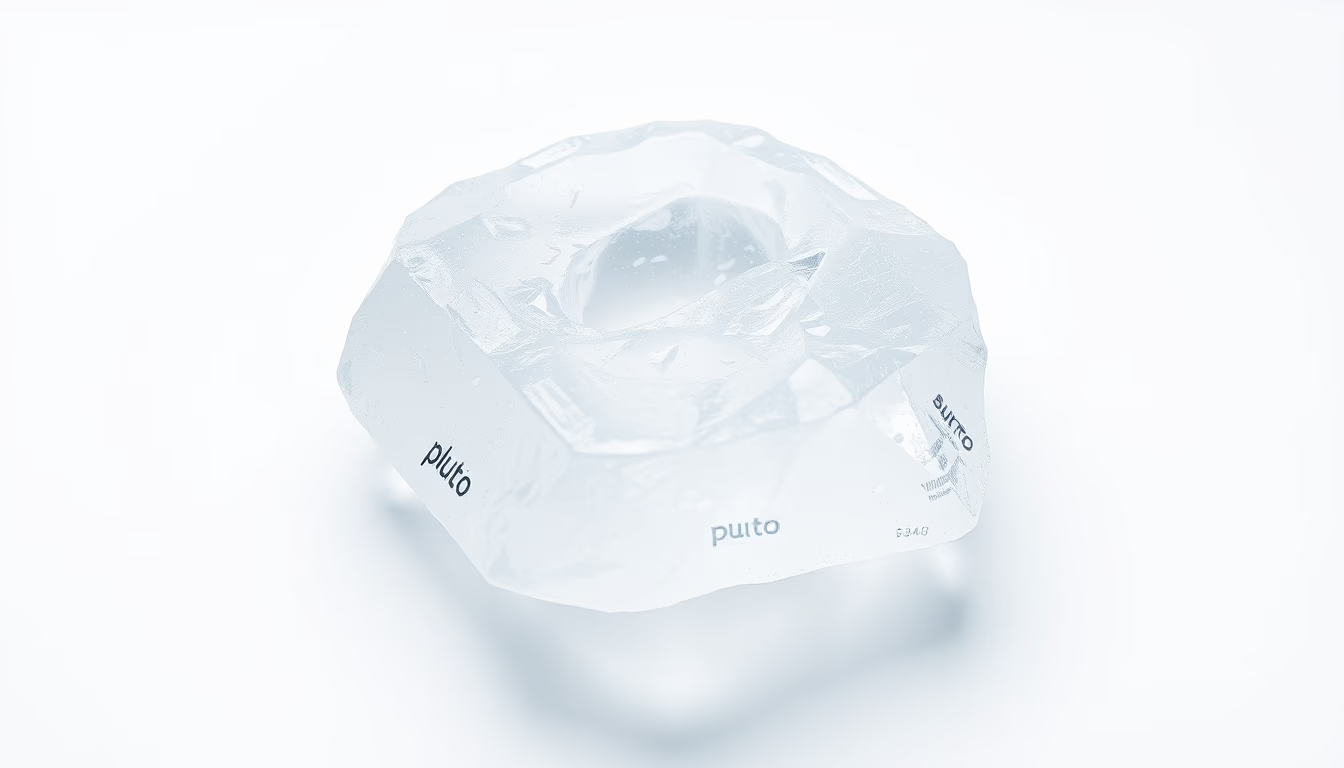
Ice on Pluto's surface reveals an exotic landscape of frozen nitrogen, methane, and carbon monoxide, shaped by unique geological processes.
About this subject
Pluto, reclassified as a dwarf planet in 2006, has a surface covered by a variety of volatile ices that behave differently from terrestrial ice. Data from the New Horizons spacecraft, which flew by in 2015, show that the predominant ice is molecular nitrogen, followed by methane and carbon monoxide. These compounds freeze at extremely low temperatures, around -230°C, and form vast plains like Sputnik Planitia, an impact basin filled with nitrogen ice.
Pluto's ice is not static. It sublimates and condenses over the Plutonian day, which lasts about 6.4 Earth days, creating polygonal cell patterns up to 30 km in diameter. These structures are evidence of convection in nitrogen ice, never before observed on other Solar System bodies. Additionally, water ice mountains, harder than frozen nitrogen, emerge as towering peaks, such as Montes Hillary and Norgay, named after the first Everest climbers.
Ice composition varies with altitude and latitude. Equatorial regions have more methane, which absorbs red light, giving Pluto its characteristic reddish hue. The poles concentrate carbon monoxide. The interaction of these ices with the tenuous nitrogen atmosphere generates winds that transport particles, sculpting dunes and valleys. Recent studies suggest Pluto's ice may contain complex organic compounds, possible precursors to life.
Interestingly, Sputnik Planitia is considered one of the coldest places in the Solar System, with surface temperatures of -235°C. The presence of nitrogen ice is crucial for maintaining the dwarf planet's atmosphere, as it regulates atmospheric pressure through seasonal sublimation and condensation. Future missions, such as the proposed Pluto Orbiter, could map the exact distribution of these ices and unveil more secrets about cryogenic geology.
Frequently Asked Questions
What is the composition of ice on Pluto's surface?
The predominant ice is molecular nitrogen, followed by methane and carbon monoxide. There is also water ice, which is harder and forms mountains.
Why does Pluto have a reddish coloration?
The reddish hue comes from frozen methane, which absorbs blue light and reflects reddish tones. This effect is stronger in equatorial regions.
Does Pluto's ice move?
Yes, nitrogen ice undergoes convection, forming polygonal cells up to 30 km across. This unique process occurs due to sublimation and condensation caused by temperature variations.
Direct URL
https://pub-c7d6a6ea828543ac903a74a341ccb2e1.r2.dev/imagens/pluto-surface-ice-commercial-product-photography-p6.avifHow to credit
Include a visible link back to UtilizAí. Copy one of the snippets below:
<a href="https://xn--utiliza-eza.com/en/midia/imagens/pluto-surface-ice-commercial-product-photography-p6">Pluto surface ice</a> by <a href="https://xn--utiliza-eza.com">UtilizAí</a>, licensed under <a href="https://creativecommons.org/licenses/by/4.0/">CC BY 4.0</a>.
[Pluto surface ice](https://xn--utiliza-eza.com/en/midia/imagens/pluto-surface-ice-commercial-product-photography-p6) by [UtilizAí](https://xn--utiliza-eza.com), CC BY 4.0
License: CC-BY-4.0