Planet jupiter atmosphere
1344×768 · AVIF · CC BY 4.0
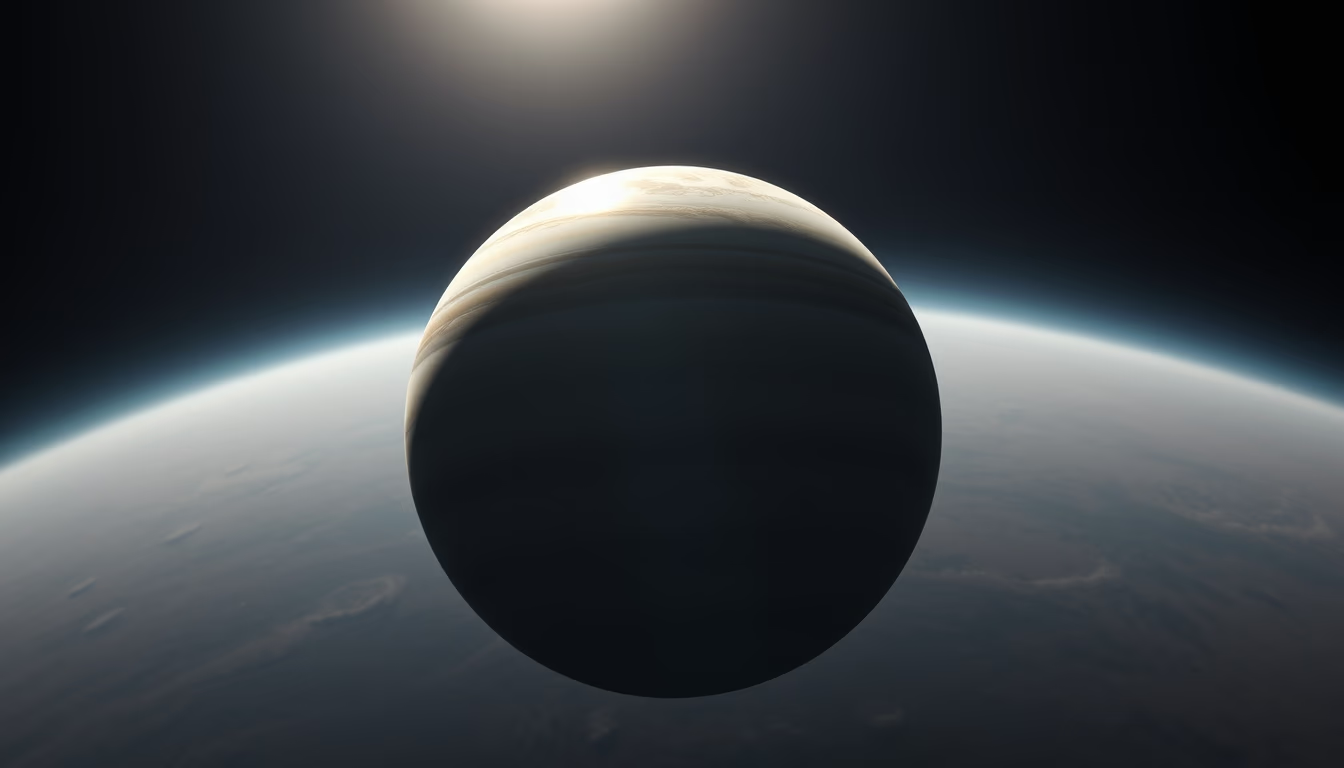
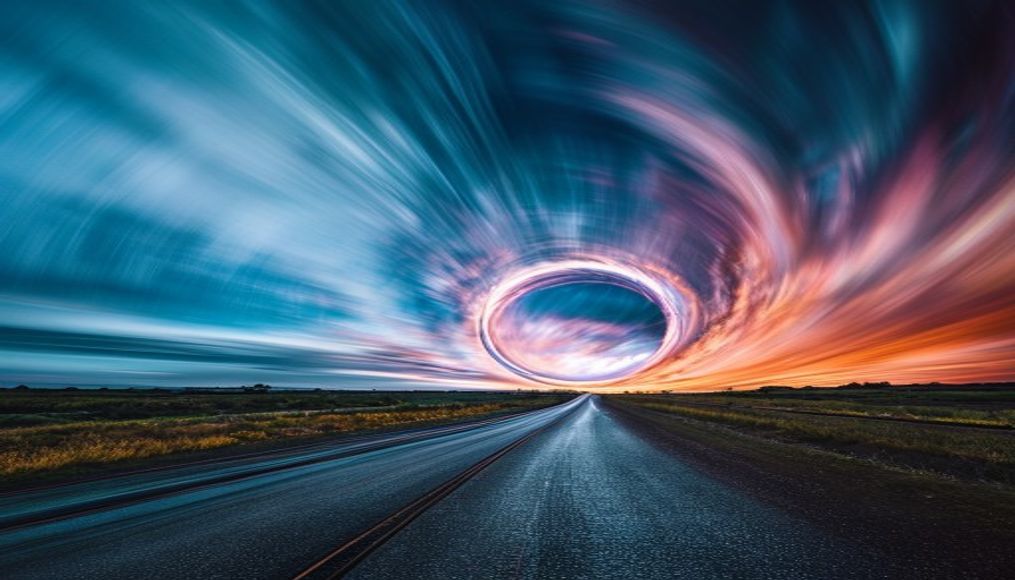
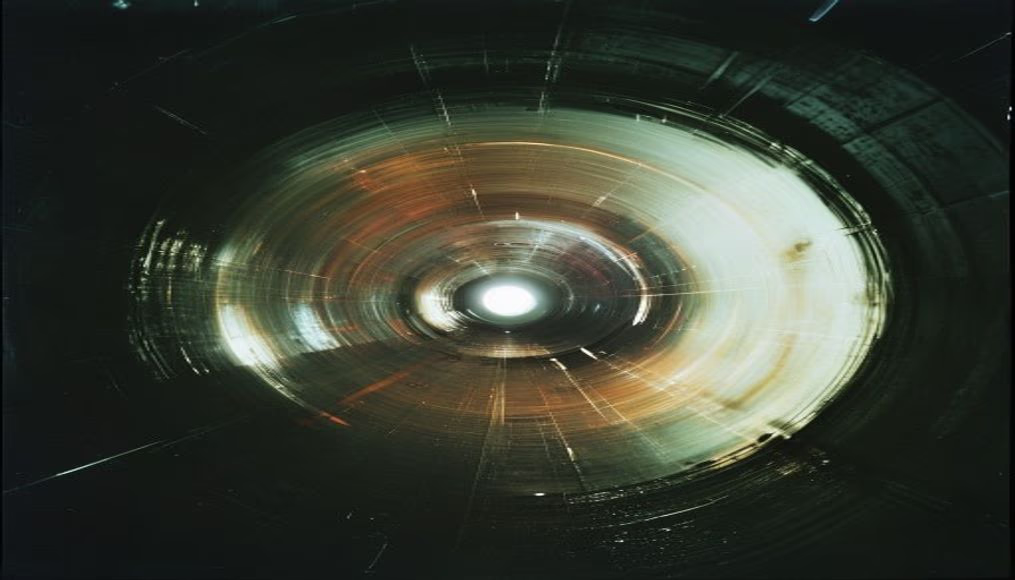
Jupiter, the largest planet in the Solar System, has a turbulent gaseous atmosphere filled with colorful bands and giant storms.
About this subject
Jupiter's atmosphere is composed mainly of molecular hydrogen (about 90%) and helium (10%), with traces of methane, ammonia, water vapor, and other compounds. This composition makes it the largest planetary atmosphere in the Solar System, extending more than 5,000 km deep before reaching a layer of metallic hydrogen. The parallel bands we see, called zones (light) and belts (dark), are the result of convection currents and winds that can reach up to 600 km/h, dividing the planet into different latitudes.
The most iconic feature is the Great Red Spot, an anticyclonic storm that has persisted for at least 350 years and is larger than Earth. The reddish color comes from compounds such as phosphorus, sulfur, and hydrocarbons in the upper clouds. In 2016, NASA's Juno spacecraft entered orbit around Jupiter and revealed unprecedented details: the atmosphere has ammonia rings, polar cyclones, and even lightning in deep regions, similar to terrestrial thunderstorms.
The atmospheric layers are divided into troposphere, stratosphere, thermosphere, and exosphere. The troposphere contains clouds of ammonia, ammonium hydrosulfide, and water ice. Unlike Earth, Jupiter has no significant seasons because its rotational axis is almost perpendicular to its orbital plane, tilted only 3.13 degrees. The Galileo probe (1995-2003) also studied the atmosphere, recording extreme pressures and temperatures, the fastest winds are near the equator.
An interesting aspect is that Jupiter emits more heat than it receives from the Sun, due to residual heat from its formation and gravitational contraction. This internal energy drives atmospheric dynamics. Furthermore, the Juno mission discovered that Jupiter's poles are covered by cyclones arranged in unique geometric patterns, with one central cyclone surrounded by eight others at the north pole and five at the south. These phenomena make Jupiter's atmosphere one of the most extreme and fascinating environments for study.
Frequently Asked Questions
What is Jupiter's atmosphere made of?
The atmosphere is primarily composed of hydrogen (about 90%) and helium (10%), with small amounts of methane, ammonia, water vapor, and other trace elements.
How long has the Great Red Spot lasted?
The storm known as the Great Red Spot has been observed for at least 350 years, and it may be even older. Recent studies suggest it is shrinking in size.
Why does Jupiter have colorful bands in its atmosphere?
The bands are layers of clouds at different altitudes and chemical compositions, driven by strong winds (up to 600 km/h) that create light zones and dark belts. Colors come from compounds like ammonia, sulfur, and phosphorus.
Direct URL
https://pub-c7d6a6ea828543ac903a74a341ccb2e1.r2.dev/imagens/planet-jupiter-atmosphere-minimalist-composition-p3.avifHow to credit
Include a visible link back to UtilizAí. Copy one of the snippets below:
<a href="https://xn--utiliza-eza.com/en/midia/imagens/planet-jupiter-atmosphere-minimalist-composition-p3">Planet jupiter atmosphere</a> by <a href="https://xn--utiliza-eza.com">UtilizAí</a>, licensed under <a href="https://creativecommons.org/licenses/by/4.0/">CC BY 4.0</a>.
[Planet jupiter atmosphere](https://xn--utiliza-eza.com/en/midia/imagens/planet-jupiter-atmosphere-minimalist-composition-p3) by [UtilizAí](https://xn--utiliza-eza.com), CC BY 4.0
License: CC-BY-4.0