Plane wood shaving
1344×768 · AVIF · CC BY 4.0
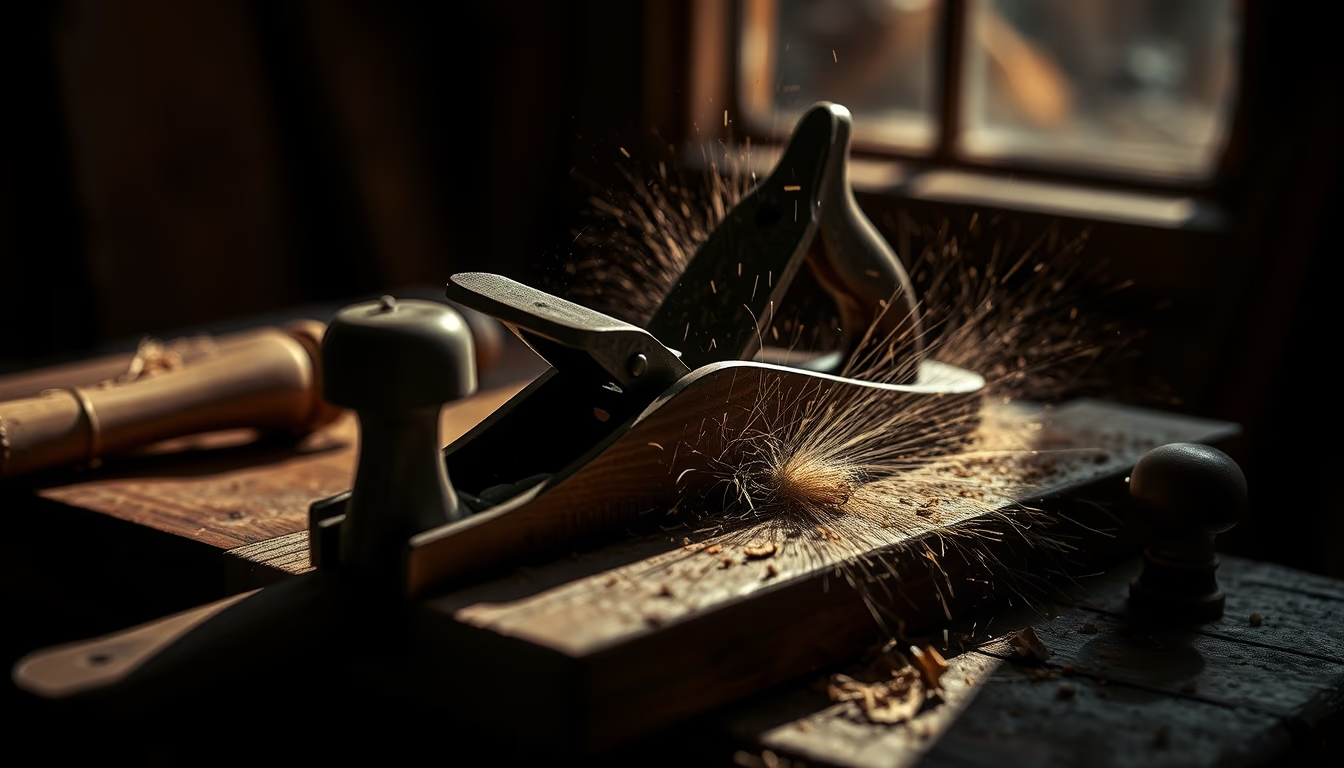
Planing wood with hand tools produces thin wood shavings, known for their distinctive texture and aroma.
About this subject
Plane wood shavings are the thin, curled waste produced when smoothing or shaping wood with a hand plane or power planer. This centuries-old tool, used by carpenters and woodworkers, removes thin layers of wood to achieve a flat, smooth surface. The thickness of a shaving can range from fractions of a millimeter to a few millimeters, depending on the plane's adjustment and the wood species. Softer woods like pine and cedar yield longer, continuous shavings, while hardwoods such as oak and ipe produce shorter, more brittle pieces.
Historically, hand planing was a fundamental woodworking task before industrialization. Planes with different profiles created specific shavings for each stage of work. Plane shavings have practical uses: they serve as natural fire starters in camping, as packing material, and sometimes as a gardening substrate. Additionally, the aroma released during planing varies by species: cedar emits a woody fragrance, while pine has a resinous scent.
Interestingly, the quality of a plane shaving indicates the sharpness of the blade. A uniform, thin, and continuous shaving signals a well-sharpened and properly adjusted plane. Coarse or torn shavings suggest the blade needs honing or the wood has irregularities. For many artisans, watching a shaving form is as satisfying as the finished product, reflecting mastery of technique and a connection to the raw material.
Frequently Asked Questions
What determines the thickness of a plane shaving?
The thickness is set by the depth adjustment of the plane blade. The more the blade protrudes, the thicker the shaving. Wood hardness also plays a role: softer woods allow longer, thinner shavings.
What are plane shavings used for besides waste?
They are used as natural fire starters due to easy ignition, as protective packing material, and as mulch for gardening. Some woodworkers collect them for art projects.
How can you tell if a plane is sharp from its shavings?
A thin, uniform, continuous shaving indicates a sharp blade and correct adjustment. Torn, thick, or irregular shavings suggest the blade needs honing or the wood has knots.
Direct URL
https://pub-c7d6a6ea828543ac903a74a341ccb2e1.r2.dev/imagens/plane-wood-shaving-rembrandt-lighting-dramatic-shadows-fresh17.avifHow to credit
Include a visible link back to UtilizAí. Copy one of the snippets below:
<a href="https://xn--utiliza-eza.com/en/midia/imagens/plane-wood-shaving-rembrandt-lighting-dramatic-shadows-fresh17">Plane wood shaving</a> by <a href="https://xn--utiliza-eza.com">UtilizAí</a>, licensed under <a href="https://creativecommons.org/licenses/by/4.0/">CC BY 4.0</a>.
[Plane wood shaving](https://xn--utiliza-eza.com/en/midia/imagens/plane-wood-shaving-rembrandt-lighting-dramatic-shadows-fresh17) by [UtilizAí](https://xn--utiliza-eza.com), CC BY 4.0
License: CC-BY-4.0