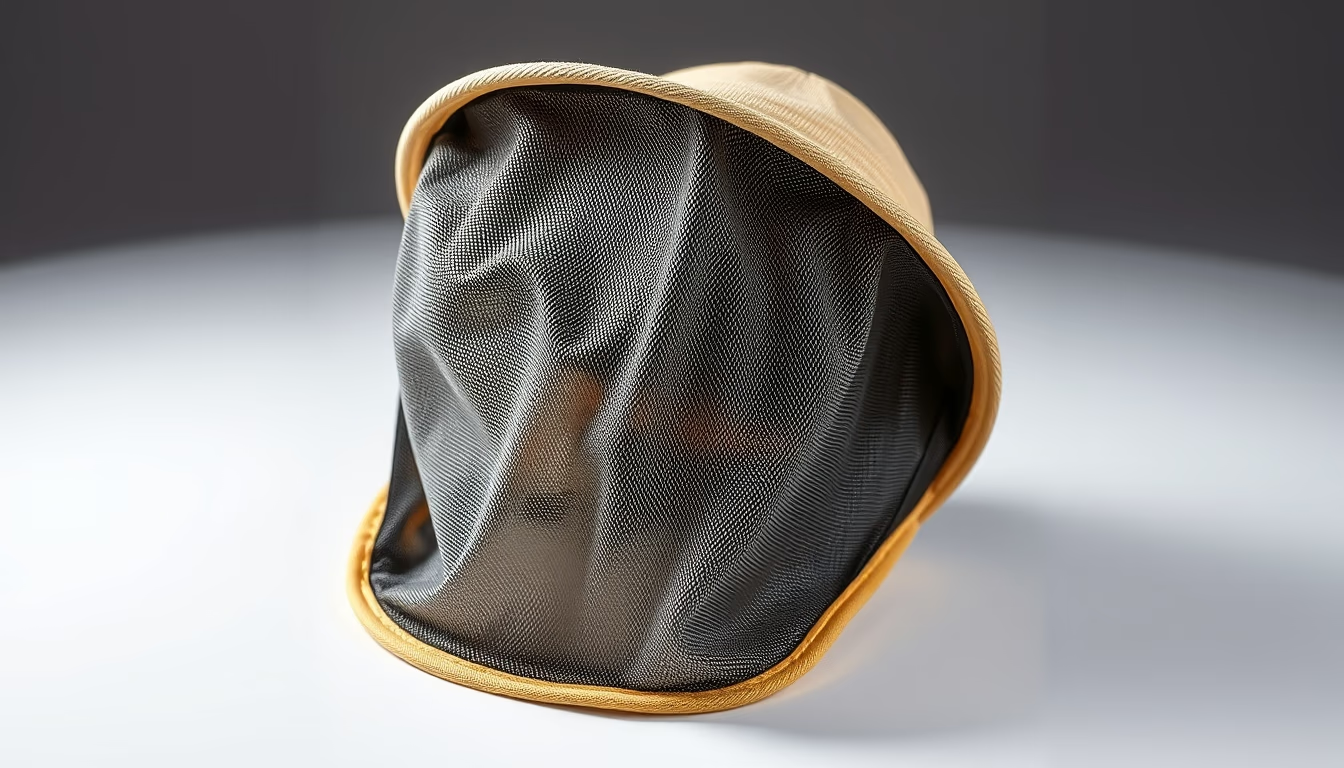
Pillow soft cozy
1344×768 · AVIF · CC BY 4.0

Soft and cozy pillows are essential for a good night's sleep. Learn about types, materials, and tips for choosing the perfect one.
About this subject
Pillows are essential bedroom items that directly influence sleep quality and spinal health. The variety of materials on the market meets different needs: memory foam for customized support, down and feathers for natural softness, latex for durability and dust mite resistance, and synthetic fibers for hypoallergenic and low-cost options. Each material offers distinct levels of firmness and breathability, making it important to consider sleeping position and personal preferences.
In 2026, trends point to pillows with cooling technologies, such as gel and breathable fabrics, as well as ergonomic designs that contour to the body. Sustainable materials gain prominence, including organic cotton and natural latex, attracting environmentally conscious consumers. In the editorial segment, pillows are used not only for sleeping but as decorative elements that add texture and visual comfort to spaces, combined with cushions and throws.
To maintain softness and hygiene, it is recommended to air pillows weekly, wash pillowcases every two weeks, and replace the pillow every one to two years. Old pillows lose support and accumulate dust mites, leading to allergies and neck pain. When choosing a new pillow, test the height: lying on your side, your head should align with your spine; on your back, a lower pillow is ideal; for stomach sleepers, ultra-thin models are most suitable.
Frequently Asked Questions
What is the best material for a pillow?
It depends on sleeping position. Side sleepers benefit from memory foam or latex for support; back sleepers prefer down or soft fiber; stomach sleepers need very thin synthetic pillows.
How often should I replace my pillow?
Every 1 to 2 years. After that, pillows lose support and accumulate dust mites, mold, and bacteria, affecting respiratory health and sleep quality.
Are larger pillows better?
Not necessarily. The pillow should fill the gap between the shoulder and head to keep the spine aligned. Too high or too low pillows can cause neck pain.
Direct URL
https://pub-c7d6a6ea828543ac903a74a341ccb2e1.r2.dev/imagens/pillow-soft-cozy-magazine-editorial-p5.avifHow to credit
Include a visible link back to UtilizAí. Copy one of the snippets below:
<a href="https://xn--utiliza-eza.com/en/midia/imagens/pillow-soft-cozy-magazine-editorial-p5">Pillow soft cozy</a> by <a href="https://xn--utiliza-eza.com">UtilizAí</a>, licensed under <a href="https://creativecommons.org/licenses/by/4.0/">CC BY 4.0</a>.
[Pillow soft cozy](https://xn--utiliza-eza.com/en/midia/imagens/pillow-soft-cozy-magazine-editorial-p5) by [UtilizAí](https://xn--utiliza-eza.com), CC BY 4.0
License: CC-BY-4.0