Photosynthesis chloroplast
1344×768 · AVIF · CC BY 4.0
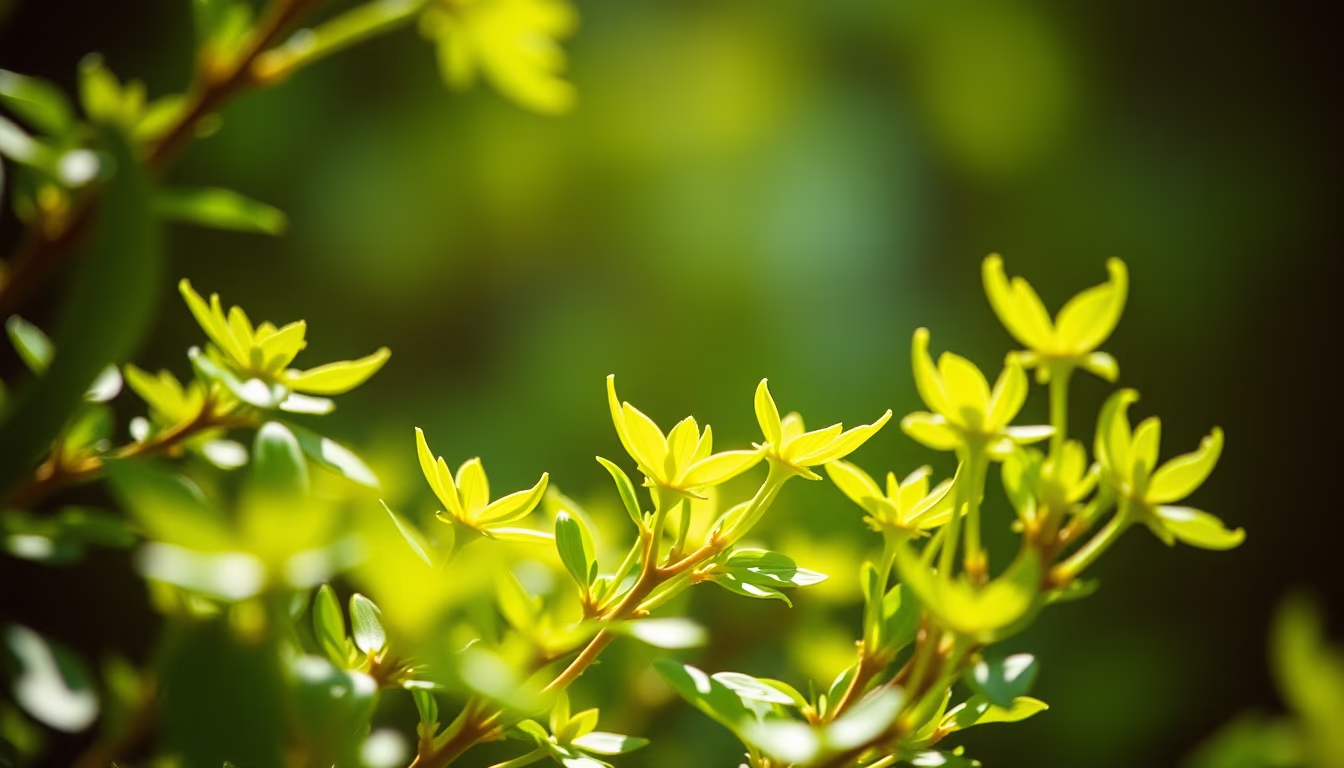
Chloroplasts are essential organelles where photosynthesis converts light into chemical energy.
About this subject
Chloroplasts are organelles found in plant cells and green algae, responsible for photosynthesis. This vital process converts light energy into chemical energy in two main stages: light-dependent reactions and the Calvin cycle. During light reactions, chlorophyll and other pigments in the thylakoids absorb photons, generating ATP and NADPH, and releasing oxygen from water. In the stroma, the Calvin cycle uses ATP and NADPH to fix carbon dioxide, producing glucose.
Chloroplasts have a complex internal structure. Thylakoids are stacked into grana, connected by stroma lamellae. The thylakoid membrane houses photosystems I and II, as well as the electron transport chain. The stroma contains enzymes like Rubisco, crucial for carboxylation of ribulose-1,5-bisphosphate. These organelles have their own DNA and ribosomes, evidence for the endosymbiotic theory, which suggests they evolved from ancient cyanobacteria.
Historically, experiments by Jan Ingenhousz and Joseph Priestley advanced understanding of chloroplast function. In 1882, Thomas Engelmann used aerobic bacteria to map oxygen release in algae, confirming chloroplasts as the sites of photosynthesis. Today, global photosynthesis is estimated to produce about 140 billion tons of oxygen annually and remove large amounts of CO₂, essential for life on Earth.
Chloroplasts are also a focus of biotechnological research to enhance photosynthetic efficiency in crops. Genetic modifications aim to improve light capture and carbon fixation, targeting higher agricultural productivity. Understanding chloroplasts also helps in studying climate change, as processes like photorespiration impact the global carbon balance.
Frequently Asked Questions
What happens inside a chloroplast?
Photosynthesis occurs inside chloroplasts, with light reactions (in thylakoids producing ATP, NADPH, and oxygen) and the Calvin cycle (in the stroma fixing CO₂ into glucose).
What is the difference between a chloroplast and a mitochondrion?
Chloroplasts perform photosynthesis, converting light into chemical energy and releasing oxygen. Mitochondria carry out cellular respiration, breaking down glucose to produce ATP and consuming oxygen.
How does photosynthesis produce oxygen?
In the light-dependent reactions, light energy splits water molecules (photolysis) in the thylakoids, releasing electrons, protons, and molecular oxygen (O₂) as a byproduct.
Direct URL
https://pub-c7d6a6ea828543ac903a74a341ccb2e1.r2.dev/imagens/photosynthesis-chloroplast-film-grain-authentic-p6.avifHow to credit
Include a visible link back to UtilizAí. Copy one of the snippets below:
<a href="https://xn--utiliza-eza.com/en/midia/imagens/photosynthesis-chloroplast-film-grain-authentic-p6">Photosynthesis chloroplast</a> by <a href="https://xn--utiliza-eza.com">UtilizAí</a>, licensed under <a href="https://creativecommons.org/licenses/by/4.0/">CC BY 4.0</a>.
[Photosynthesis chloroplast](https://xn--utiliza-eza.com/en/midia/imagens/photosynthesis-chloroplast-film-grain-authentic-p6) by [UtilizAí](https://xn--utiliza-eza.com), CC BY 4.0
License: CC-BY-4.0