Photosynthesis chloroplast
1344×768 · AVIF · CC BY 4.0
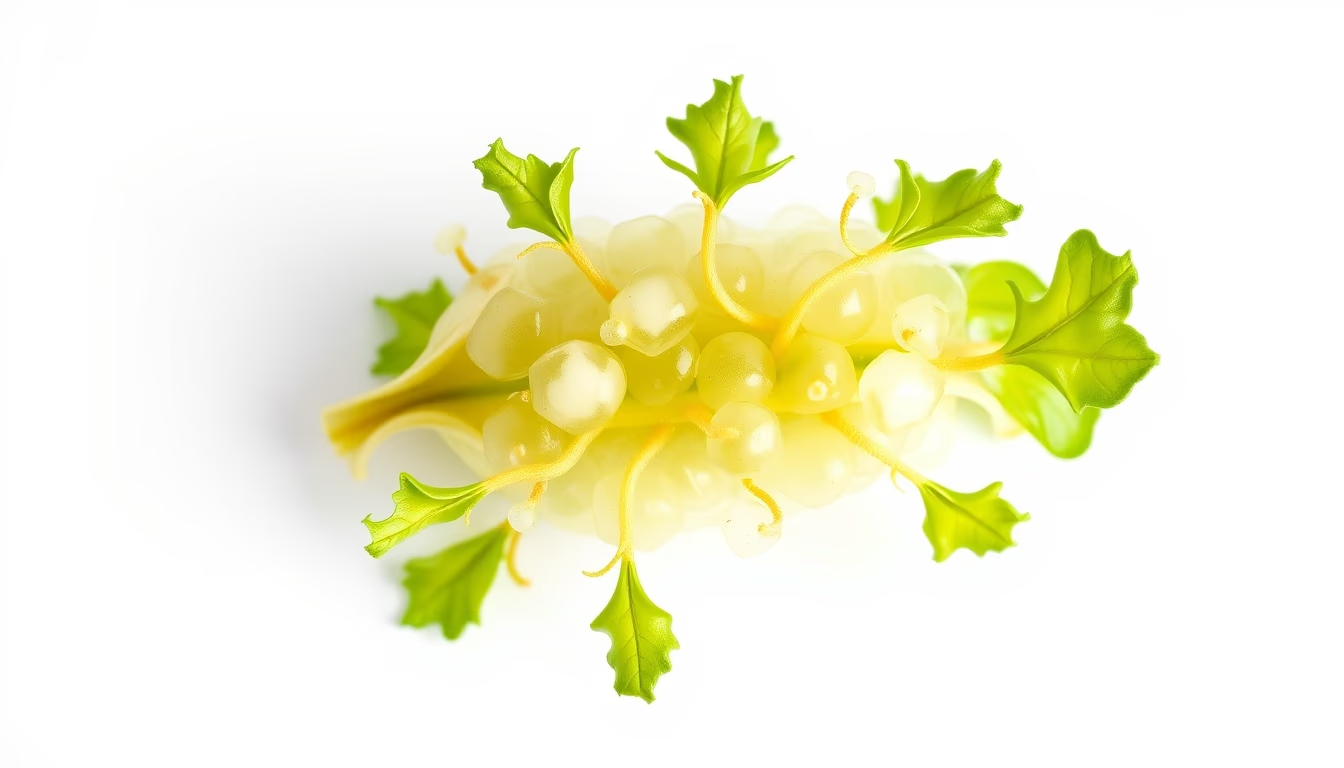
The chloroplast is the organelle responsible for photosynthesis, the process that converts sunlight into chemical energy, essential for life on Earth.
About this subject
Chloroplasts are organelles found in plant and algal cells, where photosynthesis takes place. This process converts carbon dioxide and water into glucose and oxygen using sunlight energy. Photosynthesis is fundamental for producing atmospheric oxygen and forms the base of the global food chain. Inside chloroplasts, the green pigment chlorophyll absorbs light in the blue and red wavelengths, reflecting green, which gives plants their characteristic color.
Photosynthesis occurs in two main stages: the light-dependent reactions and the Calvin cycle (light-independent). In the light reactions, light energy is converted into ATP and NADPH, releasing oxygen. In the Calvin cycle, carbon from CO₂ is fixed into organic molecules like glucose. Global photosynthesis is estimated to produce about 140 billion tons of organic matter per year.
Chloroplasts have their own DNA and ribosomes, suggesting an endosymbiotic origin: they evolved from ancestral cyanobacteria that were incorporated by eukaryotic cells. This theory is widely accepted and explains the double membrane of chloroplasts. Besides photosynthesis, chloroplasts play roles in fatty acid synthesis, amino acid production, and sulfur metabolism.
The efficiency of photosynthesis is limited: only about 1 to 2% of incident solar energy is converted into chemical energy. Current research aims to improve this efficiency through genetic engineering to boost agricultural productivity. Understanding chloroplasts is also crucial for developing biofuels and solar energy technologies inspired by nature.
Frequently Asked Questions
What is a chloroplast?
A chloroplast is an organelle found in plant and algal cells that performs photosynthesis. It contains chlorophyll and converts light energy into chemical energy.
How does photosynthesis occur in chloroplasts?
Photosynthesis occurs in two stages: in the light-dependent reactions, light is captured to produce ATP and NADPH, releasing oxygen; in the Calvin cycle, CO₂ is fixed into glucose using the energy produced.
Why do chloroplasts have their own DNA?
This supports the endosymbiotic theory, which suggests that chloroplasts evolved from cyanobacteria that were incorporated into ancient eukaryotic cells, retaining some of their genetic material.
Direct URL
https://pub-c7d6a6ea828543ac903a74a341ccb2e1.r2.dev/imagens/photosynthesis-chloroplast-commercial-product-photography-p1.avifHow to credit
Include a visible link back to UtilizAí. Copy one of the snippets below:
<a href="https://xn--utiliza-eza.com/en/midia/imagens/photosynthesis-chloroplast-commercial-product-photography-p1">Photosynthesis chloroplast</a> by <a href="https://xn--utiliza-eza.com">UtilizAí</a>, licensed under <a href="https://creativecommons.org/licenses/by/4.0/">CC BY 4.0</a>.
[Photosynthesis chloroplast](https://xn--utiliza-eza.com/en/midia/imagens/photosynthesis-chloroplast-commercial-product-photography-p1) by [UtilizAí](https://xn--utiliza-eza.com), CC BY 4.0
License: CC-BY-4.0