Photon wave particle
1344×768 · AVIF · CC BY 4.0
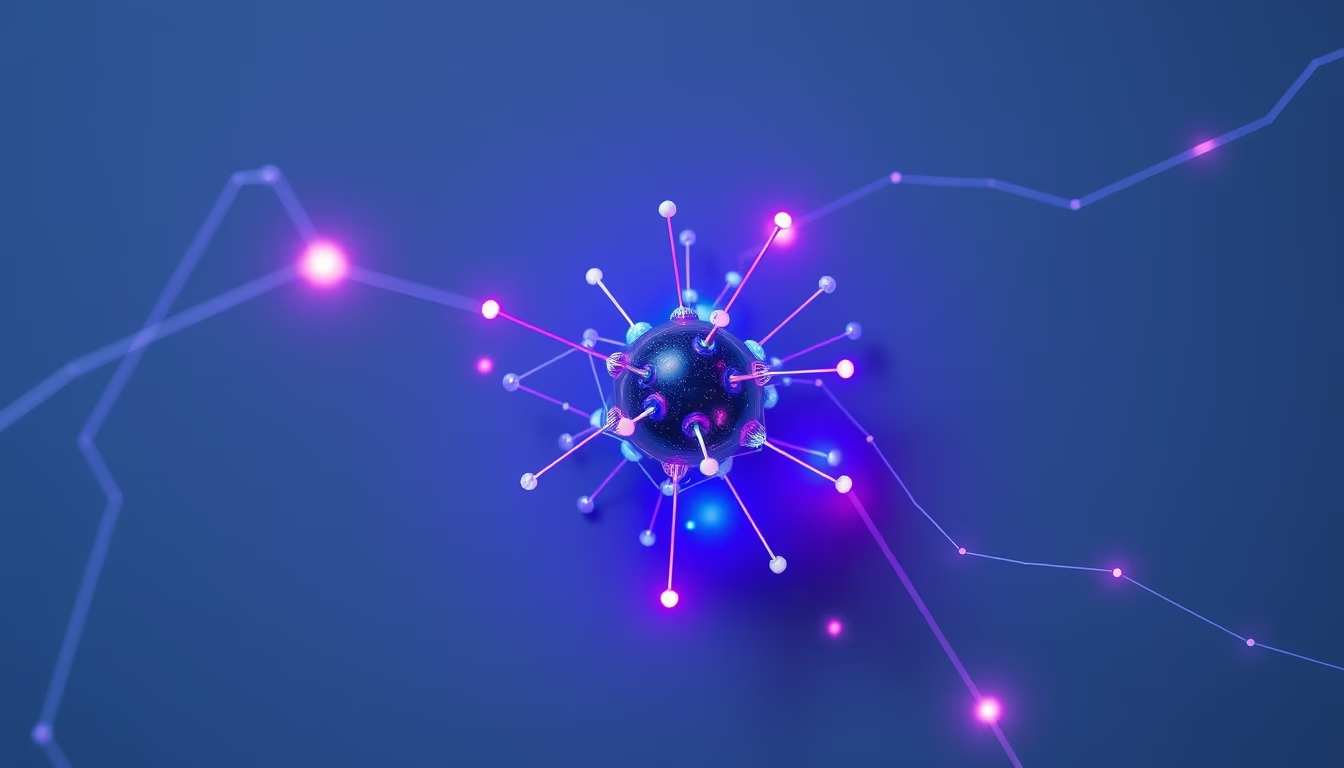
The photon is the elementary particle of light, exhibiting wave-particle duality in quantum mechanics.
About this subject
The photon is the fundamental unit of light and all forms of electromagnetic radiation. In quantum mechanics, it exhibits a dual nature: behaving as a particle in certain experiments (photoelectric effect) and as a wave in others (diffraction and interference). This wave-particle duality is a cornerstone of modern physics.
In 1905, Albert Einstein explained the photoelectric effect by proposing that light consists of energy quanta, later called photons. Each photon carries energy proportional to its frequency, given by E = hν, where h is Planck's constant. This discovery earned Einstein the Nobel Prize in Physics in 1921 and established the particle nature of light.
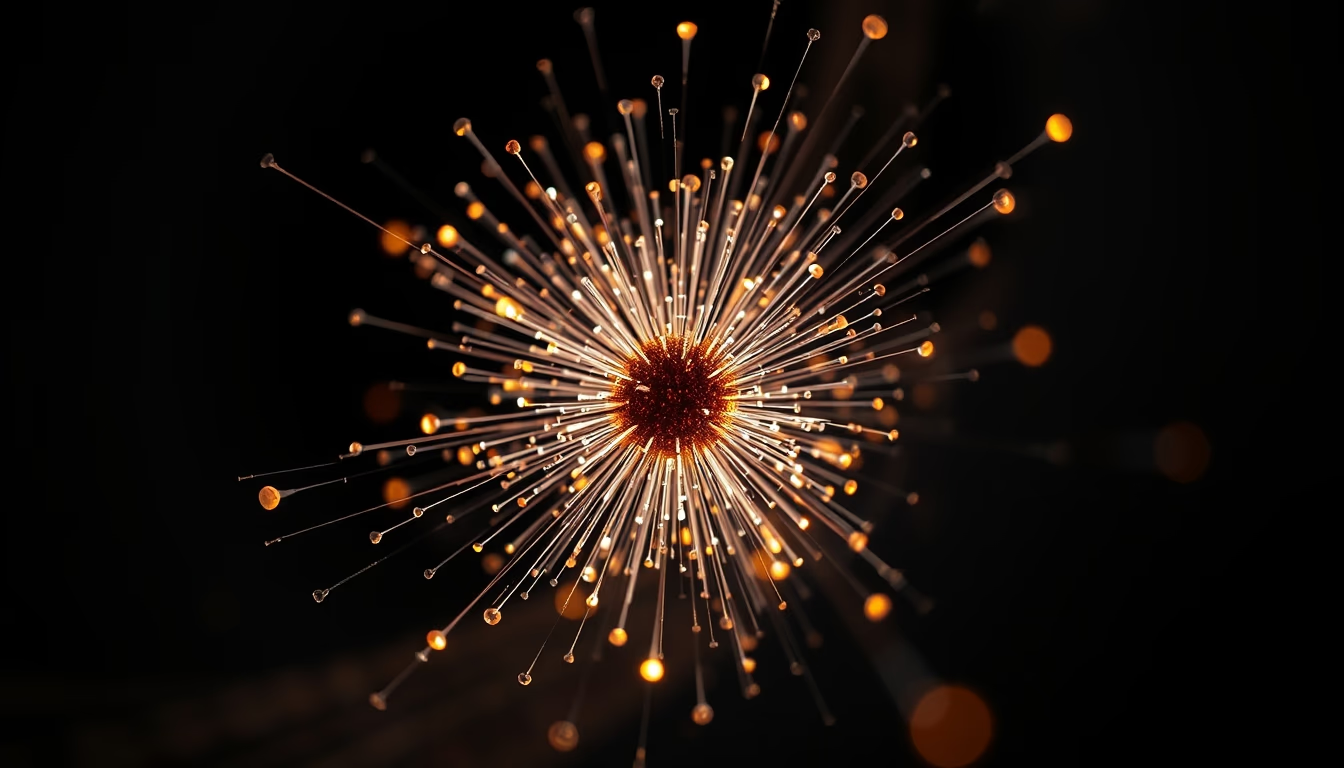
The double-slit experiment, performed with individual photons, clearly demonstrates the duality. When unobserved, photons form an interference pattern characteristic of waves. When detected, they appear as localized points. This behavior defies classical intuition and is crucial for technologies such as quantum computing and quantum cryptography.
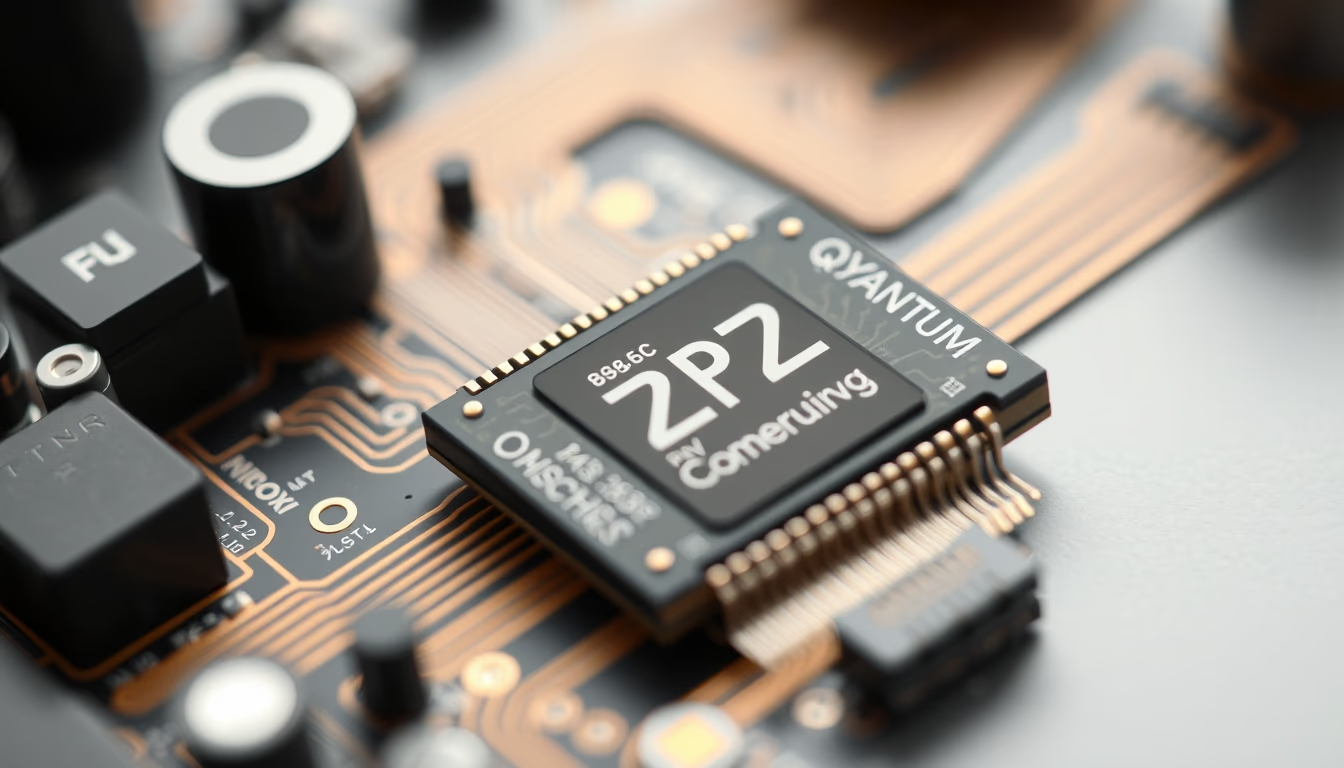
Photons have unique characteristics: they are massless particles, travel at the speed of light in a vacuum (about 300,000 km/s), and carry momentum despite having no mass. This property is exploited in optical tweezers and solar sails. Additionally, blackbody radiation, the Compton effect, and pair production are other phenomena involving photons.
Frequently Asked Questions
What is wave-particle duality for photons?
It is the property of photons to behave both as waves (interference, diffraction) and as particles (photoelectric effect, localized detection) depending on the experimental setup.
How was the particle nature of light discovered?
Einstein in 1905 explained the photoelectric effect, showing that light consists of photons with quantized energy, contradicting classical wave theory.
What are practical applications of photon knowledge?
In quantum computing, quantum cryptography, solar panels, lasers, optical tweezers, and imaging techniques like fluorescence microscopy.
Direct URL
https://pub-c7d6a6ea828543ac903a74a341ccb2e1.r2.dev/imagens/photon-wave-particle-isometric-flat-lay-p8.avifHow to credit
Include a visible link back to UtilizAí. Copy one of the snippets below:
<a href="https://xn--utiliza-eza.com/en/midia/imagens/photon-wave-particle-isometric-flat-lay-p8">Photon wave particle</a> by <a href="https://xn--utiliza-eza.com">UtilizAí</a>, licensed under <a href="https://creativecommons.org/licenses/by/4.0/">CC BY 4.0</a>.
[Photon wave particle](https://xn--utiliza-eza.com/en/midia/imagens/photon-wave-particle-isometric-flat-lay-p8) by [UtilizAí](https://xn--utiliza-eza.com), CC BY 4.0
License: CC-BY-4.0