Pharos alexandria reconstruction
1344×768 · AVIF · CC BY 4.0
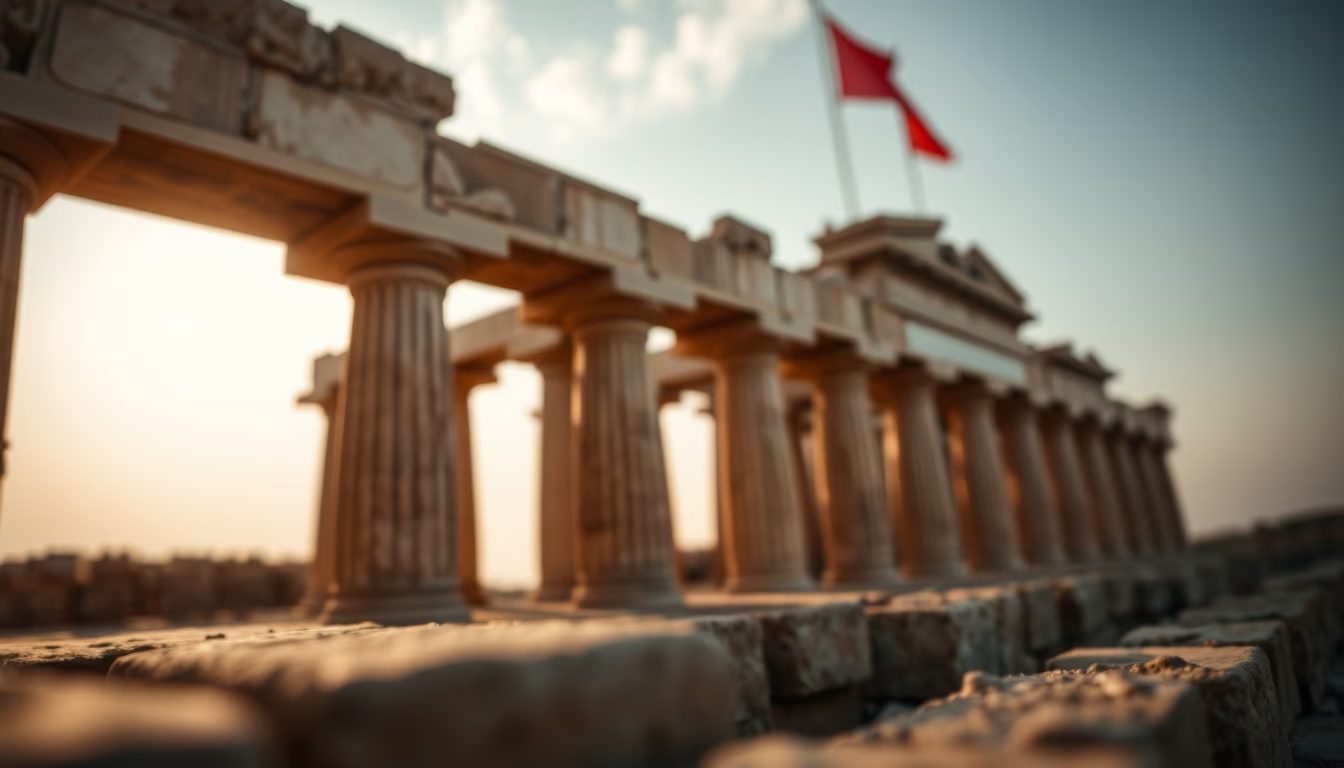
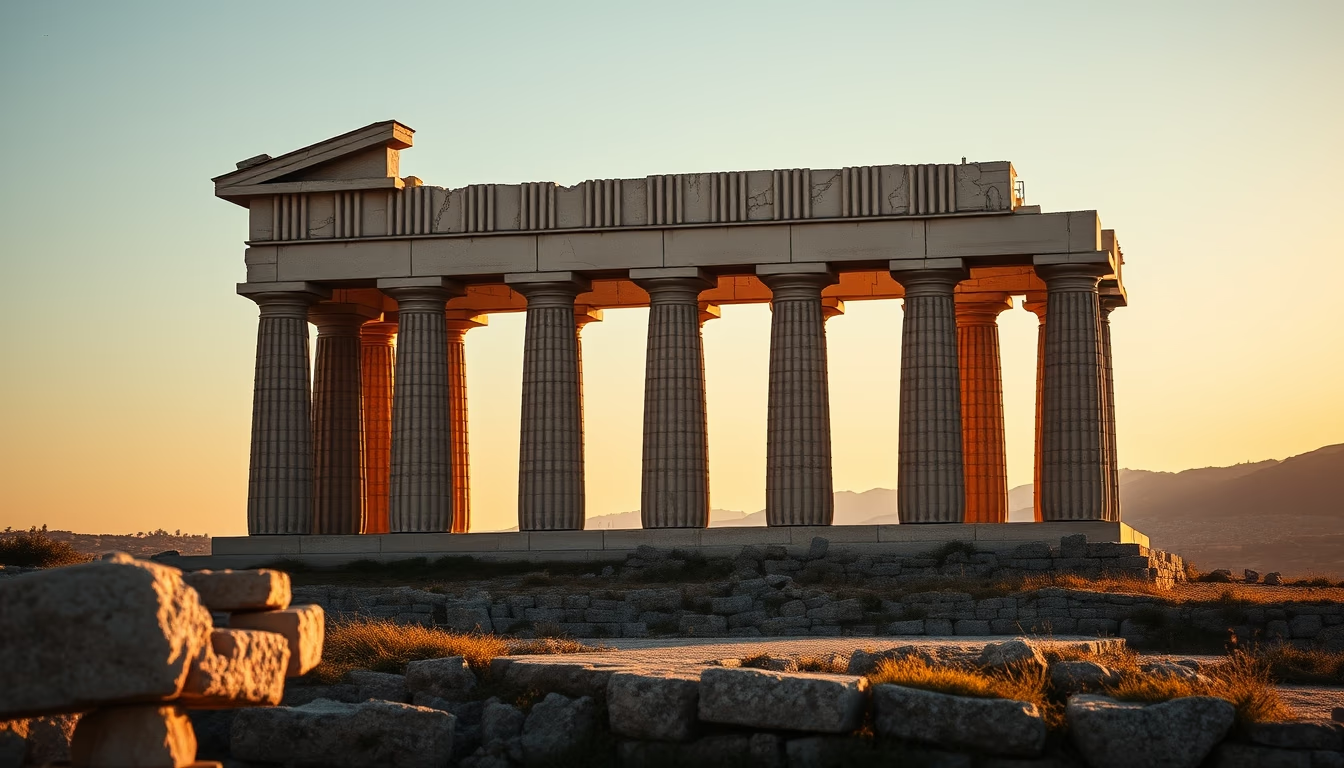
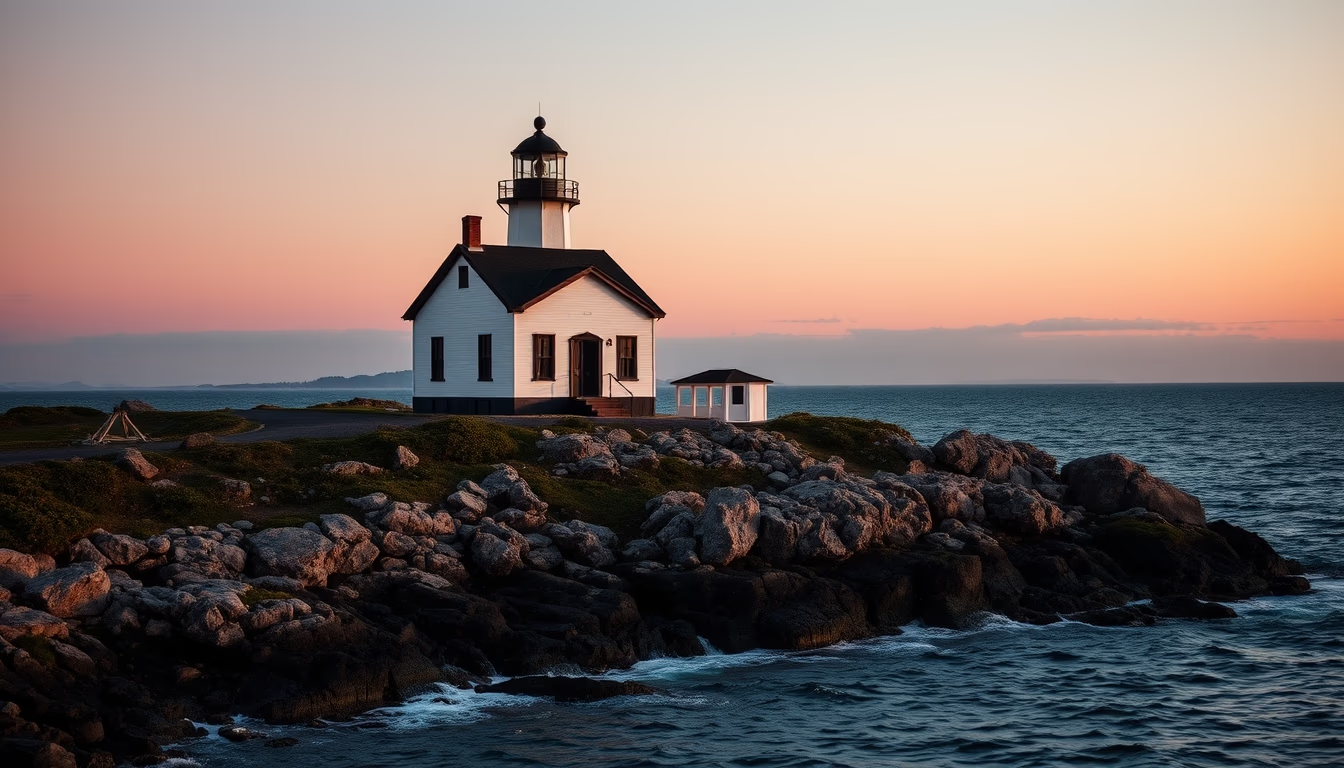
The Lighthouse of Alexandria, one of the Seven Wonders of the Ancient World, was a colossal tower that guided ships for centuries. Its imagined reconstruction reveals legendary engineering.
About this subject
The Lighthouse of Alexandria, also known as the Pharos, was built between 280 and 247 BC on the island of Pharos, off the coast of Egypt. Estimated at 100 to 130 meters in height, it was one of the tallest man-made structures of antiquity. Its purpose was to guide ships into the harbor of Alexandria, one of the most important cities in the Mediterranean. The lighthouse consisted of three sections: a square base, an octagonal middle, and a circular top where a flame was reflected by polished metal mirrors, visible for dozens of kilometers.
The construction was commissioned by Ptolemy I Soter and completed by his son Ptolemy II Philadelphus. The architect Sostratus of Cnidus led the project, which included a statue of Zeus or Poseidon at the apex. Materials included large blocks of limestone and granite, joined with molten lead to withstand the sea. The lighthouse survived for about 1,500 years, damaged by repeated earthquakes, especially in the 10th and 14th centuries, until it completely collapsed in 1480, when the Mamluk sultan Qaitbay used its stones to build a fortress on the same site.
The Lighthouse of Alexandria was not merely a signaling tower but a symbol of Ptolemaic power and innovation. Its influence spans centuries, inspiring later lighthouse architecture such as the Tower of Hercules in Spain and the Lighthouse of Genoa. Underwater excavations in Alexandria's harbor, led by French and Egyptian archaeologists in the 1990s, found granite blocks and statues that may belong to the lighthouse, though the fragmentary remains hinder exact reconstruction.
The name "Pharos" became synonymous with lighthouse in many languages (e.g., "phare" in French, "faro" in Italian). Despite its loss, the Lighthouse of Alexandria remains an icon of ancient engineering and one of the first structures built solely for navigation, marking the intersection of science, art, and public utility in the Hellenistic world.
Frequently Asked Questions
Did the Lighthouse of Alexandria really exist or is it a legend?
The Lighthouse of Alexandria really existed. It was a colossal tower built on the island of Pharos between 280 and 247 BC, documented by ancient authors like Strabo and Pliny the Elder. Underwater archaeological remains confirm its existence.
Why was the lighthouse built and how did it work?
It was built to guide ships to the harbor of Alexandria, a vital commercial city. At the top, a fire was reflected by polished metal mirrors, producing a beam visible for dozens of kilometers at night.
What caused the destruction of the Lighthouse of Alexandria?
The lighthouse was damaged by a series of earthquakes over the centuries, especially in 956, 1303, and 1323. It finally collapsed in 1480, and its stones were reused by Sultan Qaitbay to build a fortress on the same site.
Direct URL
https://pub-c7d6a6ea828543ac903a74a341ccb2e1.r2.dev/imagens/pharos-alexandria-reconstruction-macro-closeup-fresh14.avifHow to credit
Include a visible link back to UtilizAí. Copy one of the snippets below:
<a href="https://xn--utiliza-eza.com/en/midia/imagens/pharos-alexandria-reconstruction-macro-closeup-fresh14">Pharos alexandria reconstruction</a> by <a href="https://xn--utiliza-eza.com">UtilizAí</a>, licensed under <a href="https://creativecommons.org/licenses/by/4.0/">CC BY 4.0</a>.
[Pharos alexandria reconstruction](https://xn--utiliza-eza.com/en/midia/imagens/pharos-alexandria-reconstruction-macro-closeup-fresh14) by [UtilizAí](https://xn--utiliza-eza.com), CC BY 4.0
License: CC-BY-4.0