Pharmacy compounding lab
1344×768 · AVIF · CC BY 4.0
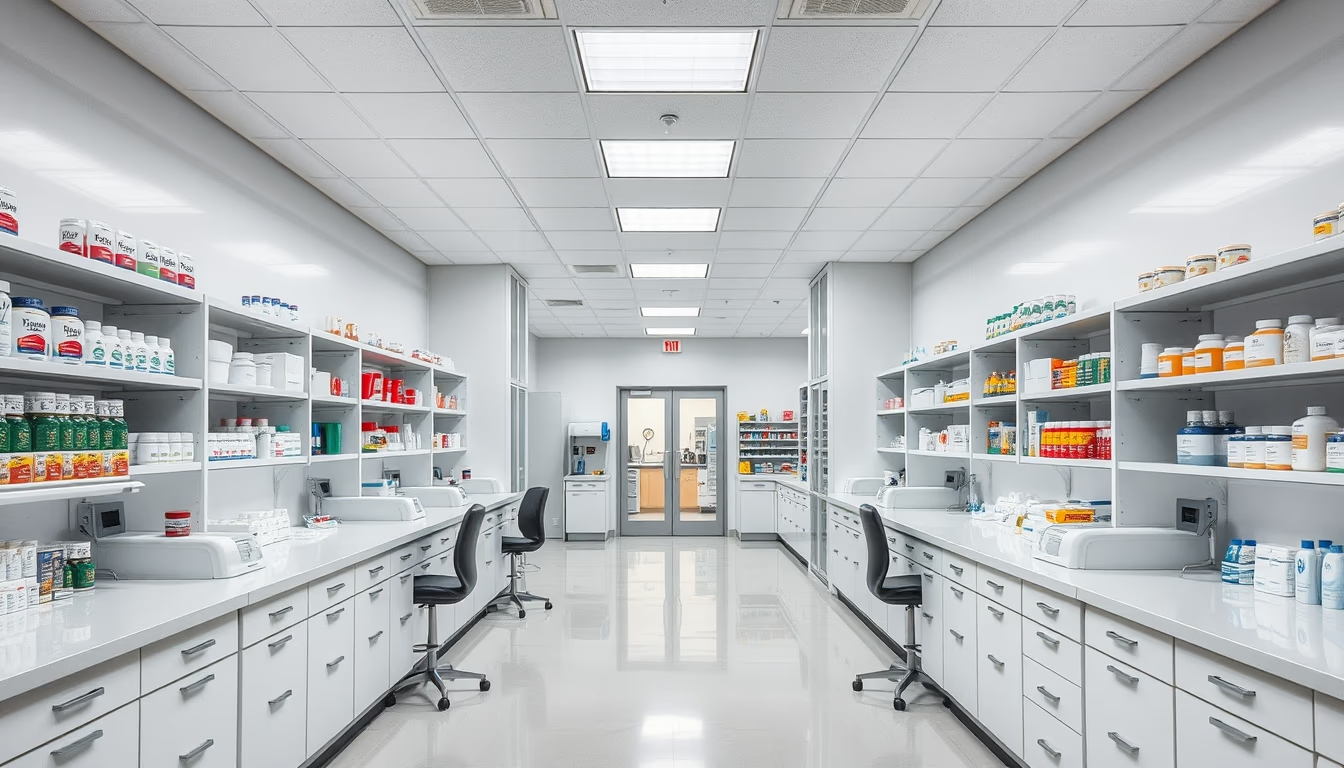
Pharmacy compounding lab, where customized medications are prepared under prescription, following strict quality standards.
About this subject
A pharmacy compounding lab is a specialized environment where pharmacists prepare customized medications to meet specific patient needs. Unlike commercial pharmacies that sell mass-produced drugs, compounding allows adjustments in dosage, dosage forms, and combinations of active ingredients not available on the market. This is essential for patients allergic to dyes or preservatives, children requiring pediatric doses, elderly with swallowing difficulties, or those needing gluten-free or lactose-free formulations.
In the United States, compounding pharmacies are regulated by state boards of pharmacy and, at the federal level, by the FDA under the Drug Quality and Security Act (DQSA). The law distinguishes between traditional compounding (patient-specific prescriptions) and outsourcing facilities that produce larger batches. Labs must follow USP <795> and <797> standards for non-sterile and sterile compounding, respectively, ensuring proper equipment, air quality, and personnel training to prevent contamination.
Historically, compounding dates back to ancient apothecaries. With industrialization, many pharmacies stopped compounding, but the field experienced a resurgence due to the growing demand for personalized medicine. Today, compounding labs produce not only medications but also customized supplements, dermatological creams, and veterinary preparations. The global compounding pharmacy market was valued at over $10 billion in 2023 and is projected to grow steadily.
Compounding plays a vital role in areas like hormone replacement therapy (bioidentical hormones), pain management, and pediatrics. During drug shortages, compounding labs can provide critical alternatives. The rise of 3D printing and automation is transforming the sector, enabling precise dosing and on-demand production. However, safety concerns, such as the 2012 fungal meningitis outbreak linked to a compounding pharmacy, have led to stricter oversight and inspections.
Frequently Asked Questions
What is a compounded medication?
It is a medication prepared individually by a compounding pharmacy according to a prescription, tailored to a patient's specific needs such as customized dosage forms or allergen-free formulations.
How are compounding labs regulated?
In the US, compounding labs are regulated by state pharmacy boards and federal agencies like the FDA, following standards such as USP <795> and <797> for sterile and non-sterile compounding, ensuring quality and safety.
Can any pharmacy compound medications?
No, only pharmacies with a valid license and proper facilities, equipment, and trained personnel can legally compound. They must comply with strict regulations to minimize risks of contamination or dosing errors.
Direct URL
https://pub-c7d6a6ea828543ac903a74a341ccb2e1.r2.dev/imagens/pharmacy-compounding-lab-architectural-photography-p5.avifHow to credit
Include a visible link back to UtilizAí. Copy one of the snippets below:
<a href="https://xn--utiliza-eza.com/en/midia/imagens/pharmacy-compounding-lab-architectural-photography-p5">Pharmacy compounding lab</a> by <a href="https://xn--utiliza-eza.com">UtilizAí</a>, licensed under <a href="https://creativecommons.org/licenses/by/4.0/">CC BY 4.0</a>.
[Pharmacy compounding lab](https://xn--utiliza-eza.com/en/midia/imagens/pharmacy-compounding-lab-architectural-photography-p5) by [UtilizAí](https://xn--utiliza-eza.com), CC BY 4.0
License: CC-BY-4.0