Periodic table elements glow
1344×768 · AVIF · CC BY 4.0
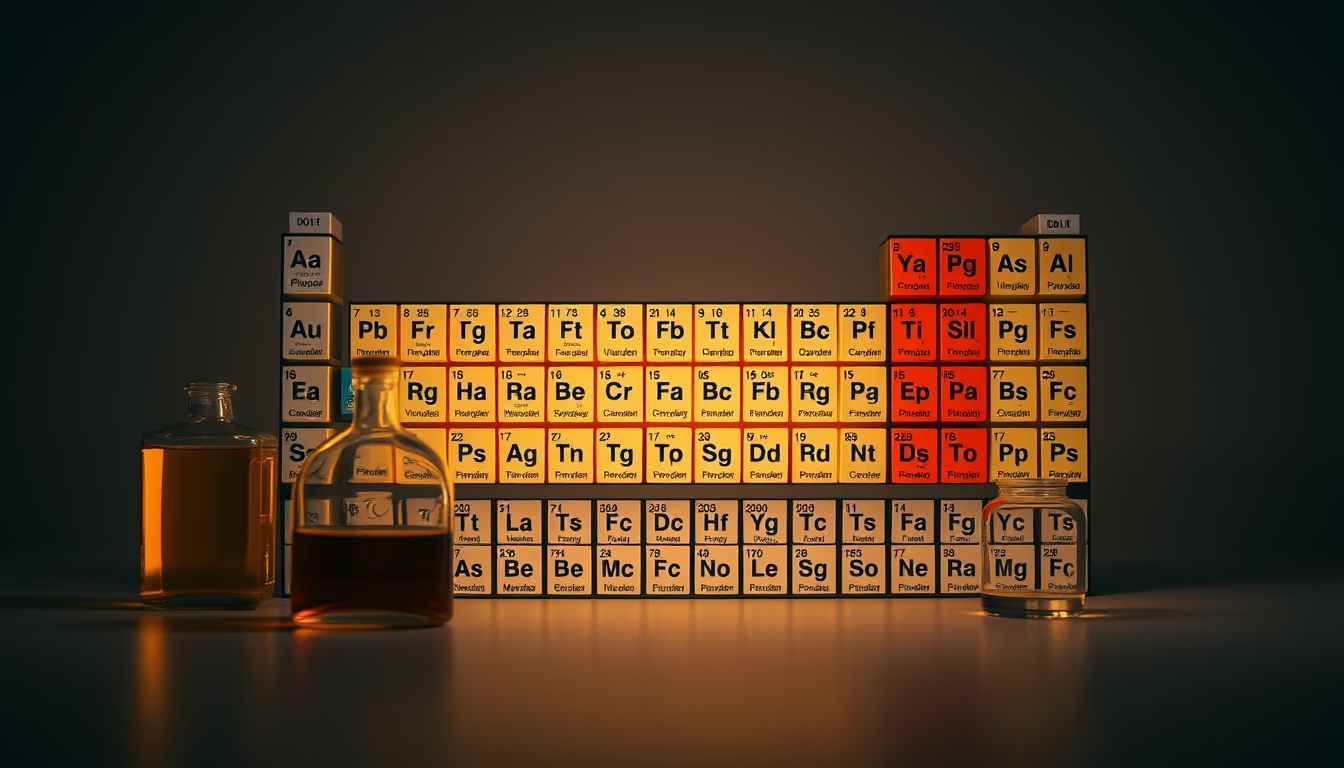
The elements of the periodic table emit characteristic light when excited, a phenomenon used in flame tests and neon lamps.
About this subject
Each chemical element has a unique emission spectrum, like a luminous fingerprint. When atoms receive energy (heat, electricity), their electrons jump to higher levels and, upon returning to the ground state, release photons at specific wavelengths. This produces distinct colors: sodium (Na) yields the intense yellow of sodium vapor lamps; copper (Cu) gives green tint in fireworks; strontium (Sr) produces the characteristic red of flares. Atomic emission spectroscopy, based on this principle, allows identification of elements in samples from forensic labs to the analysis of distant stars.
The phenomenon is widely used in lighting technology. Neon lamps (noble gas neon) glow red-orange, while argon and mercury produce blue and ultraviolet light, respectively. Gas discharge tubes, signage, and fluorescent lamps rely on excitation of gases and phosphors. On the periodic table, elements from different groups behave peculiarly: alkali metals (lithium, rubidium) burn with vibrant colors; rare earths (europium, terbium) are essential for phosphors in screens and LEDs.
Fun fact: hydrogen's emission spectrum, discovered in the 19th century, was crucial for developing quantum mechanics, with Bohr's model explaining the Balmer lines. Today, scientists use element fluorescence in biological markers, such as europium in medical tests. In school labs, the flame test still delights students by revealing the hidden colors of metal salts, a visual invitation to chemistry.
Frequently Asked Questions
Why do elements glow with different colors?
Each element has a unique electronic structure. When excited, electrons jump to higher energy levels and, upon returning, emit photons at specific wavelengths, producing characteristic colors.
Where can I see element glow in everyday life?
In sodium vapor lamps (yellow), fireworks (varied colors), neon signs (red or other colors), and fluorescent lamps (white light).
What is the flame test?
A simple experiment where metal salts are heated in a flame, producing typical colors for each element. It is used to identify metals like sodium (yellow) and copper (green).
Direct URL
https://pub-c7d6a6ea828543ac903a74a341ccb2e1.r2.dev/imagens/periodic-table-elements-glow-studio-still-life-p8.avifHow to credit
Include a visible link back to UtilizAí. Copy one of the snippets below:
<a href="https://xn--utiliza-eza.com/en/midia/imagens/periodic-table-elements-glow-studio-still-life-p8">Periodic table elements glow</a> by <a href="https://xn--utiliza-eza.com">UtilizAí</a>, licensed under <a href="https://creativecommons.org/licenses/by/4.0/">CC BY 4.0</a>.
[Periodic table elements glow](https://xn--utiliza-eza.com/en/midia/imagens/periodic-table-elements-glow-studio-still-life-p8) by [UtilizAí](https://xn--utiliza-eza.com), CC BY 4.0
License: CC-BY-4.0