Periodic table elements glow
1344×768 · AVIF · CC BY 4.0
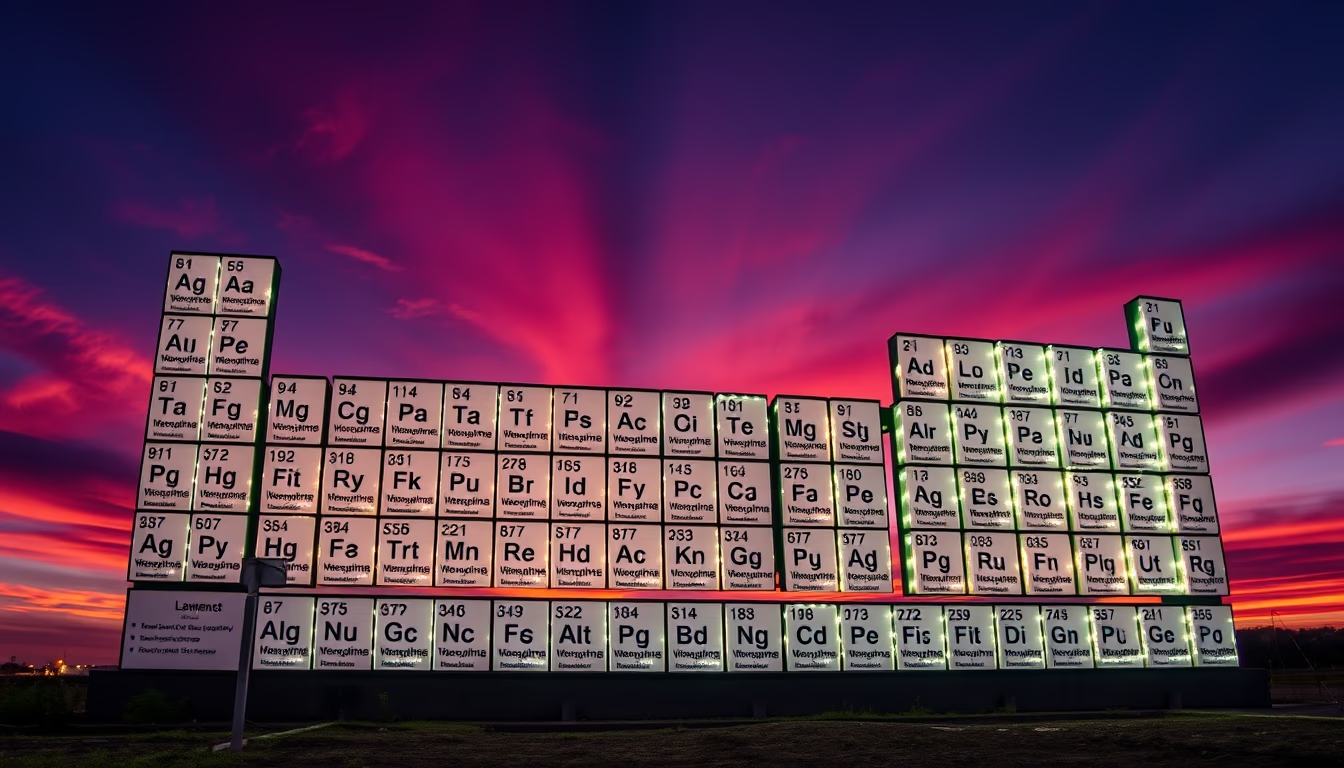
The periodic table organizes chemical elements by atomic properties, revealing patterns like light emission at different wavelengths.
About this subject
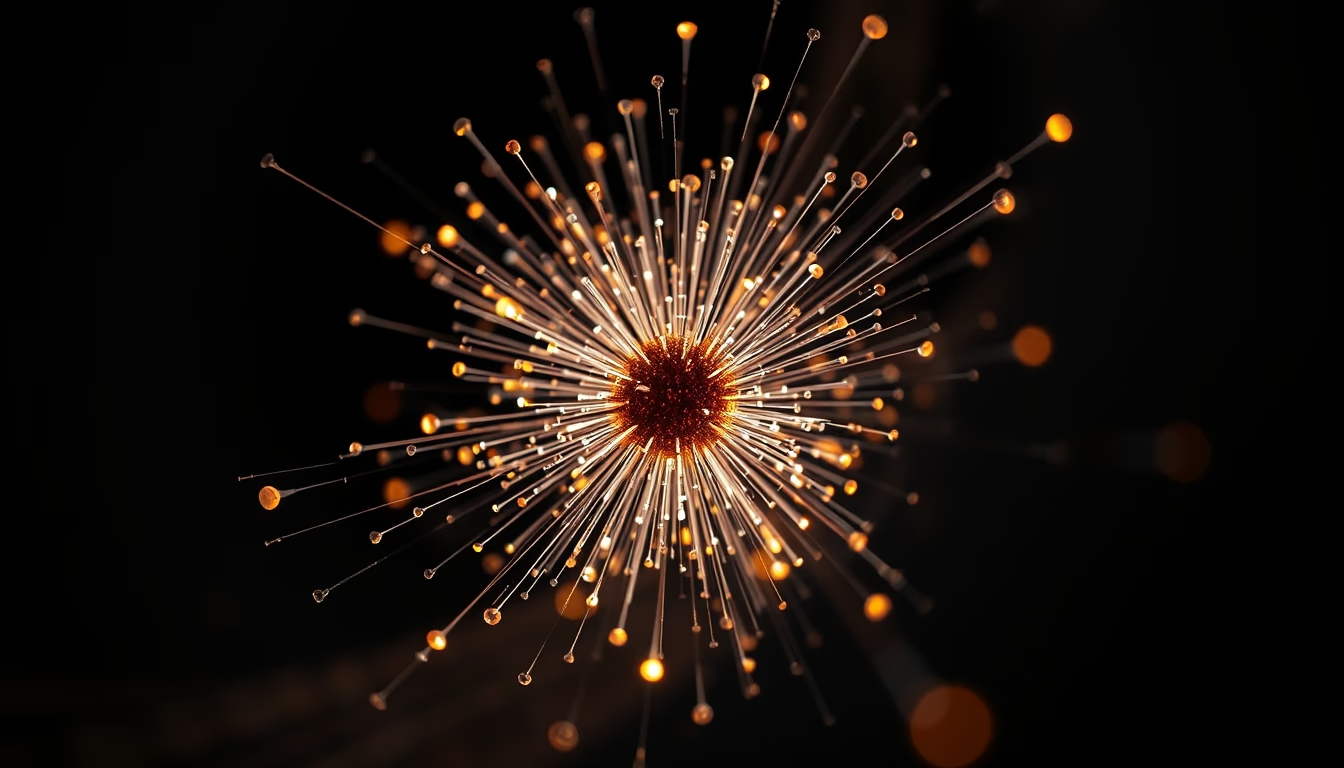
The periodic table is a cornerstone of chemistry, organizing the 118 known elements by increasing atomic number. Conceived by Dmitri Mendeleev in 1869, it not only listed elements but also predicted properties of undiscovered ones, such as gallium and germanium. Its structure of periods and groups reflects electron configurations and enables prediction of chemical behavior. Each element has a unique emission spectrum, arising when electrons are excited to higher energy levels and then return, emitting photons at specific wavelengths. This is the basis of flame tests: sodium compounds produce a bright yellow flame, copper gives green, and strontium yields red. These colors are used in fireworks, flares, and metal vapor lamps. Long exposure photography captures these glows as luminous trails, highlighting the inherent beauty of matter. The periodic table is vital in nuclear medicine, where radioisotopes like technetium-99m are used for diagnostic imaging, and in electronics, with elements like silicon and germanium in semiconductors. The discovery of new elements, including those in period 7, continues to expand our understanding, and the periodic table remains a symbol of the unity and diversity of matter.
Frequently Asked Questions
Who created the periodic table and how has it evolved?
Dmitri Mendeleev published the first widely accepted version in 1869, organizing elements by atomic mass and leaving gaps for undiscovered elements. The modern table is ordered by atomic number and includes contributions from Henry Moseley and Glenn Seaborg.
Why do elements glow with different colors when heated?
Each element has a unique electron configuration. When excited, electrons jump to higher levels and, upon returning, emit photons at specific wavelengths, resulting in characteristic colors from the element's emission spectrum.
What are practical applications of the periodic table in everyday life?
It is used in laboratories for element identification via spectroscopy, in fireworks production with metal salts, in semiconductors (silicon, germanium), and in nuclear medicine (technetium-99m for imaging scans).
Direct URL
https://pub-c7d6a6ea828543ac903a74a341ccb2e1.r2.dev/imagens/periodic-table-elements-glow-long-exposure-p9.avifHow to credit
Include a visible link back to UtilizAí. Copy one of the snippets below:
<a href="https://xn--utiliza-eza.com/en/midia/imagens/periodic-table-elements-glow-long-exposure-p9">Periodic table elements glow</a> by <a href="https://xn--utiliza-eza.com">UtilizAí</a>, licensed under <a href="https://creativecommons.org/licenses/by/4.0/">CC BY 4.0</a>.
[Periodic table elements glow](https://xn--utiliza-eza.com/en/midia/imagens/periodic-table-elements-glow-long-exposure-p9) by [UtilizAí](https://xn--utiliza-eza.com), CC BY 4.0
License: CC-BY-4.0