Patch cable bundle
1344×768 · AVIF · CC BY 4.0
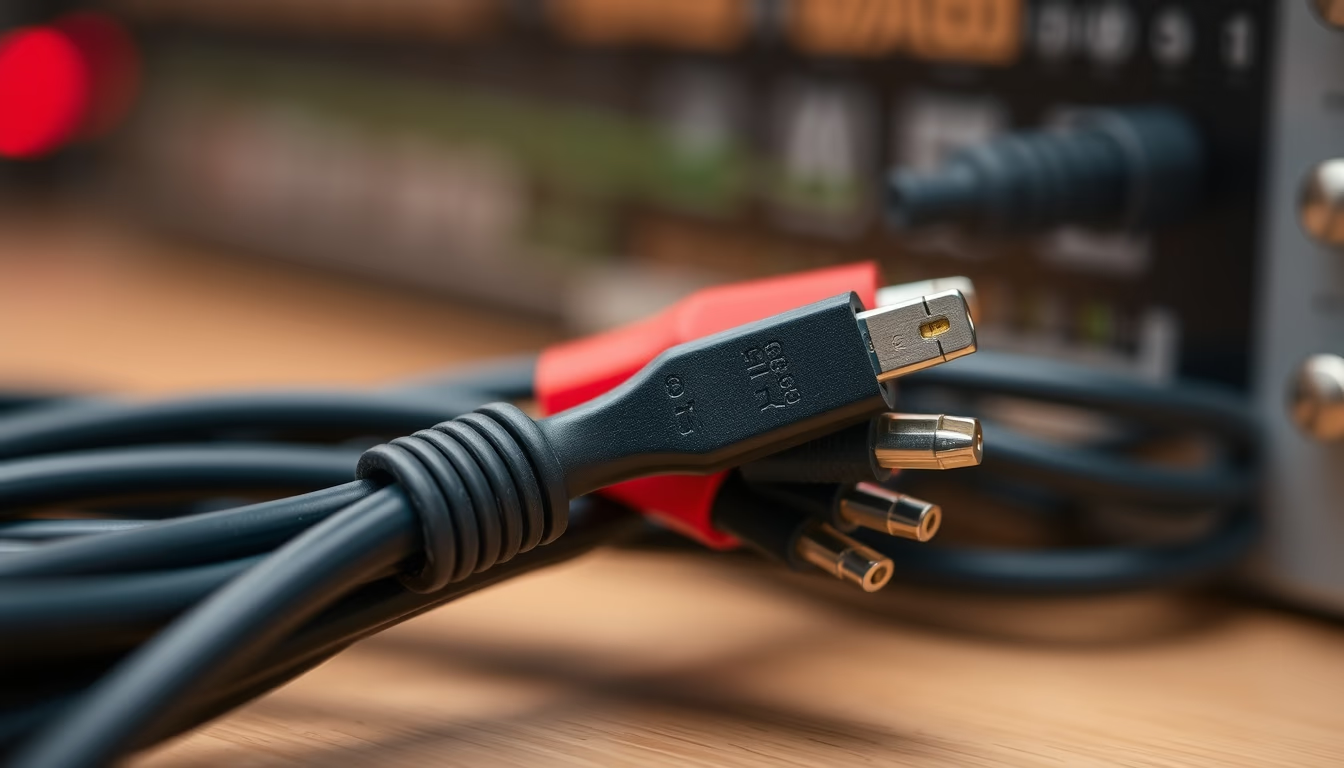
Patch cable bundle with a tilt-shift miniature effect, highlighting the organization and importance of network cables in modern data centers.
About this subject
Patch cables, also known as Ethernet cables, are essential components in local area networks (LANs) and data centers. They connect devices such as computers, switches, and routers, enabling high-speed data transmission. Patch cables typically have RJ45 connectors and are categorized by standards like Cat5e, Cat6, and Cat6a, supporting data rates from 1 Gbps to 10 Gbps, depending on category and length.
In data centers, cable organization is critical for maintaining airflow efficiency and ease of maintenance. Cable bundles are often tied with Velcro straps or cable ties to prevent tangling and ensure that equipment cooling is not impeded. This practice also reduces the risk of accidental disconnections and improves the visual aesthetics of the infrastructure.
The tilt-shift effect used in this image is a photographic technique that simulates a miniature look by distorting perspective and creating a shallow depth of field. Applying this effect to a bundle of patch cables adds a playful dimension, contrasting with the technical seriousness of network components. The technique is commonly used in architecture and landscape photography, but here it highlights the beauty in cable organization, an often-overlooked element.
Interestingly, the maximum recommended length for patch cables in Ethernet networks is 100 meters, due to signal attenuation. In large-scale data centers, cable management is automated with patch panel systems and pre-terminated cables, reducing installation time and human errors.
Frequently Asked Questions
What is the difference between Cat5e and Cat6 cables?
Cat5e supports speeds up to 1 Gbps and a frequency of 100 MHz, while Cat6 operates at 10 Gbps for distances up to 55 meters and has a frequency of 250 MHz. Cat6 also has better shielding against interference.
Why are cables bundled in data centers?
Bundling cables improves organization, enhances airflow for cooling, reduces the risk of accidental disconnections, and simplifies maintenance. It is a standard practice in data centers to ensure efficiency and reliability.
What is the tilt-shift effect?
It is a photographic technique using special lenses or post-processing to mimic the appearance of a miniature model, with selective blur and perspective distortion. Commonly used in landscape or object photography to create a whimsical effect.
Direct URL
https://pub-c7d6a6ea828543ac903a74a341ccb2e1.r2.dev/imagens/patch-cable-bundle-tilt-shift-miniature-fresh14.avifHow to credit
Include a visible link back to UtilizAí. Copy one of the snippets below:
<a href="https://xn--utiliza-eza.com/en/midia/imagens/patch-cable-bundle-tilt-shift-miniature-fresh14">Patch cable bundle</a> by <a href="https://xn--utiliza-eza.com">UtilizAí</a>, licensed under <a href="https://creativecommons.org/licenses/by/4.0/">CC BY 4.0</a>.
[Patch cable bundle](https://xn--utiliza-eza.com/en/midia/imagens/patch-cable-bundle-tilt-shift-miniature-fresh14) by [UtilizAí](https://xn--utiliza-eza.com), CC BY 4.0
License: CC-BY-4.0