Patch cable bundle
1344×768 · AVIF · CC BY 4.0
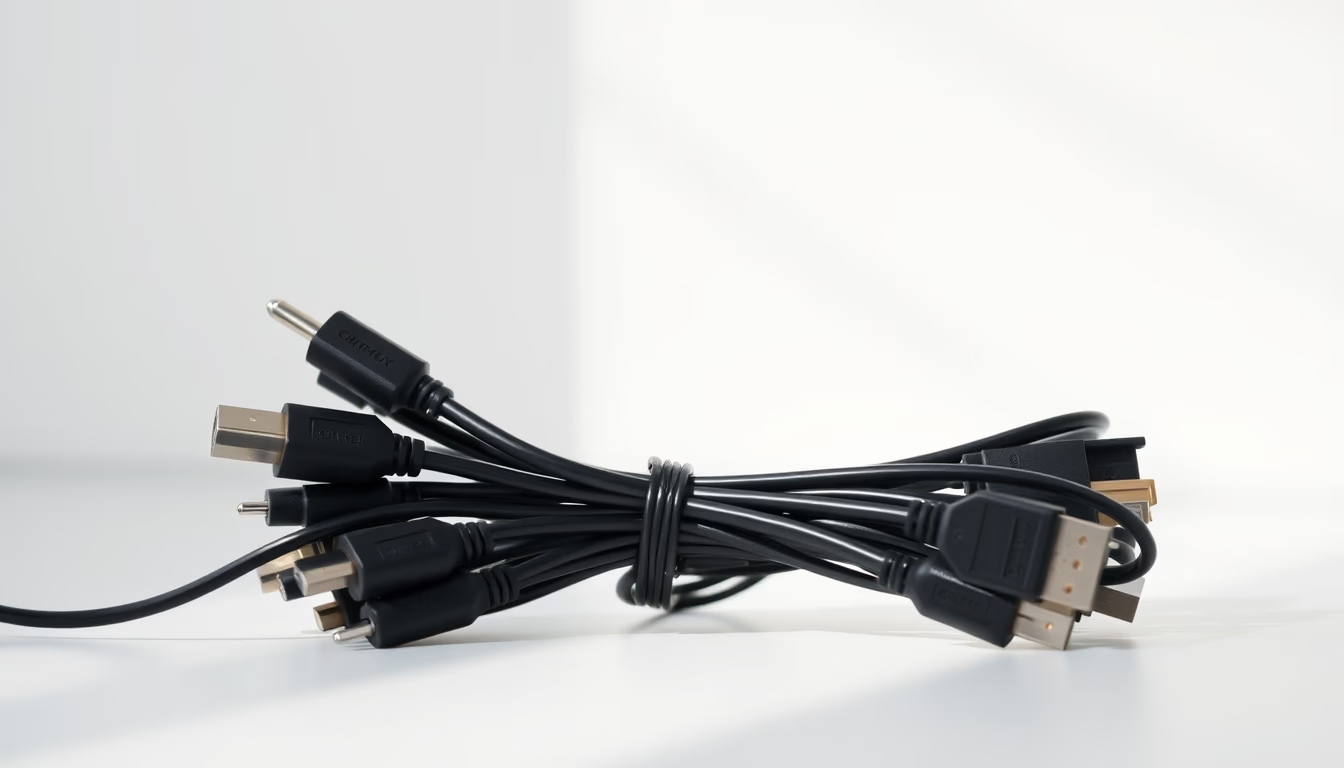
A bundle of patch cables neatly arranged, essential for data connections in home and corporate networks.
About this subject
Patch cables are essential components in computer networks, used to connect devices such as routers, switches, servers, and computers to network outlets or directly to patch panels. They come in various lengths, typically from 0.5 to 15 meters, and are made of twisted copper pairs to reduce electromagnetic interference. Their construction follows international standards like TIA/EIA-568, which defines termination specifications and performance categories.
Different categories of patch cables exist, such as Cat5e, Cat6, Cat6a, and Cat7, each supporting distinct frequencies and data rates. Cat5e, for instance, delivers up to 1 Gbps at 100 MHz, while Cat6a reaches 10 Gbps at 500 MHz and is common in modern data centers. The choice of category depends on existing infrastructure and bandwidth requirements, with shielded cables (STP) increasingly used in high-interference environments.
In data centers and structured cabling, organizing patch cables into bundles is crucial for airflow, maintenance, and performance. Using Velcro straps or cable ties along with trays and raceways creates orderly bundles that follow planned routes, reducing accidental disconnections and improving visual appeal. Different colors are often employed to identify functions such as corporate data, telephony, or security systems.
A historical note: the first patch cables for Ethernet emerged in the 1980s, using RJ45 connectors that evolved from telephone connectors. Today, millions of kilometers of these cables are produced annually worldwide, with rigorous testing standards to ensure signal integrity in high-speed networks. Despite the rise of wireless networking, patch cables remain indispensable for fixed connections requiring stability and low latency.
Frequently Asked Questions
What is the difference between a patch cable and a regular network cable?
A patch cable is a short, flexible network cable with connectors on both ends, used to directly connect devices. A 'network cable' can refer to any cable used in networking, including long fixed runs. All patch cables are network cables, but not all network cables are patch cords.
What does the cable category mean, such as Cat5e or Cat6?
The category defines performance: maximum supported frequency and data rate. Cat5e supports up to 1 Gbps at 100 MHz; Cat6 up to 1 Gbps at 250 MHz; Cat6a up to 10 Gbps at 500 MHz; and Cat7 up to 10 Gbps at 600 MHz. Higher categories require better materials and shielding to maintain signal integrity.
How should patch cables be organized in a server rack?
Use patch panels in front of switches, route cables horizontally with Velcro ties, avoid tight bends, and group by function with color coding. Leave slack for adjustments and use cable guides or troughs to keep bundles tidy.
Direct URL
https://pub-c7d6a6ea828543ac903a74a341ccb2e1.r2.dev/imagens/patch-cable-bundle-minimalist-composition-fresh1.avifHow to credit
Include a visible link back to UtilizAí. Copy one of the snippets below:
<a href="https://xn--utiliza-eza.com/en/midia/imagens/patch-cable-bundle-minimalist-composition-fresh1">Patch cable bundle</a> by <a href="https://xn--utiliza-eza.com">UtilizAí</a>, licensed under <a href="https://creativecommons.org/licenses/by/4.0/">CC BY 4.0</a>.
[Patch cable bundle](https://xn--utiliza-eza.com/en/midia/imagens/patch-cable-bundle-minimalist-composition-fresh1) by [UtilizAí](https://xn--utiliza-eza.com), CC BY 4.0
License: CC-BY-4.0