Patch cable bundle
1344×768 · AVIF · CC BY 4.0
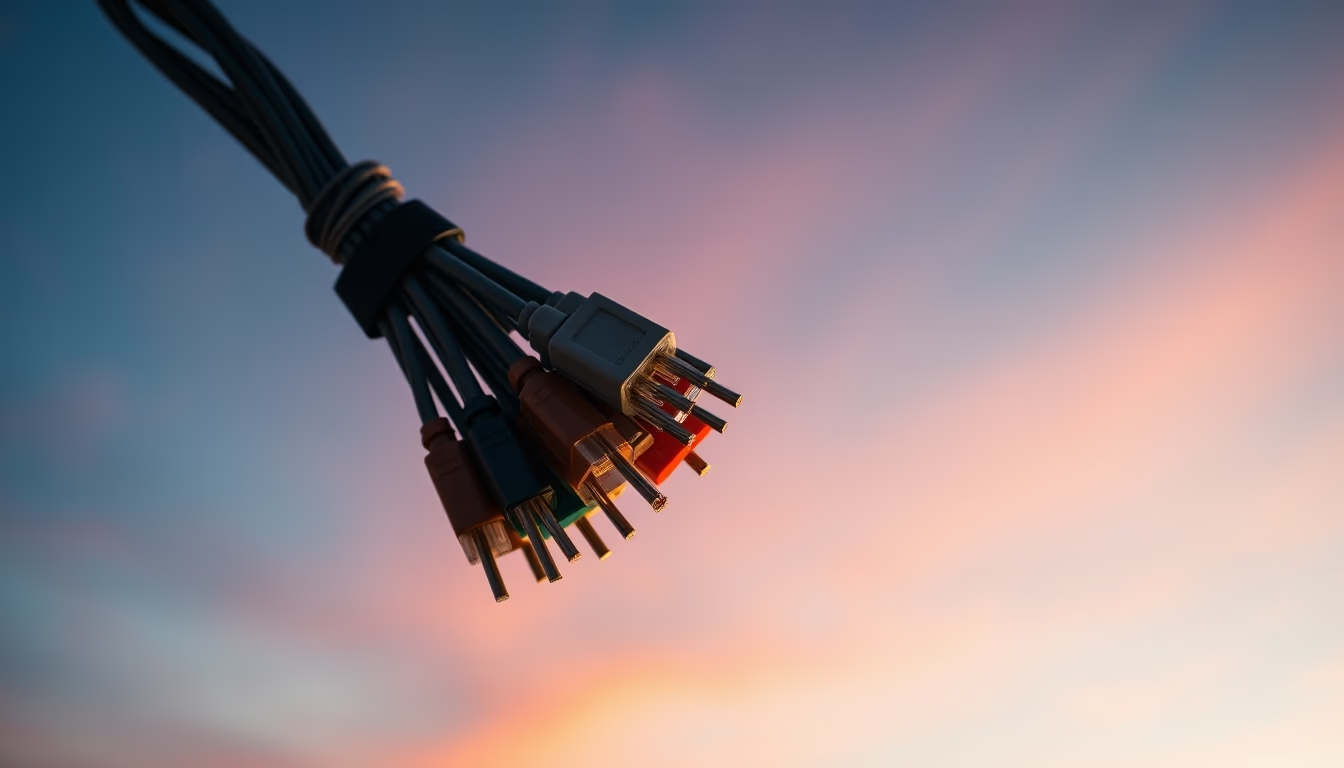
Essential networking cables for computer networks, patch cables ensure organization and performance in data centers and offices.
About this subject
Patch cables are short network cables, typically with RJ45 connectors on both ends, used to connect network devices to patch panels, switches, or routers. They come in various categories such as Cat5e, Cat6, Cat6a, and Cat7, each supporting different speeds and frequencies. For example, Cat5e cables are suitable for Gigabit Ethernet up to 100 meters, while Cat6a supports 10 Gigabit Ethernet over the same distance. The choice of category depends on the existing infrastructure and bandwidth requirements.
Beyond category, patch cables vary in length from a few centimeters to several meters and can be shielded (STP) or unshielded (UTP). Shielding reduces electromagnetic interference, which is crucial in industrial environments or areas with many cables in close proximity. The termination of connectors follows either the T568A or T568B standard, defining the order of internal wires; maintaining consistency throughout the network is important to avoid connection errors.
In data centers, patch cable organization is critical for maintenance and airflow. Techniques such as using velcro ties, cable trays, and proper labeling facilitate identification and cable swaps. A well-organized bundle of patch cables not only improves aesthetics but also simplifies troubleshooting and reduces the risk of accidental disconnections. The long exposure photographic technique mentioned in the tags might capture the motion of cables being installed or the blinking of LEDs on network equipment, but the focus here is on the subject itself: the set of network cables.
Interestingly, the term "patch cable" originated in telephony, where short cables were used to "patch" connections in distribution panels. Today, they are ubiquitous in computer networks, and demand for higher-performance cables grows with the expansion of applications like 4K streaming, cloud computing, and IoT. Choosing the correct patch cable can directly impact network latency and reliability, making this seemingly simple component a vital element of digital infrastructure.
Frequently Asked Questions
What is the difference between a Cat5e and Cat6 patch cable?
Cat5e supports frequencies up to 100 MHz and is suitable for Gigabit Ethernet, while Cat6 operates up to 250 MHz and offers better performance at higher speeds, supporting 10 Gigabit Ethernet over shorter distances (up to 55 meters).
What is a patch panel and how does it relate to patch cables?
A patch panel is a panel with RJ45 ports that centralizes network cable connections. Patch cables connect active devices (switches, routers) to the patch panel, facilitating network organization and maintenance.
How to properly organize a bundle of patch cables?
Use velcro ties to group cables, avoid sharp bends, keep them off the floor with trays or ducts, and label both ends of each cable for easy identification.
Direct URL
https://pub-c7d6a6ea828543ac903a74a341ccb2e1.r2.dev/imagens/patch-cable-bundle-long-exposure-fresh11.avifHow to credit
Include a visible link back to UtilizAí. Copy one of the snippets below:
<a href="https://xn--utiliza-eza.com/en/midia/imagens/patch-cable-bundle-long-exposure-fresh11">Patch cable bundle</a> by <a href="https://xn--utiliza-eza.com">UtilizAí</a>, licensed under <a href="https://creativecommons.org/licenses/by/4.0/">CC BY 4.0</a>.
[Patch cable bundle](https://xn--utiliza-eza.com/en/midia/imagens/patch-cable-bundle-long-exposure-fresh11) by [UtilizAí](https://xn--utiliza-eza.com), CC BY 4.0
License: CC-BY-4.0