Patch cable bundle
1344×768 · AVIF · CC BY 4.0
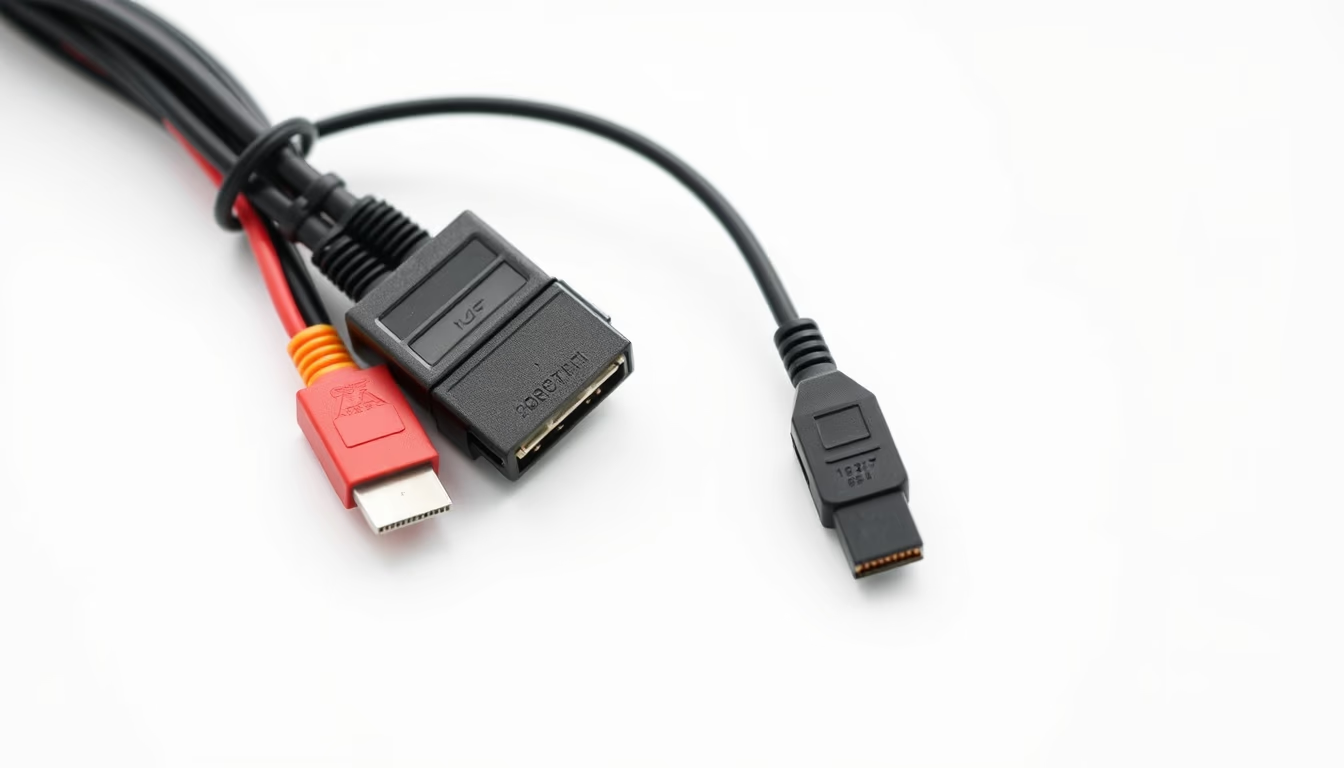
Patch cables are short connection cables used in computer networks and telecommunications to link devices in patch panels or active equipment.
About this subject
Patch cables, also known as patch cords, are short lengths of network cable (typically 0.5 to 5 meters) used to connect electronic devices in a structured cabling system. They are essential in data centers, server rooms, and offices, providing flexibility to rearrange connections without altering the fixed infrastructure. Common types include CAT5e, CAT6, and CAT6a, supporting speeds up to 10 Gbps, as well as fiber optic versions for longer distances.
Applications of patch cables are diverse: they connect computers to switches, servers to patch panels, and audio/video equipment to distribution systems. Termination follows either T568A or T568B standards to ensure compatibility. Solid core cables are used for permanent infrastructure, while stranded cables are more flexible and durable for patch cables, enduring frequent movement.
An interesting fact is that the name "patch" originates from patch panels, where cables are connected. Patch cables are often color-coded for easy visual identification of different networks or functions, such as blue for data and red for telephony. Choosing the right length is critical: overly long cables can cause signal loss and interference, especially in high-frequency networks. Major manufacturers include Belden, Panduit, and D-Link.
The evolution of patch cables has paralleled network advances. Coaxial cables were common in the past; today, twisted pair and fiber optics dominate. With Power over Ethernet (PoE), these cables now also carry electrical power to devices like cameras and access points. Future trends include CAT7 and CAT8 cables, supporting up to 40 Gbps, meeting the growing bandwidth demands in data centers and IoT applications.
Frequently Asked Questions
What is the difference between a patch cable and a regular network cable?
Patch cables are shorter and more flexible, used for temporary connections or patch panels. Regular network cables (infrastructure cables) are longer and fixed, used for permanent installations.
What is a patch cable used for?
It connects network devices like computers to switches, servers to patch panels, or audio/video equipment to distribution systems, allowing easy reconfiguration without altering infrastructure.
What types of patch cables exist?
Main types include CAT5e, CAT6, CAT6a, CAT7, and fiber optic cables. They differ in maximum speed, frequency, and distance: CAT5e up to 1 Gbps, CAT6 up to 10 Gbps (55 m), CAT6a up to 10 Gbps (100 m).
Direct URL
https://pub-c7d6a6ea828543ac903a74a341ccb2e1.r2.dev/imagens/patch-cable-bundle-commercial-product-photography-fresh4.avifHow to credit
Include a visible link back to UtilizAí. Copy one of the snippets below:
<a href="https://xn--utiliza-eza.com/en/midia/imagens/patch-cable-bundle-commercial-product-photography-fresh4">Patch cable bundle</a> by <a href="https://xn--utiliza-eza.com">UtilizAí</a>, licensed under <a href="https://creativecommons.org/licenses/by/4.0/">CC BY 4.0</a>.
[Patch cable bundle](https://xn--utiliza-eza.com/en/midia/imagens/patch-cable-bundle-commercial-product-photography-fresh4) by [UtilizAí](https://xn--utiliza-eza.com), CC BY 4.0
License: CC-BY-4.0